The Russian diesel deal was announced on 9 October, US Eastern time. After a phone call with President Putin, President Trump said Russia had agreed to supply diesel to the American and global markets. The same day, the US Treasury issued a general license that delays the application of sanctions on Russian diesel until April 2027. It is the first time since the Ukraine war began in 2022 that Washington has eased sanctions on Russian energy for this long.
I put this scene down in writing last April. My argument was that if Hormuz were closed, Russian energy would gain a pretext to return to Western markets. Things moved in that direction. So today I want to move on to the next question. While the United States is shaking hands with Russia, what is happening among Russia, Iran and China, the three countries the West has grouped together as a single axis?
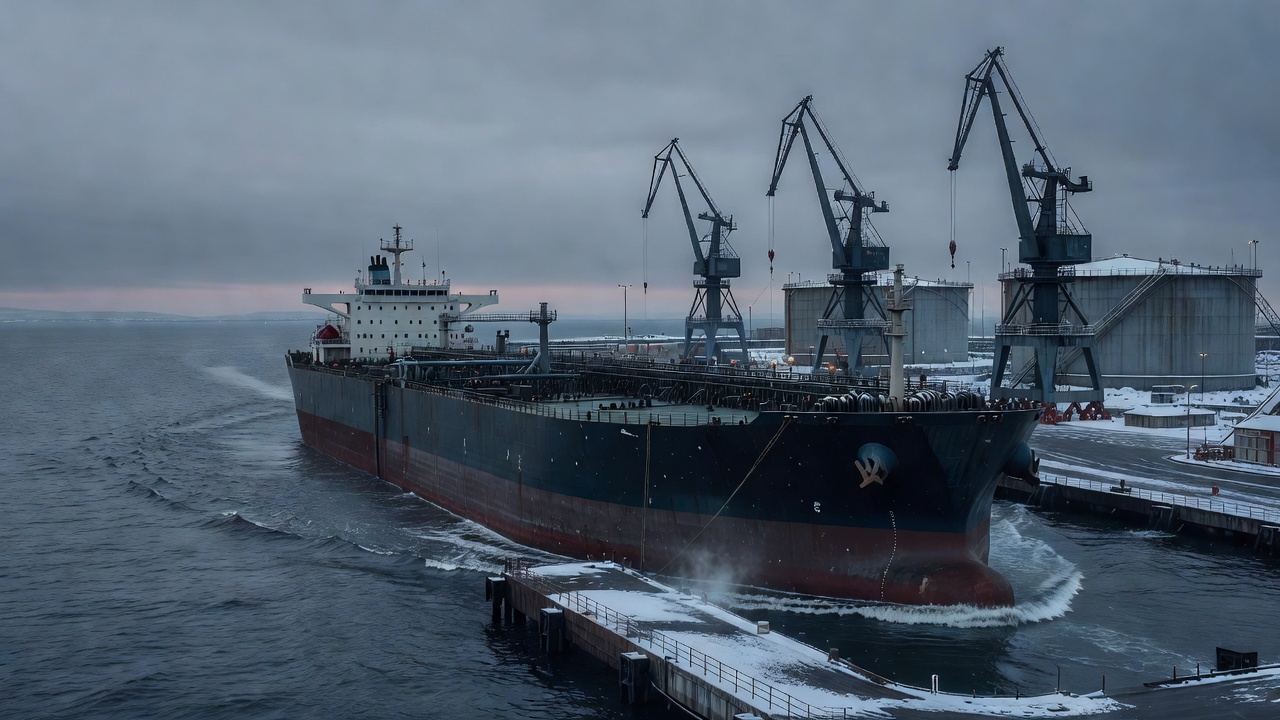
- On 9 October President Trump announced a Russian diesel supply deal after a phone call with President Putin. The Kremlin confirmed that Russia is ready to supply oil and oil products to the American and global markets.
- Russia is filling the gap left by Iranian crude. The Russian ESPO crude China buys traded about $3 a barrel below Brent in mid-July, but November-loading cargoes now carry a premium of more than $20.
- Russia and China are each dealing separately with Washington over how to end the Iran war. Iran is getting nothing more than words from either of its two patrons.
- I see three cracks among the three countries: in the market, in mediation and in trust. But because US sanctions act as the glue that binds them back together, I do not expect the cracks to turn into a break.
The Russian diesel deal — a sentence written in April, an answer in October
On 12 April I published two pieces. In my piece on the collapse of Trump’s Iran talks, I wrote that if Russia raised output, Trump would gain a pretext to ease sanctions on Russia, and could return Russian crude to Western markets under the banner of global energy security. In my piece on Trump and Putin’s backroom bargain the same day, I wrote that what Trump could offer Putin was easing of energy sanctions and permission to return to Western markets.
Six months later, Trump announced that Russian diesel would be brought into the American and global markets, and the Treasury opened the way with a license. The Kremlin said Putin had confirmed Russia’s readiness to supply oil and oil products to the American and global markets. Kirill Dmitriev, a close Putin associate, wrote that Russia–US cooperation on diesel and energy would benefit the world.
| Date | Event | Source |
|---|---|---|
| September | Trump signs a Russia sanctions law that imposes tariffs of up to 100% on the top five importers of Russian oil and gas | Passed by Congress with bipartisan support |
| 8 Oct | Putin meets Iranian President Pezeshkian in Turkmenistan and says Russia will do everything it can to help end the war | Russian news agencies, IRNA |
| 9 Oct | Trump–Putin call; Russian diesel supply deal announced | Truth Social, Kremlin statement |
| 9 Oct | US Treasury issues a general license delaying sanctions on Russian diesel until April 2027 | US Treasury, Office of Foreign Assets Control |
| 9 Oct | Kremlin says Trump welcomed Russia’s involvement in efforts to settle the Iran issue | Kremlin, Reuters |
The volumes President Trump announced are more than 300,000 tonnes immediately, 500,000 tonnes in November and 1,000,000 tonnes after that. Who will pay and when the fuel will arrive have not yet been disclosed. Russia has banned diesel exports since July, and the International Energy Agency estimates that Russian diesel output has fallen by about 30%. How much actually moves remains to be seen.
Who filled Iran’s place — before Russian diesel came Russian crude
To understand the relationship among the three countries, you first have to see where the oil flows. After the United States restored its naval blockade of Iran in mid-July, Iranian crude departures from the Middle East fell from about 970,000 barrels a day in July to virtually zero in August. The roughly 1.4 million barrels a day China bought before the war disappeared from the market.
That gap was filled from two directions. Saudi Arabia and the UAE revived exports by bypassing Hormuz through pipelines, and Middle East crude exports excluding Iran exceeded pre-war levels in September at more than 16.5 million barrels a day. On the other side, Russia pushed into the Chinese market. Sinopec, China’s largest refiner, began buying Russian crude in August and reportedly secured 10–15 ESPO cargoes for October loading alone.
| Period | Price of Russian ESPO crude to China (vs Brent) | Background |
|---|---|---|
| Mid-July (September delivery) | About $3 a barrel discount | Iranian crude still flowing |
| Early September (November loading) | About $10 a barrel premium | Iranian departures virtually halted in August |
| Around 10 September (November loading) | More than $20 a barrel premium | Chinese buyers competing for cargoes |
This table is where this piece begins. For a long time Russian crude was cheap energy for China, because Russia, shut out of other markets by Western sanctions, had no choice but to offer discounts. But when the crude of Iran, its so-called ally, was cut off, Russia filled the gap not at a discount but at a premium. One ally sold the gap left by another ally at a high price.
The structure of Middle Eastern dominance over the oil market is shifting too. Before the war, much of the crude bound for Asia passed through a single chokepoint, Hormuz, and the ability to threaten that chokepoint was Iran’s greatest leverage. In this war, however, buyers learned how to avoid it. Saudi Arabia and the UAE rerouted 40% of their exports through pipelines, and China drew down its reserves and paid premiums for Canadian, West African and Brazilian crude. And now the United States has opened its door to Russian diesel.
I think the Hormuz card grows weaker the more it is played. Every time the chokepoint is closed, buyers add another bypass route and another alternative supplier. The paradox of this phase is that the biggest share of those new alternatives goes to Russia, Iran’s own ally.
Three cracks revealed by the Russian diesel deal
Some Western researchers call Russia, Iran and China, together with North Korea, the “axis of upheaval.” In this phase, however, I see that axis cracking in three places.
The first crack — the market: Russia has taken Iran’s share
The Russian diesel deal is an extension of the first crack. Russia is counted among the biggest beneficiaries of the Iran war. The price of Urals crude reached $113.89 a barrel on 8 April, its highest since 2013. As Iranian crude left the market, Russia took Iran’s share of the Chinese market, and now it has opened the door to the American market as well. The deeper Iran’s isolation, the greater Russia’s bargaining power.
There is also something to add in fairness. According to Reuters, Russia’s oil and gas tax revenues for January–September were 5.47 trillion roubles, down 17% from a year earlier. Ukrainian attacks on refineries cut output and exports, and a stronger rouble ate into the price gains. I think this is why Russia clings to premiums and the American market. Even with higher prices it has less to sell, so it needs to charge more and sell more widely.
The second crack — mediation: Moscow and Beijing each go to Washington
The official mediators in the Iran war are Qatar and Pakistan. Neither Russia nor China is an official mediator. Yet the two countries are each dealing separately with Washington. China reportedly pressed Iran to restrain the Houthis at Saudi Arabia’s request on 17 September, and at the White House summit on 24 September it won an extension of the trade truce. Russia, the day after promising Iran’s president on 8 October that it would help end the war, spoke with Trump and won the Russian diesel deal.
The same Iran issue has become a card each patron plays to Washington. I read this not as an axis but as the spokes of a wheel. Washington sits at the hub, and Moscow, Beijing and Tehran are each connected to it separately. The spokes are not directly attached to one another.
The third crack — trust: Iran has begun to doubt its two patrons
Iran is getting nothing more than words from its two patrons. At the Shanghai Cooperation Organisation summit in Bishkek, Kyrgyzstan, on 1 September, President Xi exchanged only a brief greeting with President Pezeshkian, and US media reported that Xi kept his distance from Iran ahead of his summit with the United States. Iran International, an outlet opposed to the Iranian government, reported that the episode revived doubts in Tehran about the partnership with China.
The relationship with Russia is also less solid than the paperwork suggests. The comprehensive strategic partnership treaty Russia and Iran signed in January 2025 contains no mutual defence clause. Iranian state media reported that Russia was ready to lend the first $1 billion of a $20 billion support package, but disagreements inside Iran over how to use the money have delayed it. There is a gap between the figure showing bilateral trade grew by more than 21% in 2025 and the money that has actually reached a country at war.
Why it still won’t break — US sanctions are the glue
A crack does not mean a break. There is a force binding the three countries back together, and paradoxically it comes from the United States. In September President Trump signed a Russia sanctions law that imposes tariffs of up to 100% on the top five importers of Russian oil and gas. China and India, the biggest customers for Russian crude, could become targets of that law.
If the United States can buy Russian diesel while imposing tariffs on China for buying Russian crude, China gains a reason not to widen the distance from Russia but to hold out alongside it. Iran and Russia also share a record of cooperation in which drone and missile technology changed hands. And all three countries remain under Western sanctions or at risk of them. As long as this common pressure does not disappear, I think the relationship among the three will crack but not break.
The strength of a coalition is measured by who pays the cost
There is a principle I learned in the army while preparing for combined operations. The real strength of a coalition is revealed not by its declarations but by who pays the cost in a crisis. Each country moves only in the stretch where its own objectives overlap with the coalition’s. Where they do not overlap, it offers verbal support and holds back on action.
The Iran war has become the test of that principle. Iran is bearing the cost of the naval blockade and the bombing alone. Russia talked of mediation and gained prices and markets; China pressed for restraint and gained a trade truce. Both patrons took benefits rather than paying costs. I think this shows the real strength of the relationship among the three. It continues the line of thinking in my March piece asking who really wins the Iran war and my June piece on the managed alignment between China and Iran.
Five things to watch after the Russian diesel deal
- The price of Russian crude for China. Watch whether the premium on ESPO crude bound for China holds after the United States begins buying Russian diesel. If the premium rises further, China’s discontent will grow too.
- Enforcement of the Russia sanctions law. Watch whether the United States actually imposes the September law’s tariffs on China and India. If it does, the three countries will close ranks; if it does not, the cracks will widen.
- Iran’s official response. Watch how the Iranian government assesses the US–Russia diesel deal. Iran has not yet stated an official position.
- Russia’s status as mediator. Watch whether Russia joins Qatar and Pakistan as an official mediator. If it does, the Iran issue becomes an item of trade between the United States and Russia.
- The APEC summit in November. The Kremlin said Trump and Putin had both expressed interest in attending the APEC summit in China in November. If the three leaders gather in one place, the spoke structure will be on full display.

Limits of this analysis
What I wrote as fact and what I left as judgement
Here is what I treated as fact. The volumes and the general license in the diesel deal come from President Trump’s announcement and the US Treasury’s action, and the Kremlin’s confirmation is based on the Kremlin statement and Reuters reporting. Iranian crude departures come from S&P Global, and ESPO crude prices are trade figures reported by Bloomberg. Russia’s tax revenue is a Reuters calculation, and the tariff provisions of the September sanctions law follow US media reports.
I also want to be clear about what remains judgement. The framework of three cracks, the reading of a spoke structure, the assessment that US sanctions bind the three countries back together, and the reading of the coalition’s strength are all my own judgements. Reports on doubts inside Iran include an outlet opposed to the Iranian government, and I treated them with caution. When Iran and China issue official responses, I will review these judgements.
This article was written with the help of AI for parts of the research and for the illustrations.
I used AI to speed up cross-checking statements from the United States, Russia, Iran and China and crude trade figures against a common reference date. Every figure and quotation was rechecked against the original reports and official statements, and the interpretation and judgements are my own. All images in this piece are AI-generated illustrations, not photographs.
Frequently Asked Questions (FAQ)
Not entirely. On 9 October the US Treasury issued a general license delaying the application of sanctions on Russian diesel loaded as of that date until April 2027. It matters as the first easing beyond the standard 30-day window since the war began, but the Russia sanctions law signed in September remains in place.
China has sharply increased purchases of Russian ESPO crude and is also buying West African, Brazilian and Canadian crude. It has also drawn down reserves to reduce imports. But Russian crude has gone from a discount to a premium of more than $20 a barrel, increasing China’s burden.
I think it is more likely to hold on with cracks than to break. Their interests are diverging in the market, in mediation and in trust, but US sanctions and tariff pressure weigh on all three. Whether the United States actually imposes Russia-sanctions tariffs on China will be an important turning point.
If Russian diesel returns to the world market, upward pressure on international diesel prices could ease somewhat. Conversely, it could squeeze refining margins for Korean refiners, which export large volumes of diesel. The actual impact will depend on how much of the announced volume Russia actually delivers.
📚 References
- Al Jazeera — Trump announces Russian diesel deal amid soaring US fuel prices, 9 Oct 2026
- Fortune — Trump signed sweeping Russia sanctions last month. Now he’s striking a diesel deal with Putin, 9 Oct 2026
- CNBC — Trump strikes deal with Putin to supply Russian diesel to U.S. and global markets, 9 Oct 2026
- Middle East Eye (citing Reuters) — Trump welcomed Russia’s involvement in Iran settlement efforts, Kremlin says, 10 Oct 2026
- Al Jazeera — Putin pledges Russia’s support to end US-led war on Iran, 8 Oct 2026
- Euronews — Putin offers help to end Iran war while Russia continues its own in Ukraine, 9 Oct 2026
- Kurs.com.ua (citing Bloomberg and S&P Global) — China began overpaying for Russian oil due to Iran blockade, 10 Sep 2026
- SCMP — China turns to Russian oil as Gulf supply drops, 20 May 2026
- LB.ua (citing Reuters) — Russia’s energy revenues down 17% despite sharp oil price surge, 5 Oct 2026
- CNBC — China’s Xi keeps Iranian president at arm’s length weeks ahead of Trump summit, 2 Sep 2026
- Iran International (opposed to the Iranian government; treat with caution) — Xi snub reignites Iran’s doubts about China, 3 Sep 2026
- CBS News — Iran War Updates: oil flows and Red Sea, 5 Oct 2026
- Reuters (via US News) — China presses Iran to help rein in Houthis after Saudi appeal, 17 Sep 2026