I’ve held this view for a long time: the fight between the U.S.-Israel and Iran does not end unless one side is brought to its knees or Iran’s leadership changes. The reason is simple. Iran’s very identity as a state begins from defining the U.S. as the “Great Satan” and Israel as the “Little Satan.” With a country where hostility is closer to faith than policy, a single agreement does not bring peace. The current scene—trading blows in the Strait of Hormuz for three straight days even after signing a June 17 ceasefire memorandum (MOU)—reconfirms that diagnosis.
But examining this round, one shadow flickering behind Iran’s blade kept nagging at me: China. The disruption to oil transport is not a mere aftershock of war but increasingly structural, and I suspect Beijing sits behind—and benefits from—that chaos. Today I want to test this “China-Iran coordination” hypothesis my own way. Let me state up front: this is not a proven fact, but one observer’s reading of the circumstantial picture. I’ll keep fact and inference clearly separated.
Facts First — Iran’s Cash Line Is Beijing
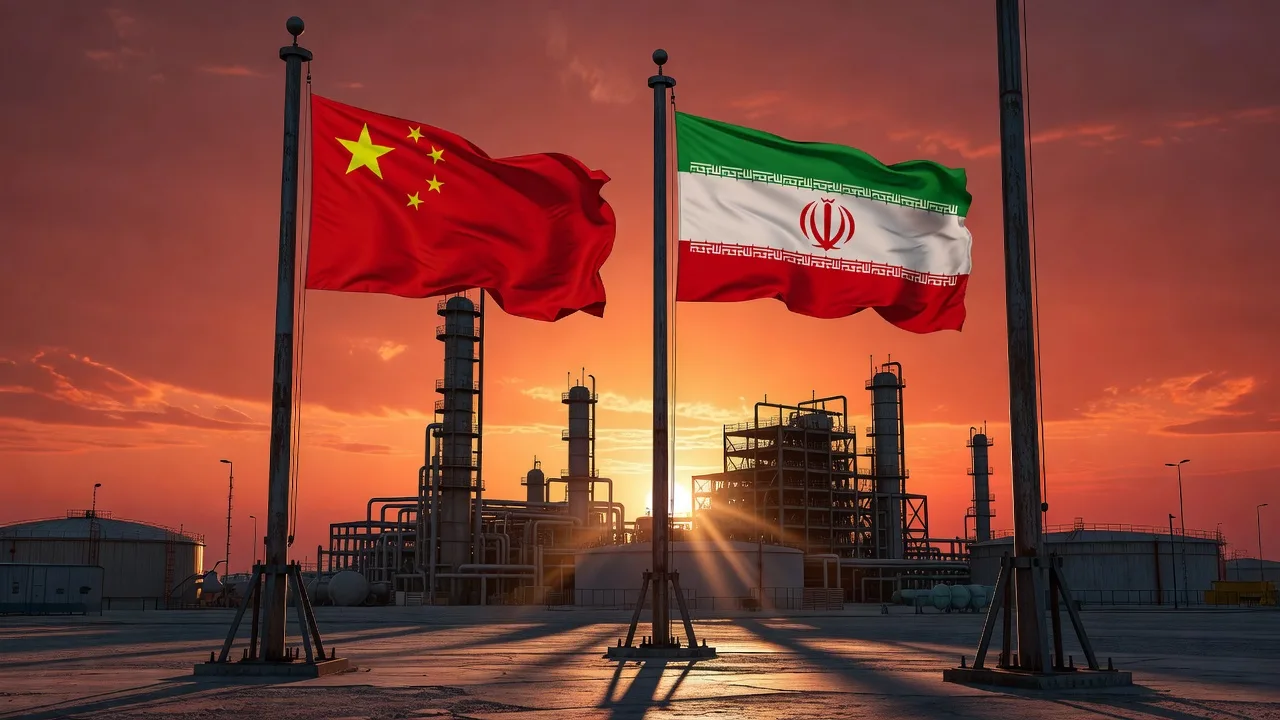
Before interpreting, let’s lay down the verified facts. Iran’s economy is suffocating under sanctions. What keeps it breathing is China. China buys roughly 80–90% of Iran’s exported crude. And it’s the so-called “teapot” refineries clustered in Shandong—small and private, structured to take the blade of U.S. sanctions in place of state firms—that receive it at a discount. For Iran, Beijing is not just a customer but an oxygen line keeping the regime alive under sanctions.
One event drew my attention most. In April 2026 the U.S. Treasury sanctioned China’s second-largest teapot refinery, Hengli (Dalian), and four others over Iranian crude trade—and in May, reports say, China effectively blocked those sanctions. It didn’t just look away while buying; when the U.S. moved to cut Iran’s cash line, Beijing actively raised a shield. This is hard to explain as “neutral trade.” At least here, China consciously protected Iran’s wartime financing.
Diplomatic Cover, and ‘Live Rounds’
It’s not only money. China has propped up Iran on the diplomatic stage too. Alongside Russia, it voiced criticism of U.S.-Israeli strikes at the UN, and in late March it offered a joint “five-point proposal” with Pakistan (ceasefire, normal Hormuz passage, etc.), playing mediator. On the surface it’s “mediation for peace,” but where that mediation’s center of gravity tilts is worth weighing.
Heavier still are intelligence assessments. Multiple analyses hold that Beijing prepared financial aid and missile components for Iran. Yet China ultimately avoided open, direct military involvement. Why? As the next section unpacks, because China’s own interests are at stake. In any case, that three lines—cash, diplomatic cover, and components—run toward Iran is a clear fact.
Something I always repeated when making intelligence judgments in the military: you can hide intent, but not the flow. If money, components, and diplomatic cover all flow in one direction, then even if the party says “we are neutral,” the flow itself states a position.
Where Did This Relationship Come From — 25 Years of Groundwork
Today’s closeness didn’t appear overnight. It has roots. In 2021, China and Iran signed a 25-year comprehensive cooperation agreement. The reported scale: China would invest roughly $400 billion in Iran’s energy and infrastructure over 25 years, securing discounted Iranian crude long-term in return. One side needed capital to breathe under sanctions; the other needed cheap, stable oil and a Middle East foothold. A deal where interests matched precisely.
An institutional shell was added on top. Iran formally joined the Shanghai Cooperation Organization (SCO) in 2023 and BRICS the following year—both frameworks of the “non-Western bloc” that China leads or anchors. In other words, the China-Iran bond stands not on an impromptu collusion but on groundwork laid across economic, diplomatic and institutional layers over years. That’s why I can’t lightly dismiss the “coordination possibility” in this Hormuz round. The board was set long ago.
So Is It Collusion — How I Read the Circumstantial Picture
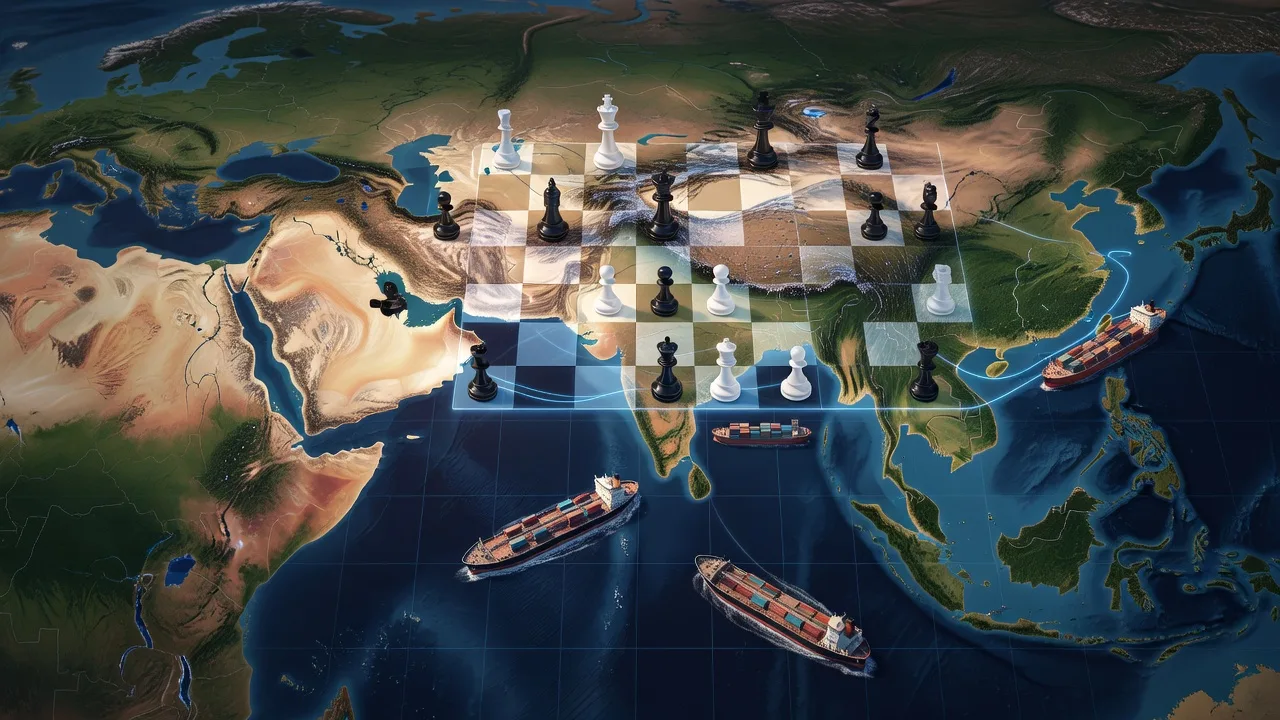
Now the realm of interpretation. I read the picture this way. For China, chaos in the Middle East is—at least up to a “reasonable line”—a benefit. The more the U.S. is bogged down in the Middle Eastern quagmire, the less bandwidth it has in the Indo-Pacific and Taiwan, the stage China truly eyes. Indeed, within China a message spreads along the lines of: “If the U.S. can’t even end one Iran war, can it sustain a far larger war over Taiwan, much closer to the mainland?” While Iran pins the U.S. in the Middle East, Beijing buys time and pretext.
Overlay the timing and the suspicion thickens. The U.S.-China tug-of-war loosening and tightening rare earth controls; Gulf states asking Xi Jinping to mediate as Beijing’s standing rises—all of it points one way: the noisier the Middle East, the more cards China holds. Iran is ideologically itching to fight the U.S., and China keeps that Iran alive while snagging America’s ankle. The way these two interests mesh and turn looks to me, even if not an explicit conspiracy, like de facto coordination. Even without a signed secret pact, if each side’s actions serve the other’s interests precisely, that is, in effect, no different from collusion.
But — the Decisive Hole in the Coordination Theory
Stopping here would be half an analysis. I was taught to strike my own hypothesis. The coordination theory has a fatal hole: if Hormuz is fully closed, the country hurt most is China itself. China imports about 5.4 million barrels of Gulf crude a day through this strait—more than double what it gets from Russia. If Iran truly closed Hormuz permanently, it would be choking China’s own industrial artery, not America’s.
So China’s actual conduct is closer to “preventing closure” than “egging it on.” That’s why it demanded normal Hormuz passage with Pakistan, stubbornly avoided direct military involvement, and urged reconciliation on both the Gulf and Iran. If China and Iran were in a “true collusion” to close Hormuz together, China wouldn’t shoot itself in the foot like this. This part can’t be explained by a simple collusion theory. Fairly put, China wants Iran to harass the U.S., yet never wants that blade to sever its own oil line too.
My Conclusion — ‘Managed Alignment’ Rather Than ‘Collusion’
Laying the two pictures together, I sum it up thus. This is not a signed conspiracy to “close Hormuz together”—China’s losses would be too great. But neither is it “accidental parallelism.” The sequence of supplying cash, raising a sanctions shield, preparing components, and providing diplomatic cover is clearly intentional. So the name I want to attach is “managed alignment.” China wants the blade that is Iran to cut America just enough, while finely managing it so the edge never touches its own oil line. Keeping Iran alive enough not to die, harassing the U.S. enough not to win—Beijing tunes that exquisite balance point. That’s my judgment.
And this relationship is by no means equal. Iran struggles to survive without China, but China lives on without Iran. So I don’t call it an “alliance.” Rather, it’s an asymmetric utilization relationship. China borrows Iran’s anti-American ideology as its own strategic asset, while Iran takes that hand to survive. If, as noted, hostility is a constant as long as Iran’s leadership doesn’t change, then Beijing is the player exploiting that constant most cleverly. Reaping the fruits of war without waging it directly—that is the chair China now sits in.
Future Scenarios — Where the Sawtooth Goes
So how does this “managed alignment” flow forward? The most likely picture I see is a “sawtooth pattern.” In negotiating phases Hormuz opens a little and oil prices fall; in combat phases passage freezes again and prices spike—a form where patching and rupture alternate. Scenes like this June—striking ships days after signing an MOU—are likely to recur with variations each quarter. Neither full peace nor full closure, but an awkward middle zone, because that is the most “manageable” state for everyone.
Two variables could break this balance. First, a change in Iran’s leadership. If a regime whose state creed is anti-Americanism wavers or shifts course, the very “blade” China borrowed disappears. Second, China’s energy-security calculus. If Iran’s provocations go too far and Hormuz is closed long-term, China could withdraw its protective hand and pivot sharply toward stability. Ultimately, the real control stick of this game is held by Beijing, not Tehran—that’s my conclusion. Iran swings the blade, but how far that blade is allowed is set by China’s interests.
Where Does Korea Stand
Finally, we can’t skip our own story. Korea imports most of its crude from the Middle East—through Hormuz, at that. So each time this strait’s gears slip, Korea’s refining, petrochemicals, aviation and shipping take a direct hit. Moreover, we are a country leaning on the U.S. for security while deeply entangled with China economically. If the U.S. and China sustain “managed tension” with Iran in between, Korea is positioned to bear the cost of that tension first—and most quietly.
That’s why I don’t see this Hormuz crisis as “a distant Middle Eastern fire.” It is a miniature of U.S.-China strategic competition, and on that stage Iran holds the blade, China the hand, the U.S. the shield. Korea is not a spectator but stands beside the stage, taking the same wind. If this is a fight that won’t end, our job is not to forecast “when it ends” but to lay thick buffers—energy, supply chain, diplomacy—on the premise that it continues. Not the one who waits for the end, but the one who endures even if it doesn’t end, survives.
Frequently Asked Questions (FAQ)
A “collusion” like a signed secret pact has never been proven. But it is fact that China buys 80–90% of Iran’s crude, blocked U.S. sanctions on its own refineries in May 2026, and provided diplomatic cover. This piece reads that circumstantial picture as “managed alignment,” while separating proven fact from inference.
Yes—that’s the decisive hole in the collusion theory. China imports about 5.4 million barrels of Gulf crude a day through Hormuz, more than double its Russian volume. A full closure would hit Chinese industry directly, so China actually moved closer to “preventing closure.”
Because of its own interests. With Hormuz stability and Gulf crude imports at stake, China prepared financial and component support for Iran while avoiding open military involvement—a strategy of reaping the fruit of America being pinned down without waging war itself.
Korea imports most of its crude through Hormuz, so whenever the strait wobbles, its refining, petrochemicals, aviation and shipping take a direct hit. Given a structure of leaning on the U.S. for security and China for the economy, Korea is positioned to bear the cost of U.S.-China “managed tension” first.
📚 References
- Al Jazeera — China blocks US sanctions against five ‘teapot’ refineries
- Al Jazeera — How China’s ‘teapot’ refineries cushion it from the Iran war oil crisis
- Brookings — Beijing’s approach to the conflict in Iran
- Chatham House — China will benefit from the Iran war
- Wikipedia — China in the 2026 Iran war