The Hormuz blockade and the Arctic route may not be a coincidence. In the same week Trump declared a full naval blockade of the Strait of Hormuz, the Novatek-Alaska LNG joint venture resurfaced. The Greenland mineral rights NATO framework had already been announced in January. Viewed separately, these are independent events. Connected, they form an entirely different picture.
- A Hormuz blockade could dramatically increase the strategic value of Russia’s Northern Sea Route — 20% of global oil supply at stake.
- Trump family associate Gentry Beach signed an LNG deal with Russia’s Novatek — “known at the highest levels” in Moscow and Washington.
- Greenland holds the world’s 8th largest rare earth reserves (1.5 million tons). Trump’s NATO framework includes mineral rights — blocking China.
- When the three puzzles align, the Hormuz blockade, Arctic route activation, and Greenland acquisition may form a single strategic chessboard.
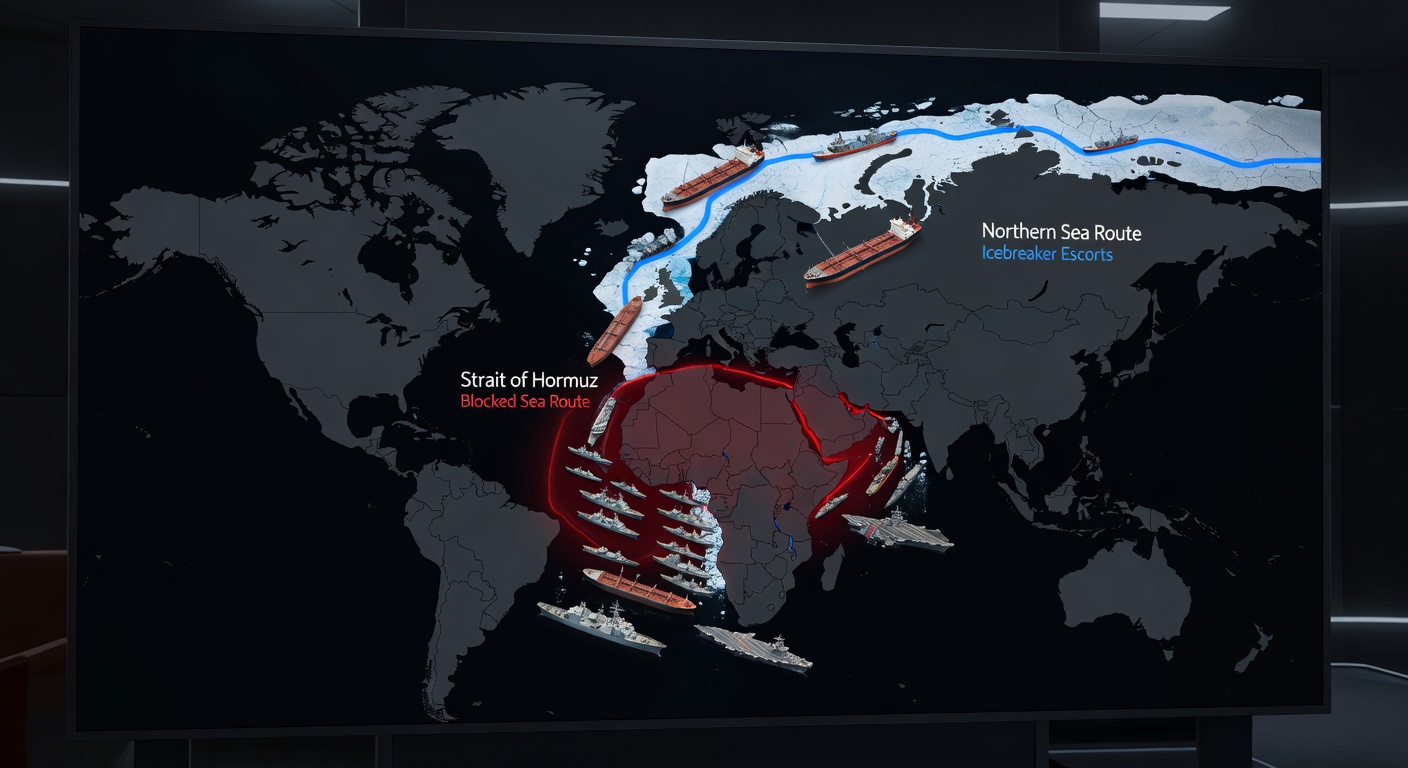
Puzzle 1 — The Great Energy Route Shift
The Strait of Hormuz handles 20% of the world’s oil. A full blockade creates a massive gap in global energy supply. Saudi and UAE bypass routes exist but cannot fully compensate.
Russia’s Structural Demand Surge
Russia is the world’s second-largest oil producer. If Hormuz closes, demand for Russian crude surges. But existing export routes face bottlenecks — European pipelines restricted by sanctions, Black Sea ports limited by Turkish straits, Far East terminals at capacity. The Northern Sea Route becomes the only large-scale alternative.
The NSR runs roughly 5,600 km along Russia’s Arctic coast. It cuts Asia-Europe distances by 30-40% compared to the Suez Canal. In 2025, 103 transits moved 3.2 million tons of cargo. Russia is converting the NSR into a year-round export artery using Arc7 ice-class LNG carriers.
Oil at $100 — The Economics Shift
The NSR’s biggest barrier has been economics — icebreaker fees, insurance costs, and seasonal limits. If oil anchors above $100, those costs become manageable. The Hormuz blockade could eliminate the economic barrier that has kept the Arctic route from going mainstream.
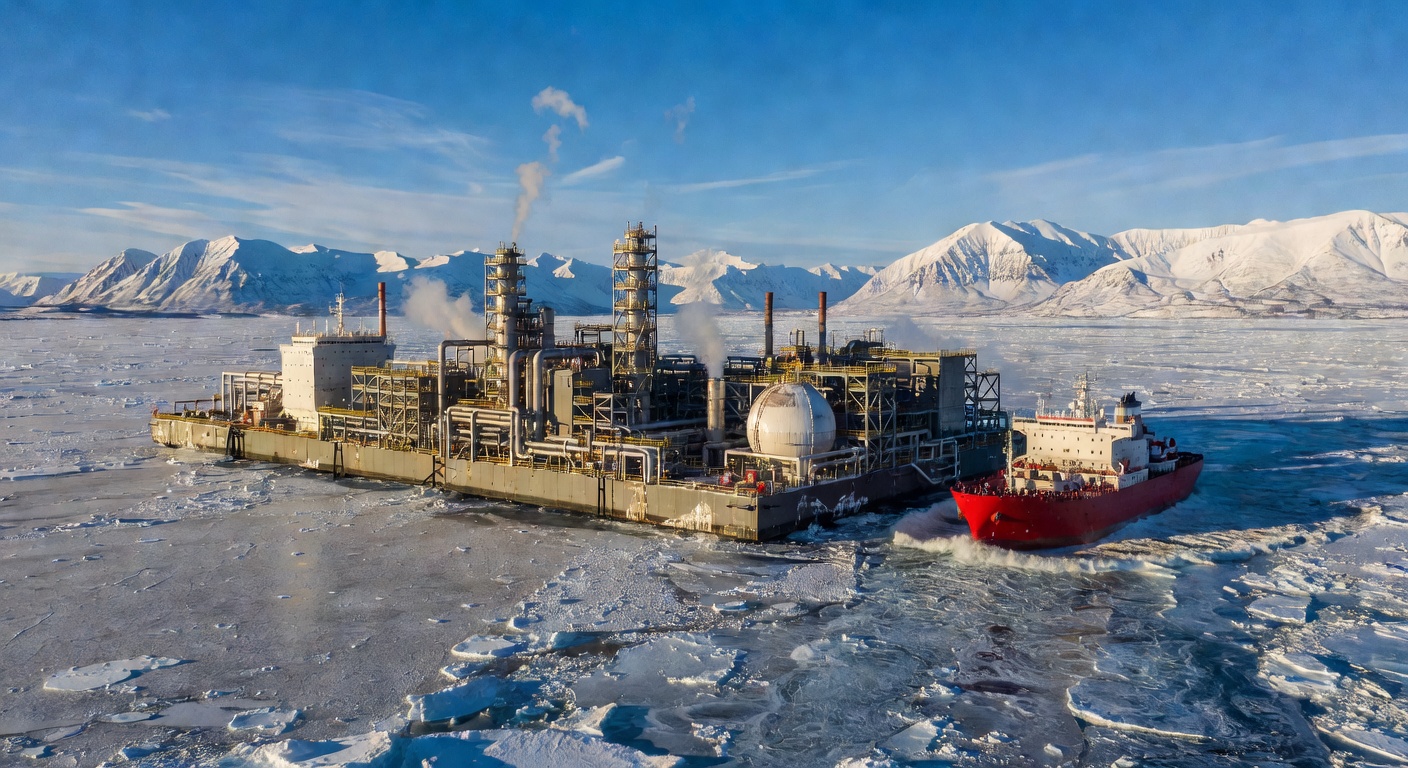
Puzzle 2 — The Novatek-Trump Alaska Connection
At the Alaska summit in August 2025, Putin mentioned Novatek was in talks with “U.S. partners” about Arctic LNG projects. Months later, the NYT reported that Gentry Beach — a college friend of Donald Trump Jr. and 2017 inauguration finance vice chairman — had signed a cooperation agreement with Novatek.
Beach is a college friend of Trump Jr. and served as 2017 inauguration finance vice chairman. He negotiated with Novatek CEO Leonid Mikhelson in Dubai and Europe. Beach acknowledged that “this project is known about at the highest levels” in Moscow and Washington, while insisting his Trump family ties played no role.
Polar Eagle — Sanctioned Equipment Heading to Alaska
The project would deploy Novatek’s gravity-based LNG technology on Alaska’s North Slope. South Korean-built icebreaking LNG carriers would export to Asian markets. As of April 2026, Polar LNG has applied for OFAC approval to acquire partially completed equipment from the sanctioned Arctic LNG 2 project. Investment decision is targeted for 2027, production for 2029-2030.
The Sanctions Paradox — A Signal of Easing?
The U.S. sanctions Russian energy companies while seeking to import their technology to Alaska. The same company is both a sanctions target and a cooperation partner. This contradiction could be read as a precursor to sanctions relief.
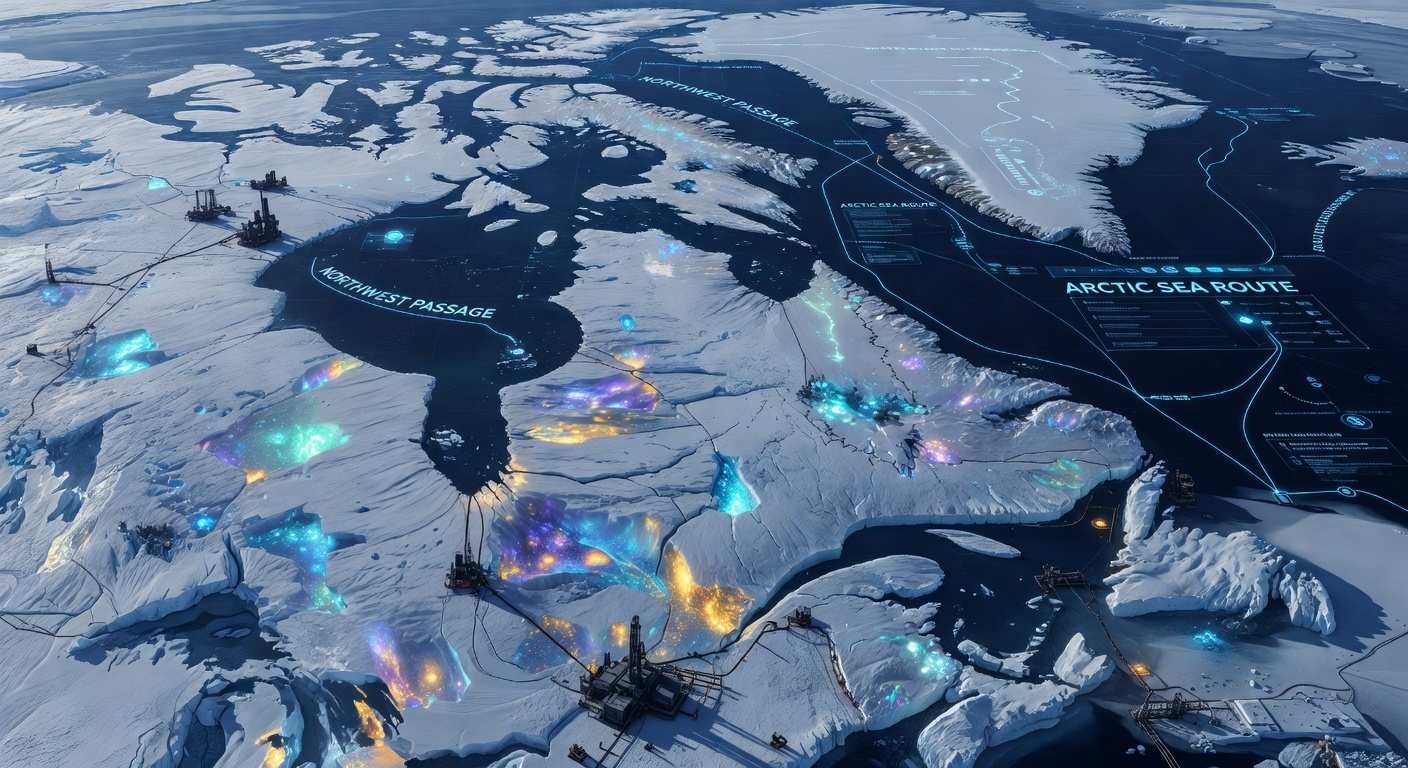
Puzzle 3 — Greenland and the Arctic Gateway
The Arctic route’s eastern end is Russian territorial waters (Bering Sea). The western end connects to Greenland’s waters. If the U.S. secures Greenland, it controls the Arctic’s western gateway while Russia controls the east — a potential structure for joint Arctic route management.
Greenland holds 1.5 million tons of rare earth reserves — world’s 8th largest (CSIS). 25 of the EU’s 34 critical raw materials are found in Greenland. The rare earth market is projected at $7.6 billion in 2026. China controls 69-90% of global processing. Greenland is a strategic card for reducing China dependence.
Greenland Was on the Kremlin Agenda
Axios confirmed that the January 2026 Kremlin meeting between Putin and Trump’s envoys covered not only Ukraine but also “Greenland and Trump’s Board of Peace.” What was discussed remains undisclosed.
The Outlines of a Possible Deal
Reading the circumstances, a possible exchange emerges. Trump could offer Russia sanctions relief and Western market access. Putin could offer a Ukraine ceasefire and silence on Greenland — a NATO ally’s territory where Russian opposition would complicate matters.
When the Three Puzzles Align
Taken together, a structure emerges. A Hormuz blockade creates a gap in global energy supply. The Northern Sea Route fills that gap with Russian energy. Greenland gives the U.S. control of the route’s western gateway.
The result: the U.S. could control two energy chokepoints simultaneously — Hormuz (south) and Greenland (north). Russia gains sanctions relief and expanded Arctic exports. China loses both cheap Iranian oil and access to Greenland’s rare earths.
The facts cited here — the Alaska summit, the Novatek-Beach deal, the Kremlin’s Greenland agenda, the NSR’s year-round conversion — are sourced from Axios, NYT, and CSIS. Connecting them into a single strategic framework is analytical interpretation. Private negotiation content remains undisclosed. Future sanctions policy and Arctic investment flows will test this analysis.
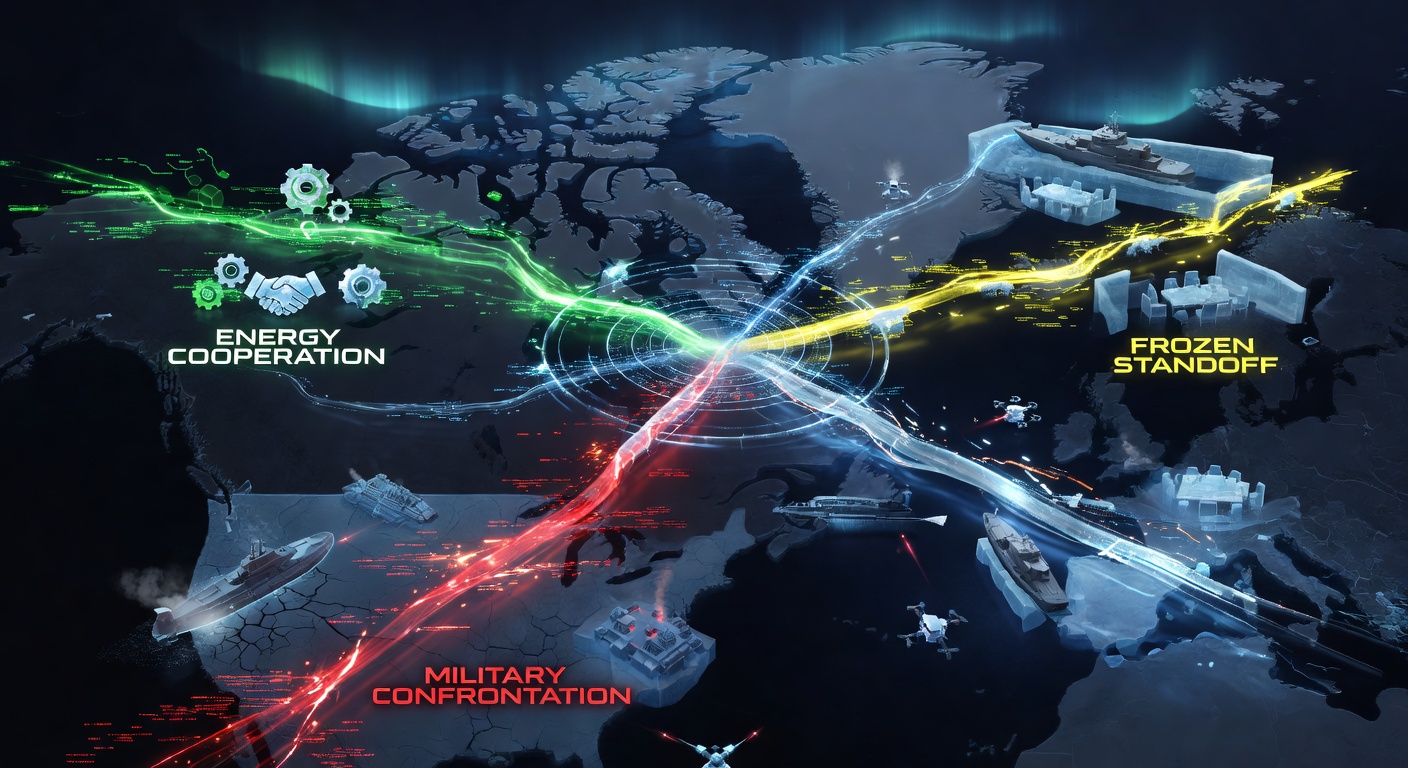
Three Scenarios
U.S.-Russia energy cooperation formalizes. Sanctions partially lifted. Novatek-Alaska project advances. NSR LNG exports surge. Greenland mineral development begins with U.S. capital.
Market Impact: Energy and shipbuilding stocks rally. Oil stabilizes at $90.
Hormuz blockade continues but U.S.-Russia thaw stalls. Sanctions remain. Novatek deal blocked by legal barriers. NSR grows gradually without breakthrough.
Market Impact: Oil at $100-110. Energy uncertainty persists.
Relations deteriorate. The Arctic becomes a new confrontation front. U.S. deploys Arctic Security Cutters. Russia militarizes the NSR. Greenland becomes a contested space.
Market Impact: Energy and defense stocks surge. Global supply chain risk expands.
Outlook
Whether the Hormuz blockade, Arctic route activation, and Greenland grab are coincidence or coordinated strategy — time will tell. The key variables: whether OFAC approves the Novatek deal, and whether Greenland’s population (85% opposed to U.S. acquisition) accepts the arrangement.
For the Hormuz blockade analysis, see Trump Iran Talks Collapse and the Hormuz Blockade. For China’s oil leverage, see Is China the Real Winner of the Iran War?
FAQ — Frequently Asked Questions
No official confirmation exists. However, economic logic dictates that a Hormuz closure increases demand for alternative energy routes. Russian officials have intensified NSR promotion since the crisis, calling it “the future of global trade.”
It requires OFAC approval. Novatek subsidiaries are under U.S., UK, and other sanctions. The project targets final investment decision by 2027 and production by 2029-2030. Legal barriers remain high.
Experts are skeptical. 80% ice coverage, no infrastructure, costs 5-10x higher than elsewhere. CSIS notes the U.S. could mine domestically instead. The strategic goal appears to be blocking China rather than actual near-term mining.
Axios confirmed Greenland was on the agenda at the January 2026 Kremlin talks. The specific content remains undisclosed. At the August 2025 Alaska summit, the official agenda was Ukraine, but Putin referenced Novatek’s U.S. Arctic partnerships afterward.
Arctic route expansion would boost demand for ice-class LNG carriers. Korean shipyards (Hanwha Ocean, HD Hyundai Heavy Industries) hold competitive advantages in Arc7 vessel construction. Energy supply route diversification also directly impacts Korea’s energy security.