On April 8, 2026, the United States and Iran agreed to a two-week ceasefire brokered by Pakistan. Within hours, Iran closed the Strait of Hormuz again, and Israel launched its largest-ever strikes on Lebanon. The core problem: both sides are holding different versions of the agreement. The American version, the Iranian version, and the Pakistani mediator’s version diverge on at least seven critical points — creating a ceasefire that was broken before it began.
• The ceasefire collapsed within hours. Iran closed Hormuz after Israel’s Lebanon strikes (182 killed in one day). The White House called reports “false.” Iran’s parliament speaker declared the US “already violated 3 conditions.”
• Three different agreements exist. Pakistan: “immediate ceasefire everywhere including Lebanon.” US + Israel: “Lebanon not included.” Iran: “Lebanon inclusion is a precondition.” VP Vance admitted “three different 10-point proposals are circulating.”
• Iran’s 10 points vs America’s 15 points. Iran demands: full sanctions lift, reparations, US troop withdrawal, enrichment rights. US demands: nuclear surrender, enriched uranium handover, missile limits, proxy dismantlement. At least 5 points are in direct conflict.
• April 10 Islamabad talks may not happen. Iran signaled non-attendance unless Lebanon is included. The negotiation is breaking down before it starts.
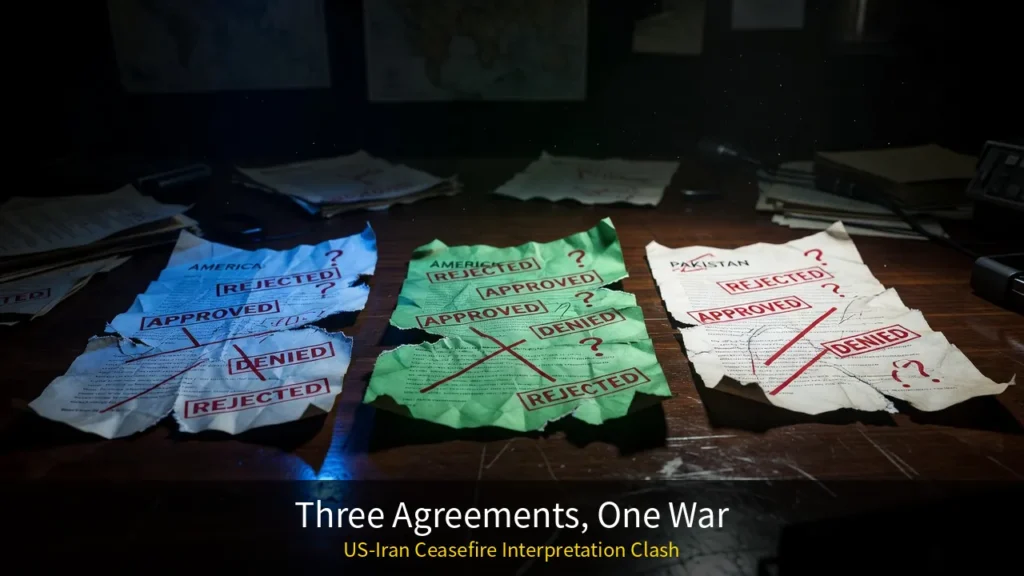
Three Agreements — Whose Version Is Real?
On Tuesday night, less than an hour before Trump’s deadline to destroy Iranian civilian infrastructure, a ceasefire was announced. But from the moment of announcement, each side told a different story.
Pakistan’s version (mediator):
PM Sharif: “Immediate ceasefire everywhere including Lebanon and elsewhere, EFFECTIVE IMMEDIATELY.” Talks to begin April 10 in Islamabad.
America’s version:
Trump: “I agree to suspend the bombing of Iran for two weeks, subject to Iran agreeing to the COMPLETE, IMMEDIATE, and SAFE OPENING of the Strait of Hormuz.” Iran’s 10-point plan is “a workable basis on which to negotiate.” Lebanon not included.
Iran’s version:
Supreme National Security Council: “We forced criminal America to accept our 10-point plan.” FM Araghchi: “The terms are clear — the US must choose: ceasefire or continued war via Israel. Lebanon is included.”
Israel’s version:
Netanyahu: “We support the Iran ceasefire but it does not extend to Lebanon. This is not the end of the campaign. Our finger is on the trigger.”
VP Vance himself acknowledged the confusion: “There were three different 10-point proposals” circulating. The very document that forms the basis of negotiations is not agreed upon.
Seven Points of Collision — US vs Iran Interpretation
Comparing Iran’s 10-point proposal with America’s 15-point framework reveals at least seven critical points where interpretations directly clash.
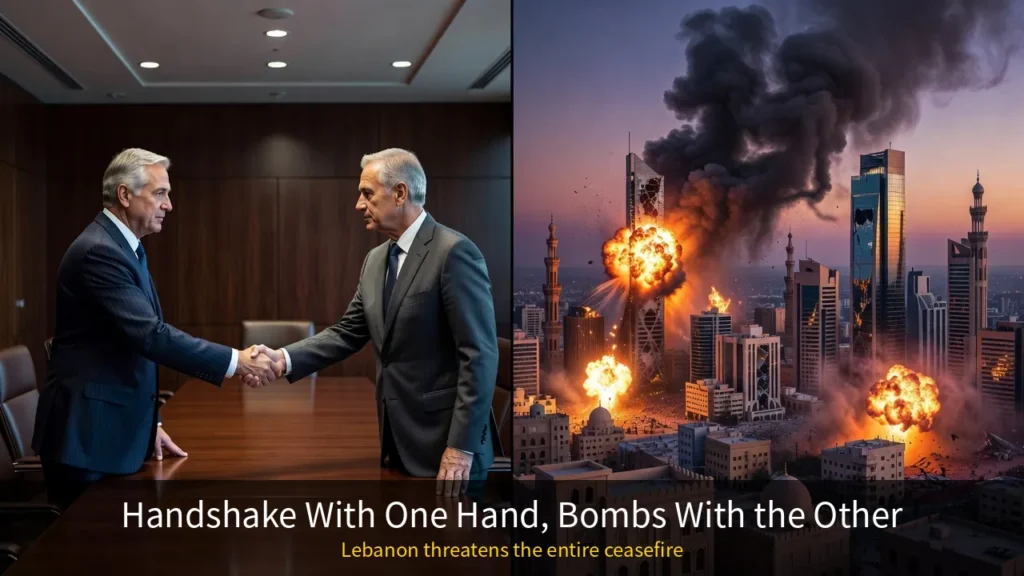
Point 1: Lebanon — Included or Not?
Iran: “All-front ceasefire is the precondition. If Lebanon attacks continue, Hormuz closes.” Iran made good on this within hours — closing Hormuz after Israel’s Lebanon strikes.
US + Israel: “Lebanon is a separate war.” Netanyahu launched the largest-ever Lebanon strikes on Wednesday (182 killed), calling it the “biggest operation since the war began.”
Pakistan: Sharif’s original announcement explicitly stated “including Lebanon.”
This single issue determines whether the entire ceasefire survives. Iran views Hezbollah as strategic depth. Striking Hezbollah while shaking hands with Iran is — in Tehran’s framing — “shaking with one hand, striking with the other.”
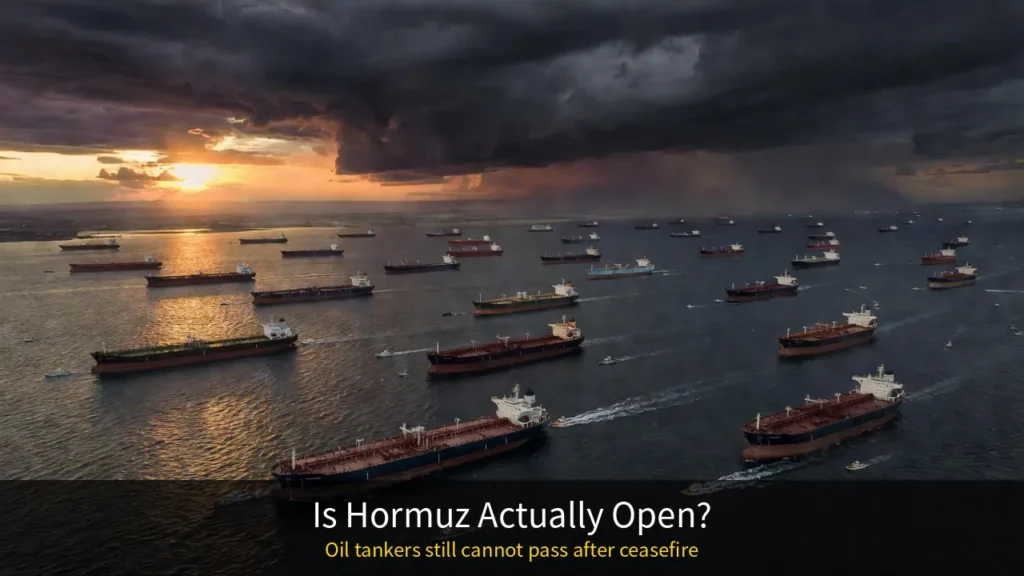
Point 2: Hormuz — Control, Tolls, and Freedom of Navigation
Iran: “Hormuz is under Iranian control. Transit coordinated with Iranian armed forces. Tolls collected for post-war reconstruction.”
US: WH Press Secretary Leavitt: “Open immediately, without limitation, including tolls. This is the president’s expectation and demand.” Defense Secretary Hegseth: “The strait is open.”
Reality: Only 2 bulk carriers (not oil tankers) have passed since the ceasefire. Pre-war daily traffic was 100–120 vessels. A shipping executive told CNBC: “We have no information about how to transit. We are not in contact with Iranian authorities. Without absolute safety guarantees, we will not pass.”
Point 3: Nuclear Program — Enrichment vs Surrender
Iran: 10-point plan includes “acceptance of enrichment.” Posted officially by Iran’s embassy in India and multiple state media outlets.
US: Trump: “There will be no enrichment of uranium. The United States will dig up and remove it. Under very exacting satellite surveillance (Space Force!). Nothing has been touched.”
Positions are diametrically opposed. Iran views enrichment as sovereign right. The US views nuclear surrender as the war’s raison d’être.
Point 4: Sanctions — Full Removal vs Conditional Easing
Iran: All primary and secondary sanctions lifted. All UN Security Council resolutions on Iran terminated. All IAEA resolutions ended. Frozen assets released.
US: Trump mentioned discussing “tariff and sanctions relief” but specified no scope. America’s 15-point plan conditions sanctions relief on nuclear surrender, missile limits, and proxy dismantlement first.
Point 5: Reparations
Iran: Demands compensation through a “war-loss fund.”
US: Trump spent years attacking Obama for sending cash to Iran under the JCPOA. Sending reparations to Iran would be political suicide.
Point 6: US Troop Withdrawal
Iran: “Withdrawal of US combat forces from regional bases.”
US: Hegseth: US forces will be “hanging around” during the ceasefire. Abandoning decades of Middle East forward deployment is a fundamental policy shift that no administration — especially this one — would accept.
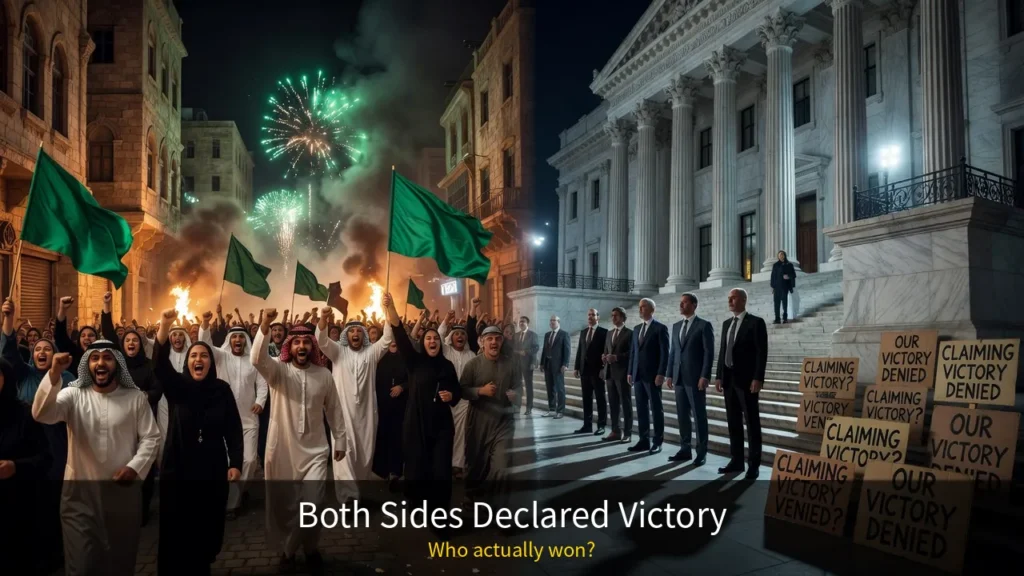
Point 7: Who Begged Whom — The Narrative War
US: Hegseth: “Iran begged for this ceasefire.” Trump: “Total and complete victory.” Leavitt: “Maximum leverage for diplomacy.”
Iran: Security Council: “Forced criminal America to accept our 10-point plan. An enduring defeat for Washington.” Tens of thousands celebrated in Tehran’s Revolution Square.
Reality: The Financial Times reported that the US side initiated ceasefire talks and spent weeks trying to convince Iran to negotiate. Araghchi’s team had agreed in principle to a “ceasefire for Hormuz” deal days before Trump’s ultimatum. Iran expert Trita Parsi described it as “a strategic retreat by Trump.”
Feasibility Analysis — What Can Actually Be Agreed?
① Non-aggression guarantee: ⚠️ Negotiable. “No regime change” language is possible. But legally binding guarantees require Senate ratification — unrealistic.
② Iranian control of Hormuz: ❌ Non-starter. International law guarantees innocent passage through international straits. US recognition of Iranian tolls would collapse global freedom-of-navigation principles.
③ Enrichment rights: ❌ Absolute non-starter. Trump publicly declared “no enrichment.” Accepting this negates the war’s entire justification.
④ All-front ceasefire (including Lebanon): ❌ US/Israel refuse. Netanyahu treats Lebanon as a separate war. However, US pressure on Israel to “check themselves” (Vance’s words) is possible.
⑤ Full sanctions removal: ⚠️ Partial removal possible. Trump already issued oil waivers and mentioned “sanctions relief.” Phased removal conditioned on compliance is feasible.
⑥ End UN/IAEA resolutions: ❌ Cannot be done unilaterally. Security Council resolution termination requires Russia/China agreement. IAEA involves technical verification.
⑦ Reparations: ❌ Politically impossible for Trump.
⑧ US troop withdrawal: ❌ Non-starter. Decades of forward deployment cannot be negotiated away.
⑨ Frozen asset release: ⚠️ Negotiable. Bessent already uses dollar unfreezing as leverage. Phased release possible.
⑩ Binding UN resolution: ⚠️ Theoretically possible. JCPOA was backed by UNSCR 2231 — precedent exists.
Of 10 conditions, the US can realistically accept 2–3 (non-aggression language, partial sanctions, asset release). Iran’s core demands (enrichment, troop withdrawal, Hormuz control) are entirely unacceptable. Conversely, America’s 15-point demands (nuclear surrender, missile limits, proxy dismantlement) amount to regime capitulation from Iran’s perspective.
Gaza Déjà Vu — The “Different Agreements” Playbook
This is Gaza all over again. In Gaza, mediators showed each side its own version of the agreement, deferring core disputes to “later.” The result: ceasefires that broke down repeatedly.
The same pattern is repeating. Pakistan announced the maximum common ground, pushed Lebanon and Hormuz tolls and enrichment to “future discussions,” and gave each side ambiguous language to claim victory. In negotiation theory, this is called “constructive ambiguity” — effective for short-term truces, guaranteed to collide during implementation. The JCPOA was built on this same approach. The US unilaterally withdrew.
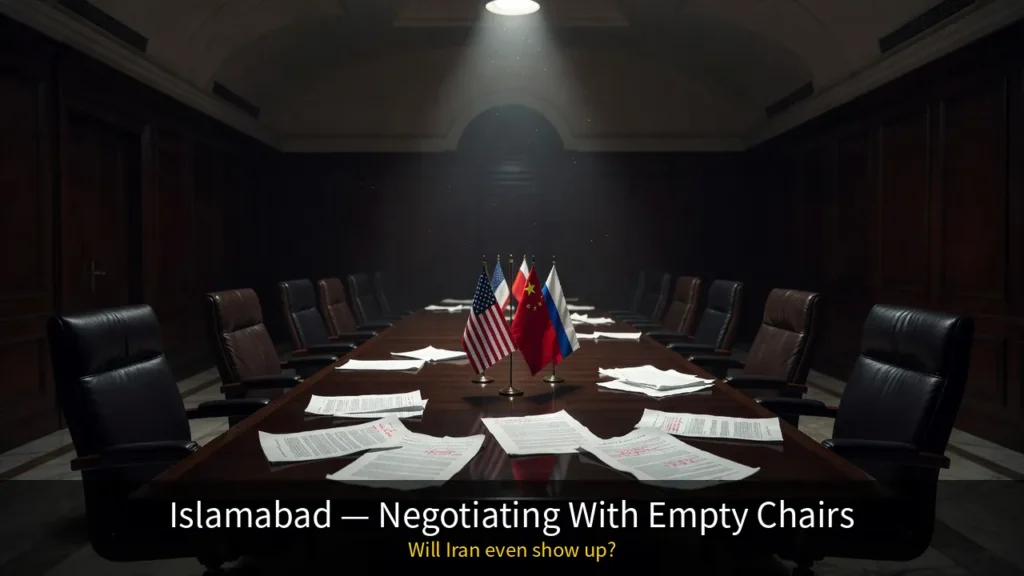
Islamabad Talks Outlook — What Happens April 10
Pakistan has organized talks in Islamabad for Friday, April 10. The US team: VP Vance, Special Envoy Witkoff, and Jared Kushner.
But Iran’s parliament speaker already declared the talks “unreasonable” because “three conditions have already been violated.” The Wall Street Journal reports that Iran’s negotiating team told mediators it would not attend unless Lebanon is included.
Scenario A — Lebanon issue patched, talks proceed (30%):
US informally pressures Israel to pause Lebanon strikes → Iran attends → Hormuz partially reopens → Basic framework within 2 weeks → Extended negotiations. Market: oil $80s, stocks rally.
Scenario B — Talks open but deadlock immediately (45%):
Iran attends formally → Instant deadlock on enrichment, Lebanon, troop withdrawal → 2-week ceasefire holds but no substantive agreement → War resumption possible after expiry. Market: oil returns to $90–100.
Scenario C — Iran refuses or walks out early (25%):
Israel continues Lebanon strikes → Iran cites “3 violations,” refuses to attend or walks out → Full Hormuz re-closure → Trump reissues ultimatum → War escalates. Market: oil $120+ again.
Outlook — What This Ceasefire Actually Means
This ceasefire is not “the beginning of peace.” It is a pause in the war. The two sides’ demands are too far apart, and the agreement document itself is not agreed upon.
But it is not meaningless. After 40 days of war, both sides have agreed to the form of dialogue — even if neither agrees on the substance. Iran claims it “dragged America to the table.” America claims it “broke Iran.” Either way, the guns are quiet for now.
Three variables will determine what happens next. First, does Israel stop in Lebanon? This directly controls Hormuz reopening. Second, can Trump compromise on Iran’s nuclear program? This determines whether a deal is possible at all. Third, does a minimum framework emerge within two weeks? If not, war resumes in May — and the 2026 midterms turn into a referendum on a war without end.
The war’s military statistics are staggering: 13,000+ targets struck, 80% of Iran’s air defenses destroyed, 450+ ballistic missile storage facilities hit. America dominated militarily. But politically, Iran still holds the Hormuz card. “Victory” is not measured in targets destroyed — it is measured in whose terms Hormuz reopens.
For the economic impact of the Hormuz crisis and China’s oil leverage, see Who Really Wins the Iran War? China’s Oil Monopoly. For the maritime insurance analysis, see The Insurance Blockade: How London Lost the Strait of Hormuz.
For stagflation risk and KOSPI impact from a Korean investor perspective, visit Atomic Economy Blog — Stagflation Survival Strategy.
Frequently Asked Questions
Formally, a two-week ceasefire was announced on April 8. But within hours, Israel launched its largest-ever Lebanon strikes, and Iran closed Hormuz again in response. Both sides hold different versions of the agreement. The ceasefire is “agreed but not agreed” — a pause in name, not yet in practice.
Non-aggression guarantee, Iranian Hormuz control, enrichment rights, all-front ceasefire including Lebanon, full primary/secondary sanctions removal, end of UN Security Council resolutions, end of IAEA resolutions, war reparations, US troop withdrawal, and a binding UN resolution guaranteeing the deal. Of these, the US can realistically accept only 2–3.
Pakistan’s mediation explicitly included Lebanon. The US and Israel say it’s excluded. For Iran, Hezbollah is strategic depth — striking Hezbollah while ceasefire-ing with Iran is seen as bad faith. Iran signaled it won’t attend Friday’s Islamabad talks unless Lebanon is included.
Effectively, no. Only 2 bulk carriers (not oil tankers) passed since the ceasefire. Pre-war daily traffic was 100–120 ships. Shipping executives say they have no information on transit procedures and will not pass without absolute crew safety guarantees.
The US plans to send VP Vance, Witkoff, and Kushner. But Iran’s parliament speaker called the talks “unreasonable,” citing 3 US violations. The WSJ reports Iran told mediators it won’t attend unless Lebanon is included. The talks themselves are uncertain.