Summer is ending. Stacking up a month of August material and sorting it by theater, I stopped at a certain point. The Middle East, Ukraine and the trade disputes have nothing to do with one another — and yet the same sentence structure kept repeating across all three briefings. It was not a story about who destroyed more. It was a story about who is blocking what.
What I want to discuss today is not the individual fronts but the grammar beneath them. As I read it, the fights now underway have shifted from breaking the opponent to holding the passage the opponent must go through. And where Korea stands within that grammar is this piece’s closing question.
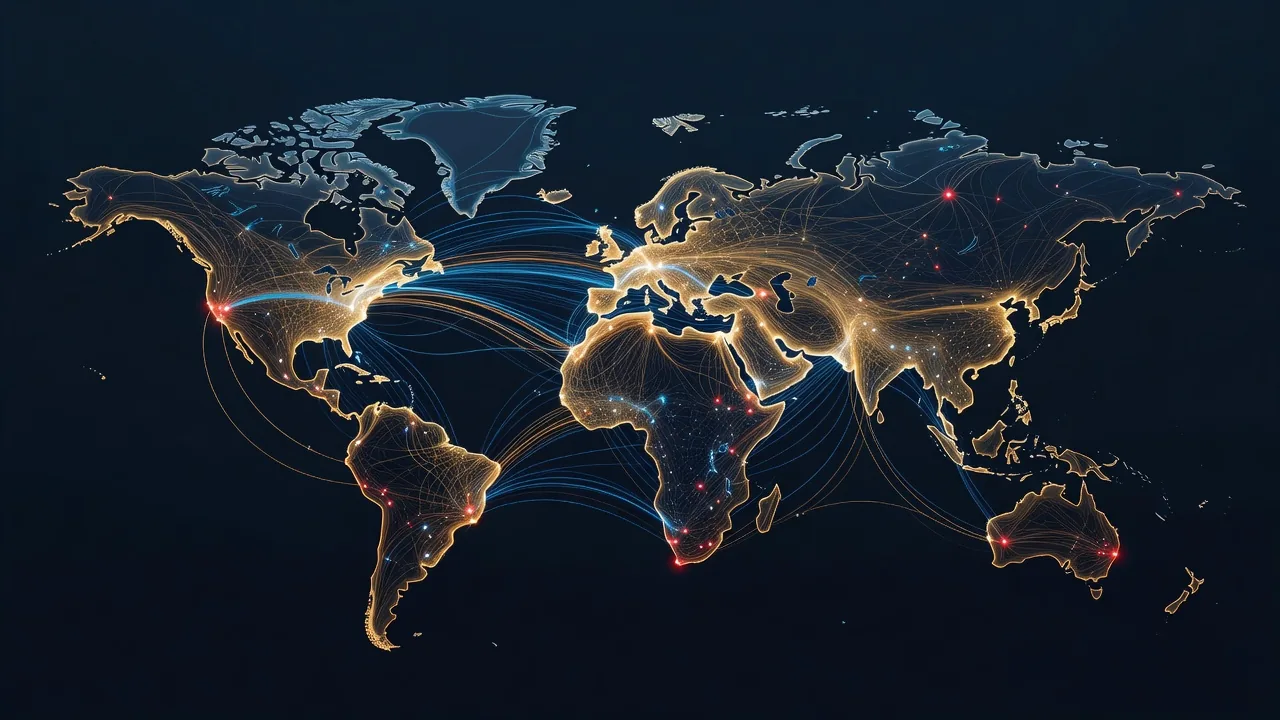
Three Fronts, One Grammar
The Middle East. The war is in its sixth month. Both sides let the negotiating window in the June memorandum lapse, and the formal ceasefire framework is gone. Yet the decisive point in this war is not which city was taken. It is the Strait of Hormuz. That channel, through which about a fifth of the world’s crude passes, remains closed, and vessels transit only in coordination with Iran. The United States bombed for nearly half a year and could not open that passage. So it changed instruments. The Treasury secretary has promised “the single greatest financial offensive ever,” aimed at banking, energy, aviation and cryptocurrency. What bombs could not do, money is now meant to do. Iran replied by threatening to seize vessels that violate transit rules. Brent sits in the mid-90s.
Ukraine. Here too the decisive factor is not territory. Russian forces are pressing forward incrementally in southern Donetsk, but the far more important line is that Ukraine’s air-defense interceptor stocks have reached a critical point. Kyiv went three days with sirens almost never stopping. Russia pushes cheap loitering drones in volume precisely to burn expensive interceptors. The objective is not urban destruction but depletion of inventory. Ukraine, conversely, strikes Russian logistics and e-commerce infrastructure. Each is squeezing the other’s supply and distribution passage.
Trade. Here it is explicit. An additional 50 percent tariff has been placed on Canadian goods, and Canada is answering with counter-tariffs on C$27.6 billion of US imports. A scheme that varies tariff rates according to whether a country has adopted forced-labour import prohibitions has also appeared. This is a design that squeezes the passage called market access in order to change another country’s domestic rules. Over the past year and a half, only two countries have chosen retaliation over negotiation: China and Canada.
The weapons differ across the three fronts — missiles, drones, tariffs. But the aim point is the same. Not the heart. The throat.
East Asia is no exception, though here it remains at the stage of displaying a chokehold rather than applying one. The possibility of a Taiwan blockade using the China Coast Guard is discussed steadily, and that too is a concept of controlling the approaches to the island rather than landing or occupying it. Repeated joint China-Russia flights near the Korean Peninsula and Japan are likewise closer to staking a claim over passages than to combat. Interestingly, military pressure in the Taiwan Strait was actually lower in the first half of this year — attributed to the several occasions on which US and Chinese leaders were scheduled to meet. I will return to that point.
Breaking something requires overwhelming force. Squeezing requires only one passage. So the weaker party reaches for the chokehold first — and the stronger party eventually follows.
Why the Shift — Four Readings of My Own
From here on this is my judgment rather than the record. Four things converged, in my view.
First, the paradox of precision weapons. The United States built a way of war that achieves maximum effect with minimum strikes. But precision is expensive, and expense means finite inventory. Reporting this summer indicated American interceptor stocks had been drawn down sharply, a problem I treated separately in an earlier piece. In short, the age of firepower has been tripped up by the age of inventory. If a cheap drone can draw out a multimillion-dollar interceptor, there is little reason to fight head-on.
Second, the interdependence globalization left behind became a weapon as it stood. For thirty years we stretched supply chains for efficiency. Crude passes through one strait; semiconductor materials come from a handful of countries; payments run through a few systems. In peacetime this structure is cheap, but in a crisis it means a map already exists showing where to press to cause pain. Interdependence was expected to prevent war. In practice it became a set of targeting coordinates.
Third, the upper door is shut. Nuclear-armed great powers cannot fight a total war. Nor will they abandon their demands. What remains is the floor beneath total war: strait closures, inventory depletion, sanctions, tariffs, infrastructure strikes. All are means of hurting an opponent without killing him.
Fourth — and this I consider most important — it is politically cheap. Bombing makes news, leaves photographs, moves public opinion. But tariffs, sanctions, transit delays and inventory depletion do not make news. There is no casualty count and no dramatic footage. So a leader can sustain the pressure without domestic cost. Squeezing is cheap coercion. Because it is cheap, it lasts.
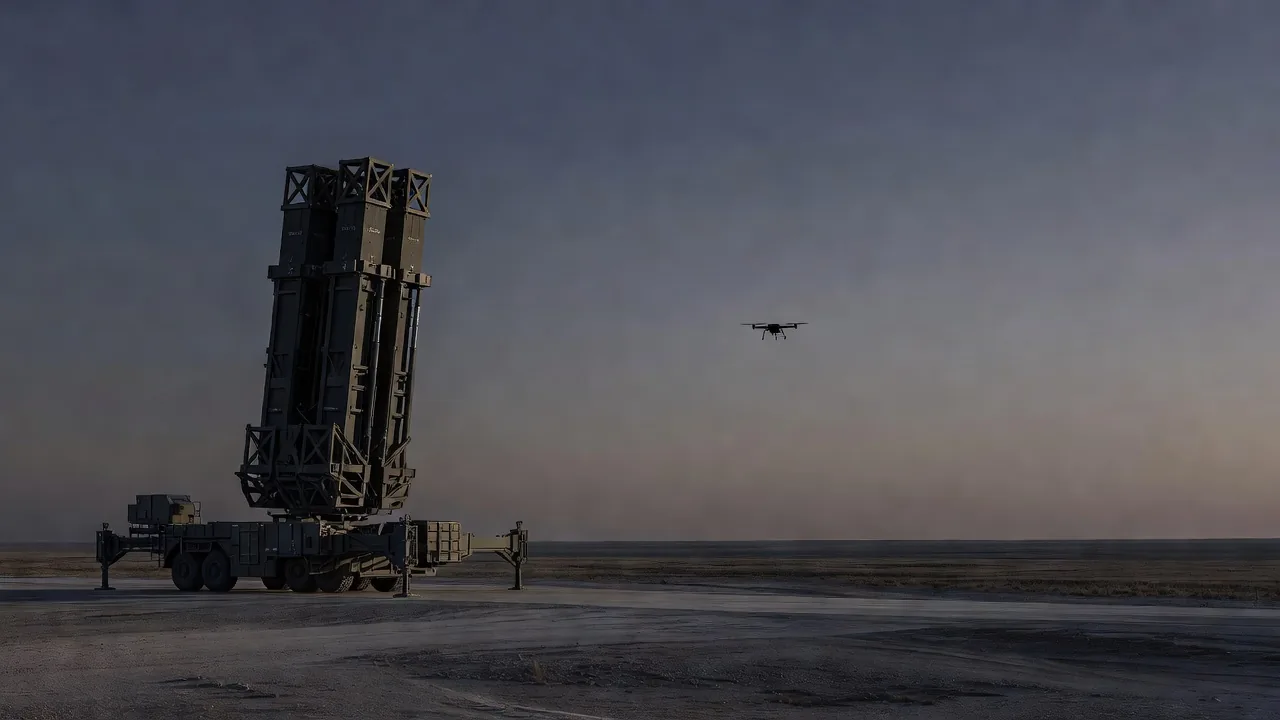
But Squeezing Does Not Win
Balance is needed here. This is not an argument that the chokehold is all-powerful. Quite the opposite. What this summer demonstrated is that squeezing does not produce victory.
Iran holds the strait but its economy is being crushed by blockade and sanctions, and its president has spoken openly of an optimal moment for a deal. The United States struck for six months, failed to open the passage, and drew down its own stocks. Russia is exhausting Ukrainian air defenses while absorbing blows to its logistics and distribution, and the front moves village by village. Whoever imposes tariffs receives counter-tariffs. When both parties hold each other’s throat, nobody wins. What remains is deadlock.
So I read the chokehold as the grammar of attrition rather than a strategy of victory. Not a means of settling matters but a way of enduring an unsettled state while waiting for the other to tire first. The outcome turns not on firepower but on the capacity to endure: inventory, finances, alternative supply lines, and how long a population will accept inconvenience.
There is one more thing to note. Squeezing carries a side effect. Squeeze a passage and the other party moves to replace it. The sanctioned seek another payment network, the blockaded open another route, the tariffed cultivate another market. Gulf states recently beginning to explore security cooperation outside the American framework belongs to the same current. In other words, a chokehold hurts in the short run but pushes the opponent out of your sphere over the long run. Hold a throat too long and one day it stops being a vital point.
This is a cost the squeezing party must calculate, and in practice rarely does — because the effect of pressure appears this quarter while the price of defection appears over the next decade. The clock of politics and the clock of structural change are out of step.
And the Door Opens at the Back
Chokehold deadlock produces one interesting by-product: open diplomacy loses its power.
On 25 August the director of the CIA made an unannounced trip to Moscow — the first such visit since late 2021. He reportedly met the heads of Russian intelligence and conveyed the message that Russia should cut a deal before its position worsens, sounding out a three-way summit. The United States also asked Ukraine to hold off strikes toward Moscow during the visit. The Kremlin denied that talks were scheduled, so this should for now be treated as single-source reporting.
The Middle East is similar. The Hormuz question is being handled not by the United States and Iran sitting across a table but through Oman, a third party, coordinating routes and management arrangements — with talk of establishing a separate corporation to collect transit fees.
I read it this way. In a fight over passages, conceding publicly is extremely hard. Release the throat and your leverage disappears; if that moment is public, it reads at home as capitulation. So real adjustment migrates to the back channel — intelligence services and third-party mediators. Hard language continues at the front door while bargains move through the back. The reason tension in the Taiwan Strait eased in the first half of this year is comparable: a channel of leader-level meetings was open.

The Staff Officer’s Eye — Where Is Korea’s Throat?
Now to us. If this grammar holds, the way a country audits its security must change. The old question was “how strong are we?” The new question is “where does it hurt when we are squeezed?”
By that standard Korea is a country with an unusual number of throats to be squeezed. Oil and gas are effectively entirely imported, much of it through the very strait now closed. Most grain is imported. We build semiconductors, but several passages in materials, components and equipment lie abroad. We live by exports, so market access is survival. And, as this summer revealed, there is the passage of interceptor inventory — at a time when even the United States is redirecting its own stocks to the Middle East.
Conversely, what throat do we hold? Honestly, the list is short: some semiconductors, high-bandwidth memory chief among them. And even that is not permanent, with every country hurrying to substitute. Put plainly: we have few throats to squeeze and many that can be squeezed. In an age of chokeholds, that is a structurally disadvantaged position.
So what should be done? Three things, I think. First, build the list. Know where our bottlenecks are, how many there are, and how many days each can hold — as numbers. The military calculates sustainable days; a country must do the same. Second, secure alternative routes in advance. Alternatives cannot be built after a crisis breaks. Stockpiles and diversification are assets that only exist if you accept a loss in peacetime. Third, protect the value of the throat we do hold. One irreplaceable technology is a stronger defense than any diplomatic phrasing.
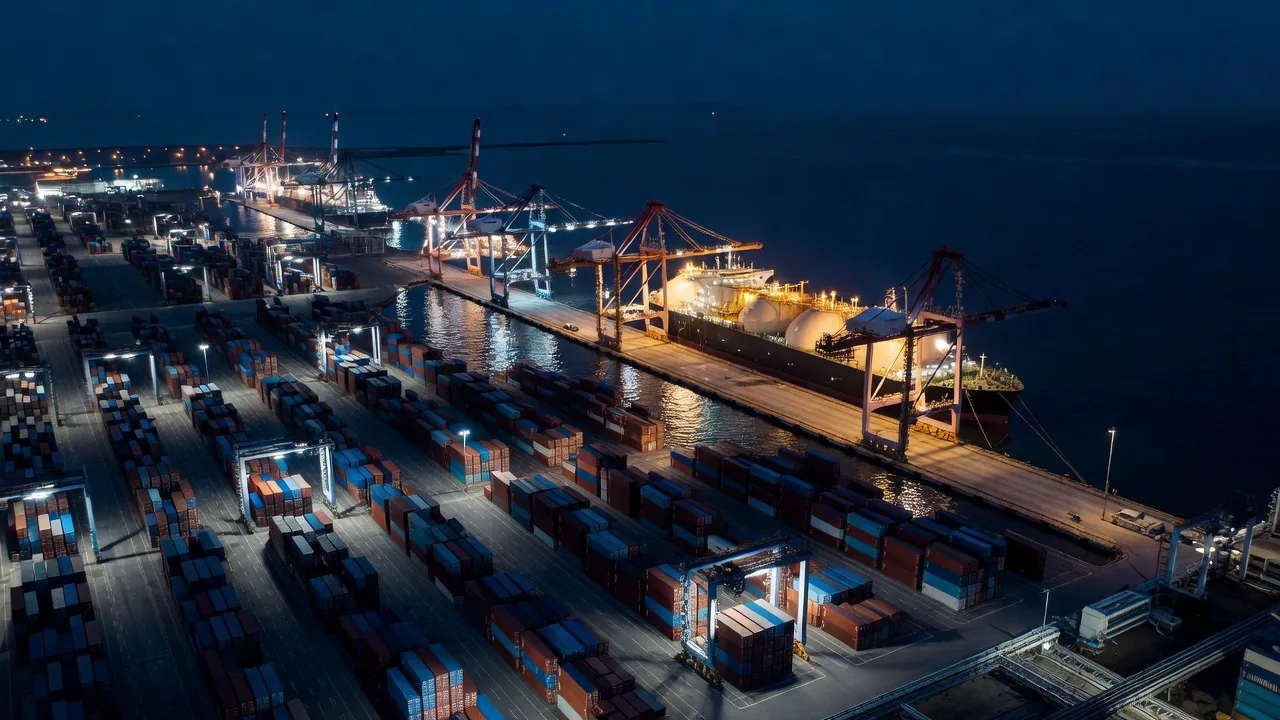
My Conclusion — The War That Is Never Declared
To sum up. The three fronts of summer 2026 look unrelated but were written in the same grammar. Do not break; squeeze. The method is cheap, quiet and durable. And it grants victory to no one. That is why nothing concluded all summer.
What I find most worrying in this grammar is not its destructive power but its invisibility. Bombing is visible, and visibility applies a political brake. Squeezing is not visible. A tanker arriving a few days late, interceptor stocks declining a little at a time, a tariff rate rising a few percent — none of it has a dramatic image. So it does not become news, and because it is not news, society does not respond. In an earlier piece I wrote about information that lies open and goes unread; this is the same problem wearing a different face. Important things usually arrive in a boring form.
So what is needed now, I believe, is not to ask whether war will break out. It is to count where the squeezing has already begun. There will be no declaration. One day a ship simply arrives late, prices rise, and a shelf is empty. To avoid being surprised then, the list has to be written now.
Frequently Asked Questions (FAQ)
Normal transit has not been restored. Vessels must coordinate with Iran to pass, and Iran has warned it will seize ships violating transit rules. Iran and Oman are reported to have reached an understanding on routes and management arrangements, but Tehran says it will not be implemented until Washington fulfills its commitments under the memorandum. Brent crude is trading in the mid-90s.
It was reported by multiple American and Ukrainian outlets, but the Kremlin denied that talks were scheduled. According to the reporting, he traveled on 25 August, met senior Russian intelligence officials, and sounded out a resumption of negotiations and a three-way summit. Since it has not been confirmed by official announcement, it is appropriate to treat it as reporting rather than established fact.
Four factors converge. Precision munitions are expensive and finite, making them vulnerable in long wars; globalization’s long supply chains have already mapped where pressure causes pain; total war between nuclear powers is impossible, leaving only coercion below that threshold; and above all such pressure produces no dramatic imagery, so its political cost is low. Because it is cheap, it persists.
Effectively total dependence on imported energy and its shipping routes, imported grain, foreign dependence in semiconductor materials, components and equipment, market access under an export-dependent structure, and inventories of wartime consumables such as air-defense interceptors. Conversely, the items we hold irreplaceably are limited largely to certain memory semiconductors. Mapping the bottlenecks, securing alternative routes, and maintaining our technological edge form the axes of response.