Someday flowers wilt and grass withers. Nothing is forever. Every time I look at the semiconductor industry, that old line comes to mind. Self-driving once sounded like a distant story. Then Tesla fused mass car production with artificial intelligence, and before we knew it “self-driving car” became a synonym for the company. Now, whatever car you build, people compare it to Tesla—the way Seoul home prices are measured by how far they sit from Gangnam. That is what it means to become a benchmark.
The memory chip world now has such a benchmark too: HBM (high-bandwidth memory). Samsung, SK Hynix and Micron together hold over 95% of the world’s HBM, and AI data centers are scrambling to buy the chips. Yet it is the backstage of this dazzling show that keeps nagging at me. Today I want to apply “nothing is forever” to the chip board and lay out the scenarios ahead in my own way. Up front: this piece proceeds by acknowledging a claim, striking a counterargument against myself, then countering that counterargument. Where the conclusion lands, I’ll say at the end.
HBM Sells the Future, DRAM Sells the Present
First, the setup. HBM essentially sells “expectations of the future”—the prospect of an AI explosion, of endless data-center growth. A premium product riding on that, with enormous margins. DRAM, by contrast, sells “the present”: the ordinary memory in the smartphones, laptops, appliances and servers we use right now. Unglamorous, but it is DRAM that governs the price of the things people actually need.
So what’s happening now? As the three giants funnel production lines toward high-margin HBM, their capacity to make commodity DRAM has shrunk—and DRAM prices have surged. In Q1 2026 DRAM prices jumped 90% quarter-on-quarter, and cumulatively about 700% over four years. Server DRAM saw 60–70% hike notices in a single quarter. Micron exited the consumer memory market entirely, and SK Hynix said its 2026 volume was effectively “sold out.” In other words, while a glittering HBM feast is underway, the price of the electronics we use every day is rising.
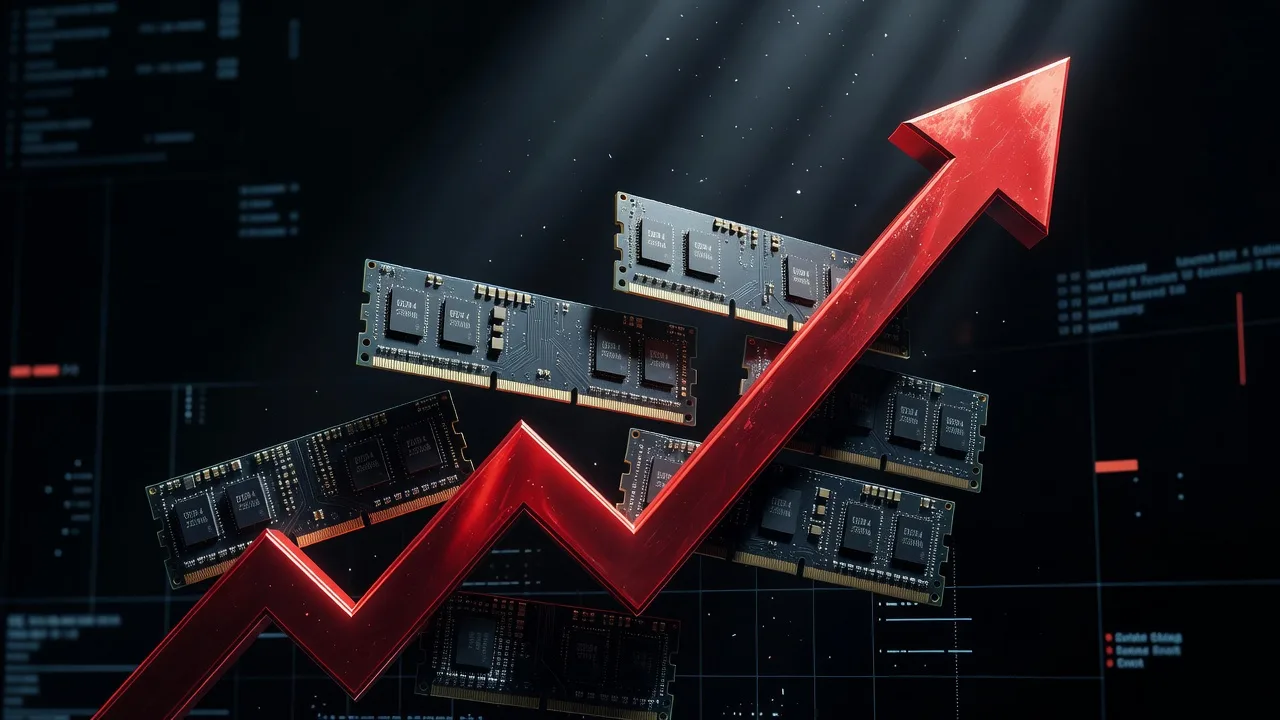
I always see it this way: pay more attention to what affects the price of things people actually need. HBM is a story of AI data centers, but DRAM is the story of the smartphone in my hand and the refrigerator in my home. An industry that neglects the latter eventually pays for it.
China Slips Into the Gap — the Signal Apple Sent
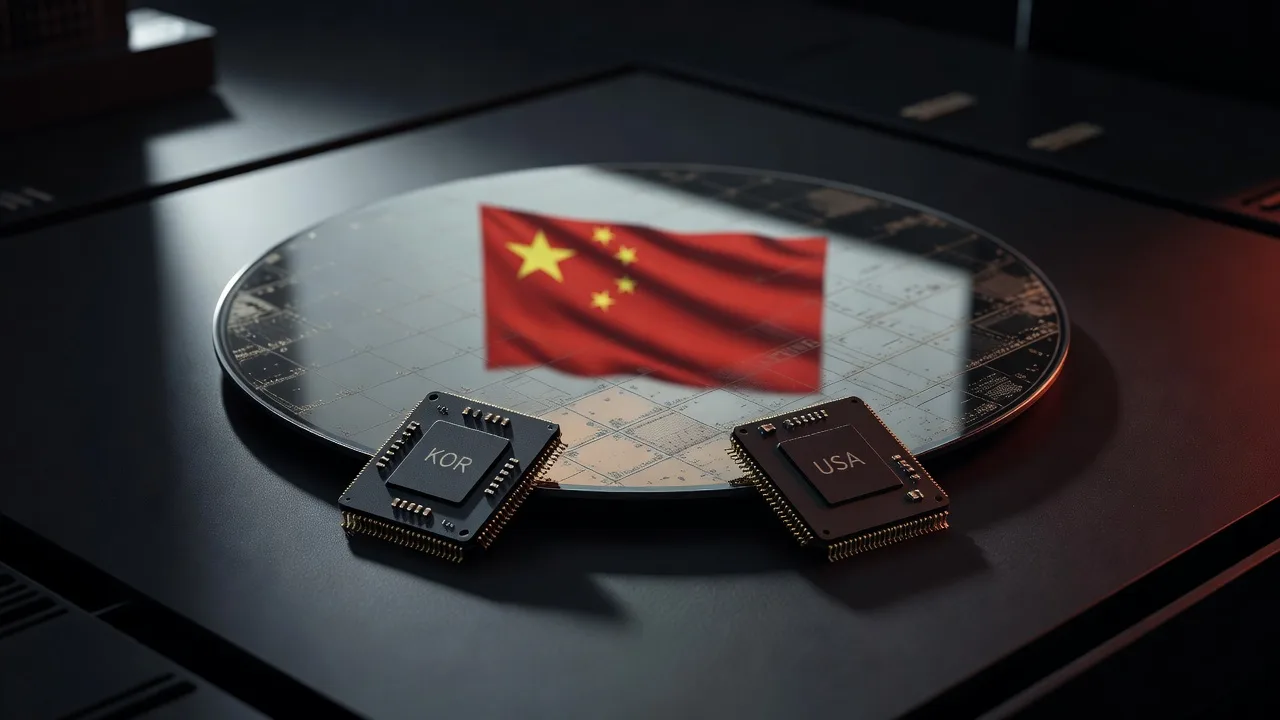
When prices rise, people look for alternatives. And that alternative is now rising from China. There’s one especially symbolic scene: Apple is lobbying the U.S. government. For what? To buy DRAM from the Chinese memory firm CXMT (ChangXin Memory). Even though CXMT is on the Pentagon’s blacklist (1260H), Apple has since May 2026 been pressing the Commerce Department for assurances that dealing with the firm won’t make it a sanctions target. The reason is simple: CXMT’s DRAM is 10–30% cheaper than existing suppliers.
I’ve stared at this scene a long time. That Apple—famously the fussiest about quality—is willing to spar with its own government to use Chinese memory is not a mere purchasing decision. Citi called it “a global endorsement of China’s tech prowess.” That when something is cheap the tide inevitably flows there—Apple’s lobbying is proving exactly that.
CXMT’s growth is no small thing either. Q1 2026 revenue hit $7.3 billion, up roughly 700% year-on-year, and it has begun mass-producing the latest specs like DDR5-8000 and LPDDR5X. It already ships in Lenovo laptops, accounts for about 30% of LPDDR5X in China’s smartphone market, and global OEMs like Dell, HP and ASUS have begun evaluating CXMT chips amid the shortage. It even signed a $2.9 billion server-DRAM supply deal with Tencent. In short, while Korean makers are absorbed in HBM and neglecting the “second-place” commodity DRAM, China is filling that empty seat.
That’s the ‘Acknowledgment’ — Now I Strike a Counterargument
Read this far and the conclusion looks obvious: “China will soon dominate DRAM.” But I was taught to strike my own judgment. So here’s the counterargument—three points.
First, CXMT’s costs aren’t competitive yet. By multiple analyses, CXMT’s cost-per-bit on DDR5 is still more than 30% higher than the leaders. Its margins look good now not because the product is superior but because the global shortage lifted “prices.” So today’s “cheap Chinese DRAM” may be a mirage created by the shortage, not a structural cost edge. Second, yield and quality are uncertain—whether it can mass-produce the latest high-capacity chips at stable yields is still a question mark. Third, U.S. sanctions genuinely bite: with advanced tools blocked, some analyses say CXMT’s capacity expansion has stalled. In short, “China will soon flip the board” may be premature. The headline “Micron has nothing to worry about” didn’t appear for nothing.
But — I Counter That Counterargument
Yet I’ll strike back at that counterargument too. This is the heart of the piece.
That costs are 30% higher is a “now” story. The industry expects CXMT to reach DDR5 yield parity around end-2026, then use aggressive low pricing to eat into the low-to-mid market for PCs, phones and appliances. And we’ve seen this pattern many times—LCD, solar panels, LEDs, EV batteries, mature-node foundry. China gets dismissed at first as expensive and low-quality, then, with state backing and overwhelming volume, drags the cost curve down and, at some point, commoditizes the whole market. Saying “CXMT’s costs are high” today stands in exactly the same spot as “Chinese batteries are no good” did a decade ago.
That sanctions bite is double-edged too. Sanctions seared into China the necessity of building its own, and so China is now nationalizing memory self-sufficiency with all its might. Sanctions, ironically, bred self-reliance. Some analyses say the Korea-China tech gap in general DRAM has narrowed to “less than a year.” And crucially—the incumbents’ HBM focus is rational short-term but strategically leaves the wide door of commodity DRAM open. When they later try to return to that market, what if China already owns the low-to-mid end? That’s the very point—drunk on HBM, neglecting second place, they could fall behind at some moment.
The Paradox of Sanctions — a Door America Opened Itself
Peel back one more layer. The seed of this whole picture was sown by America’s own chip sanctions on China. The U.S. sought to slow China’s tech rise by blocking advanced chips and tools from flowing in. The intent was clear. But the result is ironic. Unable to buy, China caught fire with the urgency that it “must make its own,” and the state poured funds and talent into memory with all its might. Lock the door from outside, and it built the factory from within.
Sanctions do hobble China—without advanced tools the leading edge remains hard, and capacity expansion isn’t smooth. But memory, especially commodity DRAM, is not solely a leading-edge game. There is clearly a domain to compete on with volume and cost at mature nodes, and it is precisely there that China is producing the combo of “cheap volume + usable quality.” If the door America locked was the cutting edge, the door China opened is the commodity side that “people use every day.” Where the sanctions aimed and where China broke through are misaligned. I call this the paradox of sanctions—what you tried to block handed you, in the place you couldn’t block, a pretext to upend the board.
Scenarios Ahead — Three Forks
So where does this game flow? I sort it into three scenarios.
- Scenario A — A dual division of labor sets in: the Big 3 take HBM and high-value DRAM, China takes commodity and low-to-mid. Phone and appliance prices stabilize thanks to cheap Chinese DRAM, but the Korean makers’ “commodity defense line” slowly crumbles. (Most likely)
- Scenario B — Geopolitics splits the board: if the U.S. tightens CXMT sanctions further, Apple’s CXMT purchase collapses and Chinese DRAM is confined “inside China.” Even so, on domestic demand alone (phones, servers) CXMT grows to top-three capacity. The world splits into “for-China” and “non-China” memory.
- Scenario C — The commoditization counterstrike: CXMT reaches yield parity and captures low-to-mid with low pricing. The moment the HBM boom cracks, the Big 3 find the commodity market they’d return to already in China’s hands. (The worst case, warned above.)
What I weigh most heavily is somewhere between A and C. The key is that the HBM boom isn’t forever. The moment AI investment pauses for breath, the HBM premium propping up the Big 3’s earnings deflates—and the commodity DRAM market they then turn to may already have China’s flag planted in it. The moment a flower wilts always comes without warning.
Carrot and Stick — What the Incumbents Must Do
So what should incumbents like Samsung, SK Hynix and Micron do? I think they must use carrot and stick together. The stick is a technology super-gap: reinvest HBM profits into commodity DRAM cost innovation and next-gen processes, running faster than China can catch up. The carrot is locking in customers: holding large customers prone to defection—like Apple—with long-term contracts, custom supply and stability guarantees. Above all, the starting point is not looking down on commodity DRAM as “second place.” The benchmark’s seat is dazzling, but get drunk on it and miss the ground beneath, and—like the many firms that chased Tesla—you become the pursued, not the pursuer.
One thing to add—this is observation, not investment advice. Memory is a brutally cyclical industry. Be wary of prices that reflect today’s super-boom as if it were eternal, and equally wary of the optimism that dismisses China’s pursuit as merely “someday.” “Nothing is forever” applies just as much to the Big 3’s dominance as to China’s rise.
My Conclusion — the Alarm Has Already Rung
To sum up. The diagnosis that launched this piece—that while absorbed in HBM, China opens the door of commodity DRAM—is firmly backed by the facts. The counterarguments (cost, yield, sanctions) are valid, but they are mostly about “now,” while the counter-counterarguments (the timing of yield parity, the historical commoditization pattern, the paradox of sanctions, the strategic opening) are about “what’s ahead.” An industry’s direction is always decided by the future, not the present.
So my conclusion leans toward warning. The scene of Apple fighting not China’s government but its own to buy Chinese DRAM—I read it as an alarm that has already rung. Flowers wilt and grass withers. What the Big 3, enjoying the semiconductor spring, must remember is precisely that truth of impermanence. The moment you get drunk on a dazzling future product and neglect the present things people use every day, the board turns—quietly, but surely.
Frequently Asked Questions (FAQ)
HBM is high-bandwidth, high-margin memory for AI data centers—a premium product selling “expectations of the future.” DRAM is the commodity memory in smartphones, PCs, appliances and servers, governing the price of “present” electronics. As the Big 3 (Samsung, SK Hynix, Micron) funneled capacity into high-margin HBM, commodity DRAM supply fell and prices surged.
Amid a shortage that lifted DRAM prices ~700% over four years, CXMT’s DRAM is 10–30% cheaper than existing suppliers. Because CXMT is on the Pentagon’s blacklist, Apple has been lobbying the U.S. Commerce Department since May 2026 for approval. That the quality-obsessed Apple is making this move is itself read as a demand-side signal of the trend.
Too early to call. CXMT’s cost-per-bit is still 30%+ above the leaders, yield and quality are uncertain, and U.S. sanctions constrain capacity expansion. But the industry expects that once it reaches yield parity around end-2026, it will eat into the low-to-mid market with low pricing. Given precedents like LCD and batteries where China upended markets via commoditization, the mid-to-long-term threat is real.
Pair a technology super-gap (stick) with customer lock-in (carrot): reinvest HBM profits into commodity DRAM cost innovation to stay ahead of the chase, and hold large customers with long-term contracts. Above all, the starting point is not belittling commodity DRAM as “second place”—because they must guard the market they’ll return to when the HBM boom cracks.