Watching the U.S. these days, one scene keeps overlapping in my mind. In rare earths, in Iran, in the Strait of Hormuz, America—clearly holding the world’s strongest military and economy—keeps looking like it’s playing in someone else’s palm. The owner of that palm is Beijing. I don’t see this as mere diplomatic blunder or bad luck. The disease lies deeper. America has forgotten the basics of fighting.
So today I want to make a somewhat provocative proposal. America must re-read Sun Tzu’s Art of War from the very beginning. And at the same time, it must go beyond Sun Tzu. It sounds like a contradiction, but read to the end and you’ll see what I mean. This is not academic analysis but the frustration and counsel of someone who has handled operations and intelligence in the military, watching today’s America.
Know the Enemy and Yourself — But America Got “Knowing the Enemy” Wrong First
There’s a line from Sun Tzu quoted more than any other: “Know the enemy and know yourself, and in a hundred battles you will never be in peril (知彼知己 百戰不殆).” It’s so famous it has worn down into a cliché, but I think this sentence is the most painful diagnosis for today’s America. Because America already went wrong at “knowing the enemy (知彼).”
What does it mean to know the enemy? It is not counting how many weapons the enemy holds. It is entering their minds to understand what they fear, what they seek, and by what logic they see the world. Yet recall how America has viewed China over the past decades. At one point it believed “trade will democratize them”; at another it sneered “they’ll collapse soon.” It saw the China it wanted to see, not China as it is. The very attempt to know the enemy was contaminated by its own hopes and political tastes. So its judgment was imperiled before a single one of a hundred battles.
The Disease of the Intelligence Agencies — Intelligence for Politics
Here I want to go a step further. To truly know the enemy, intelligence must be accurate. The lifeblood of intelligence is truth. Yet in my view, the U.S. intelligence community—including its symbol, the CIA—at some point began to look less like an institution digging for truth and more like one manufacturing answers to power’s taste. This is my judgment and critique, but not a groundless suspicion. Because a history exists, as with Iraq’s weapons of mass destruction, of fixing a political conclusion first and then fitting intelligence to it.
The moment intelligence becomes the handmaiden of politics, knowing the enemy becomes impossible. An organization that sends up what the top wants to hear doesn’t know the enemy; it paints the enemy however it pleases. I don’t think what America’s intelligence agencies need now is a flashy operation. Stopping the bad intelligence-mongering done for politics, and sending up the facts as they are—however uncomfortable—setting America right from the inside: that comes first. Before knowing the enemy, you must wipe your own eyes clear.
Something I learned to the bone making intelligence judgments in the military: the report a commander wants to hear is sweet, but that sweetness kills the unit. The most loyal intelligence officer is the one who sends up the most uncomfortable truth first. What America needs now is exactly that discomfort.
The Limits of Sun Tzu — A Continental Art Can’t Govern Maritime Hegemony
But here’s the twist. I said America should return to Sun Tzu, yet I also think Sun Tzu alone is not enough. Why? The Art of War is essentially a treatise analyzing fights within the same continent, between similar civilizations and similar armies. The Spring and Autumn and Warring States period, feudal states contesting land and people on the confined stage of the Central Plains—wisdom born of that experience. It is the art of a world where enemy and self shared a language, where terrain was continuous, and where the calculus of victory was shared.
But the stage America faces is different. America’s hegemony is spread not over a continent but over the seas, and on a planetary scale at that. It must contend with adversaries of utterly different civilization, language and values, tens of thousands of kilometers away, on a multidimensional battlefield where economy, technology, information and public opinion are all entangled. The enemy Sun Tzu imagined was a feudal lord across the river; the enemy America faces is a supply chain woven into its own market, an information war shaking its own public opinion, a technological rival inside its own universities. A continental art cannot fully explain this layered battlefield.
The Trinity of Geopolitics, Public Sentiment, and Intelligence
So what should an analysis beyond Sun Tzu be? I believe three things must be bound into one. The first is geopolitics. This is an age where a single strait, a single mineral, a single sea lane becomes hegemony’s vital point. Close Hormuz and oil prices shake; cut rare earths and weapons halt. You must spread the map and coldly read where our arteries are and where the enemy’s grip is.
The second is public sentiment. Sun Tzu too named “the Way (道)”—people and ruler being of one mind—as war’s first condition. However strong an army, it collapses if its interior splits. America’s greatest vulnerability now may be not the external enemy but the public sentiment fractured within. The third is intelligence: as said above, honest intelligence uncontaminated by politics. Only when these three—geopolitics, public sentiment, intelligence—are bound into one comprehensive judgment rather than running separately, does a strategy beyond Sun Tzu emerge.
Lessons of History — Hegemony Doesn’t Collapse from Outside First
Let’s open history a moment. Empires that lost hegemony share something. They mostly rotted within before being conquered by an external enemy. Rome is said to have fallen to Germanic swords, but those swords could enter only because Rome’s interior was already hollowed out by corruption, fiscal ruin and the collapse of civic spirit. Had the shell been solid, the sword would have bounced off.
The British Empire is the same. There’s the concept of “imperial overstretch” that historian Paul Kennedy noted in The Rise and Fall of the Great Powers: when an empire takes on military and diplomatic burdens beyond what its economy can bear, it sinks under that weight on its own. The Soviet collapse, too, was less a result of America winning militarily than of its internal economy and system collapsing on their own. The external enemy merely landed the last blow; the true cause of death was always inside.
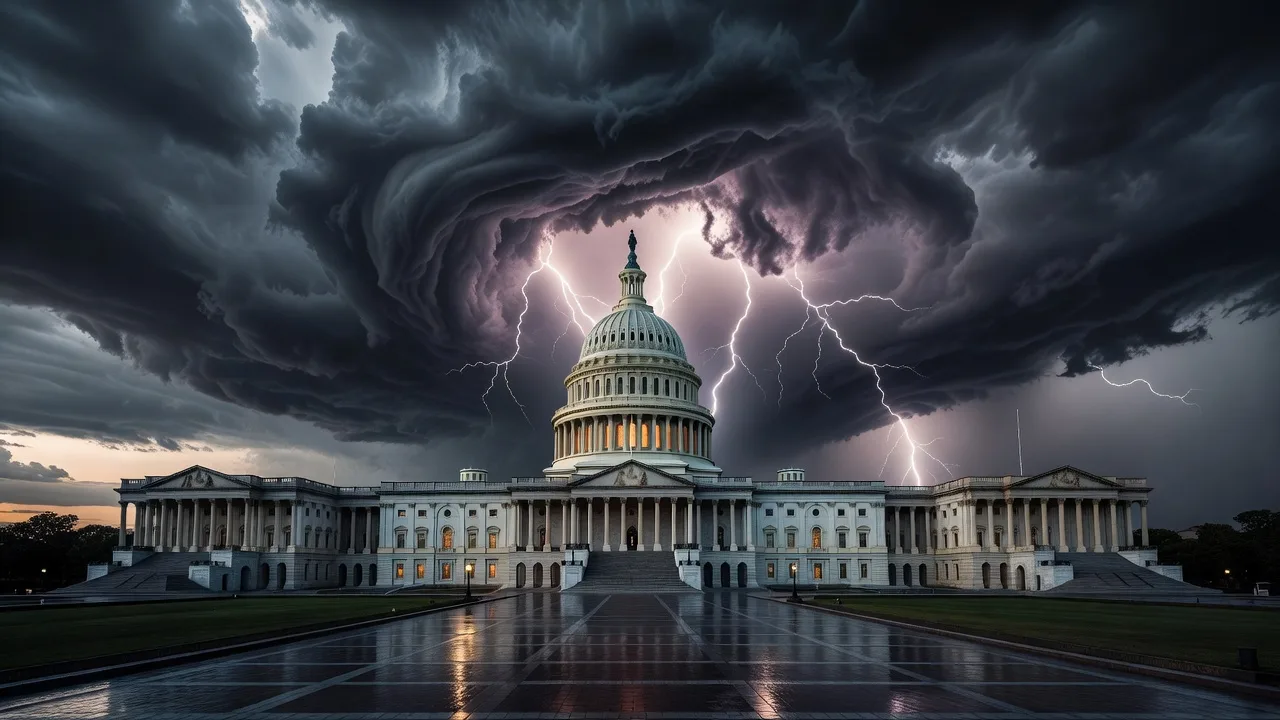
Hold today’s America up to this mirror. Exhausting its strength on endless overseas interventions, its manufacturing base hollowed, its society split in two. To me this looks like a textbook case of overstretch. If so, what America should fear is not China’s missiles but the hollow within itself. Before the wall that blocks the enemy, look first at the crumbling pillar.
The Real Battlefield Is Within — Internal Revival
And here I reach the conclusion I most want to stress. The path for America to escape China’s grip lies, paradoxically, not in an external attack on China. It lies in America’s internal revival. The surest way to defeat an enemy is to become so solid the enemy cannot shake you. Sun Tzu’s “first win, then seek battle (先勝而後求戰)” means exactly this. Not winning on the battlefield, but creating a state in which you have already won before fighting.
Concretely, it is rebuilding the severed manufacturing base, reclaiming the supply chains handed to others, and re-stitching the split society. Mining and refining rare earths with one’s own hands, making semiconductors on one’s own soil, binding allies with trust rather than money—all of this comes before striking the enemy outside. If the pillars inside the house are rotten, swinging a sword outside only makes you topple on your own. If America is having its hegemony stolen, the thief is, before Beijing, America’s own complacency and division.
The Invisible Battlefield — Cognitive Warfare and Public Opinion
The most fearsome battlefield of modern hegemonic competition is not territory but people’s minds. So-called cognitive warfare. Sun Tzu already defined the supreme victory 2,500 years ago: “to subdue the enemy without fighting is best (不戰而屈人之兵).” Today this sentence is realized not through missiles but through public opinion, narrative and platforms. Growing the divisions of a rival society, gnawing at trust, making it collapse on its own—that is the cheapest and most effective conquest.
America’s split into two cannot be blamed entirely on outside forces. The seeds of division were within. But it is also clear reality that hostile information warfare plays a part in driving a wedge into that crack and prying it open. The problem is that this invisible battlefield cannot be blocked by aircraft carriers or nuclear weapons. The only shield that protects America here is not military force but a healthy civil society and a trusted information ecosystem. If the inside is solid, no narrative attack lands. In the end, it returns again to the internal problem.
To Escape China’s Grip
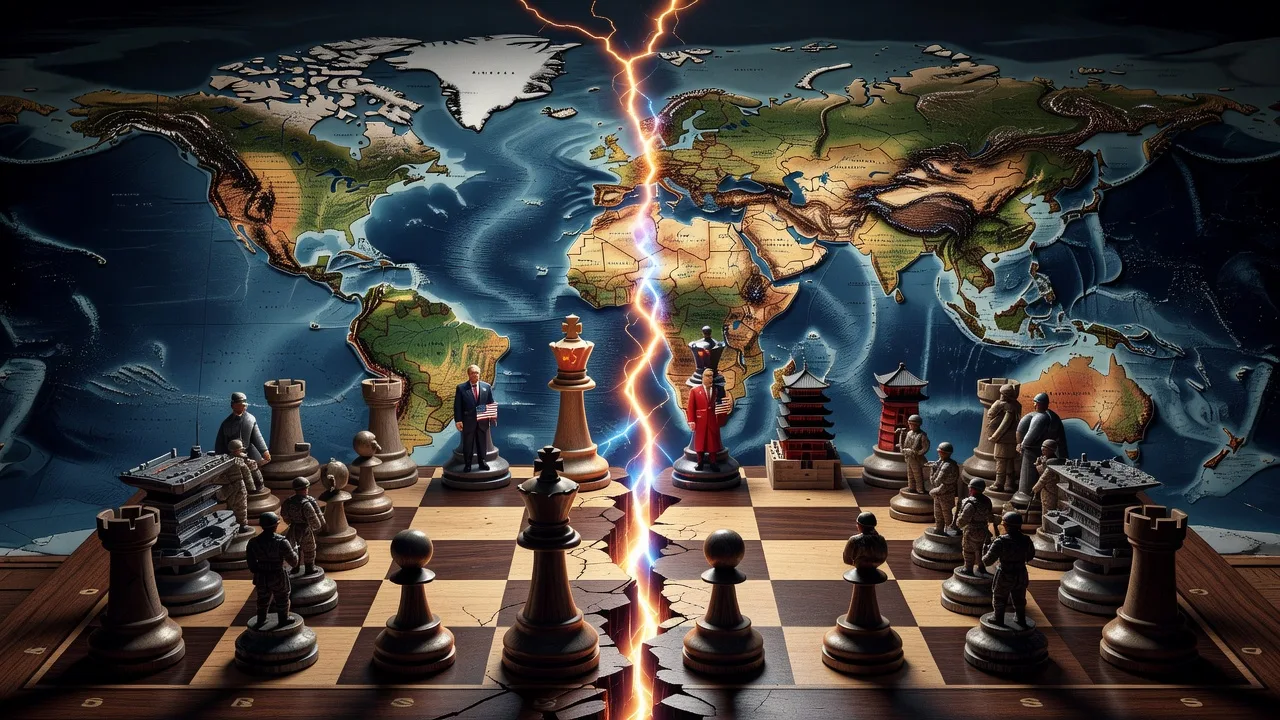
So what to do right now? I sum it up in three strands. First, don’t take the bait. China wants to pin America in attritional fights like the Middle East and drain its strength from the real stage, the Indo-Pacific. The eye to distinguish what is essence from what is bait—that is the first step in Sun Tzu’s “knowing the enemy.” Second, reclaim the vital points into one’s own hands. With arteries whose severance is fatal—rare earths, semiconductors, critical minerals—left in others’ hands, any strategy is a castle on sand.
Third, honest self-knowledge. America long overrated itself and underrated its rival. The reverse is dangerous too. Seeing oneself as one is and the enemy as it is—everything returns here in the end. Knowing enemy and self is not a fine maxim but a painful daily discipline of removing the beam from one’s own eye. Whether America can begin that discipline again—on that, I believe, hangs the direction of hegemony.
My Conclusion — Re-read Sun Tzu, but Go Beyond Him
To sum up. America must re-read the Art of War from the beginning. Returning to the most basic—”know the enemy and know yourself”—it must wipe its politically contaminated eyes and see enemy and self by fact, not hope. But it must not stop there. Sun Tzu’s art was the wisdom of one continent; America’s hegemony is a game of the whole planet. A comprehensive strategy that binds geopolitics, public sentiment and intelligence into one, a step beyond Sun Tzu—and above all, an internal revival that rises again from within. Only when these two meet does America seize a chance to reclaim its stolen hegemony.
For me, living in Korea, this is not kibitzing about someone else’s country. If America wavers, we who stand in its shadow waver too. This does not mean a strong America is always right. But a world where hegemony becomes a vacuum, or passes to a more authoritarian hand, is by no means favorable to us. So I hope America opens Sun Tzu again—and, after closing the book, fixes its own house first. Knowing the enemy begins there.
Frequently Asked Questions (FAQ)
It doesn’t mean knowing the enemy is itself wrong, but that the problem is failing to know the enemy ‘properly.’ America long saw the China it wanted to see, not China as it is. The core of this piece is that once intelligence is contaminated by political hope, knowing the enemy itself becomes impossible.
The Art of War analyzes warfare within the same continent and civilization during the Warring States period. America’s hegemony, by contrast, is a multidimensional battlefield of economy, technology, information and opinion on a planetary scale. Sun Tzu’s wisdom still holds, but a single continent’s art has limits in fully explaining maritime-based global hegemony.
Internal revival, not external attack. Rebuilding the severed manufacturing base, restoring critical supply chains like rare earths and semiconductors, and reuniting a split society come first. Becoming so solid within that the enemy cannot shake you—Sun Tzu’s “first win, then fight”—is the core.
It does not argue that a strong America is always right. It starts from the realistic recognition that a hegemonic vacuum, or a shift to more authoritarian power, does not favor a country like Korea. Please read it as one person’s strategic view urging America’s self-reflection and internal restoration.