Last month, everyone said the war was over. When the US and Iran signed the so-called Islamabad Memorandum on June 17, 2026, oil slid below $70 a barrel and markets exhaled. I didn’t believe it. I’ve said it all along — the war between the US, Israel, and Iran does not end until one side is brought to its knees. A ceasefire, when it comes, is not peace but a brief management phase. And within a month, that memorandum became a scrap of paper. But this time something went a step further than I’d predicted, and it forced me to sharpen my own argument.
What Happened — A Ceasefire That Broke in a Month
First, the facts. On June 17–18, mediated by Pakistan and Qatar, the US and Iran signed a 14-point memorandum of understanding. It set a 60-day window to settle the core disputes — uranium enrichment levels and the disposition of the highly enriched uranium stockpile, reopening the Strait of Hormuz, sanctions relief, the release of up to $25 billion in frozen assets, and even a $300 billion reconstruction plan. Markets cheered; Brent fell below $70 on July 1, back to where it sat just before the war began in late February.
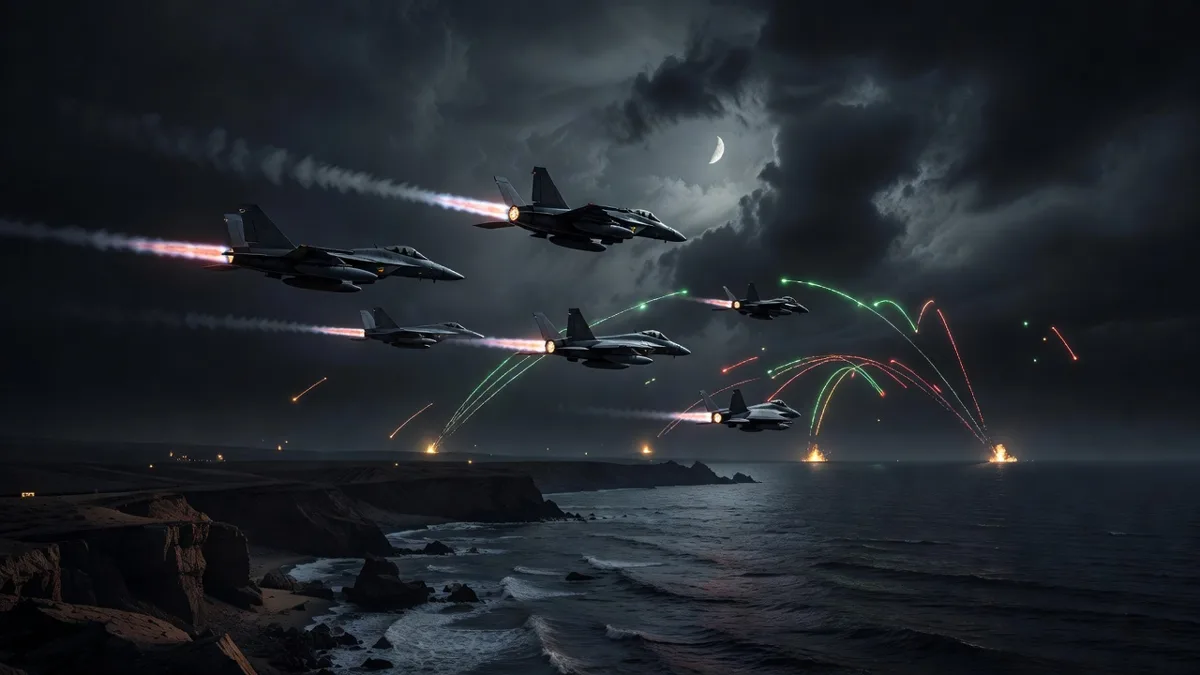
That was as far as it went. On July 7, tankers were attacked in the Strait of Hormuz; by July 9 the ceasefire had effectively collapsed. On the 12th the US launched fresh strikes to “degrade” Iran’s military, and on the 13th it hit 85 targets inside Iran in what it called retaliation for the attacks on commercial ships. Explosions rolled through the port of Bandar Abbas and the islands of Kish, Qeshm, and Abu Musa. Iran claimed it had struck two tankers in Hormuz, and said it had used drones against what it described as a US base in Kuwait — targeting communications, fuel tanks, a Patriot air-defense system, and an ammunition depot. President Trump told Tehran the ceasefire was “no longer in effect.” Oil jumped again, touching $87 before settling at $84.73 on July 14.
Then the US raised the stakes. US Central Command (CENTCOM) said that, at the president’s direction, it would once again blockade maritime traffic in and out of Iranian ports — a de facto naval blockade. That announcement alone sent oil up more than 9%. And just before the blockade, China’s foreign ministry demanded that “normal and safe passage” through Hormuz be restored. Given that China is the largest buyer of Iranian crude, those words carry weight. This front is not just between Washington and Tehran.
Exactly As I Said — A Ceasefire Is Not Peace, but a Management Phase
I’d flagged this pattern many times. Every time a ceasefire was announced, I was skeptical, for a simple reason: the very structure of this memorandum foretold its collapse. An agreement that pushes the hardest questions — enrichment, control of Hormuz, sanctions — to “60 days later” isn’t a resolution; it’s a countdown. It sets a timer without defusing the bomb. When two sides fundamentally distrust each other, 60 days isn’t a window to build trust; it’s a window to test each other’s weaknesses.
And the transmission belt I kept describing — repeated flare-ups freeze traffic through Hormuz, war-risk insurance for ships spikes, and eventually no one can move oil with any confidence — played out exactly. Since fighting resumed, traffic through Hormuz has fallen steeply, and war-risk premiums on the major Asia–Europe and Asia–US East Coast lanes have jumped roughly 150% from late February. Industry estimates put the added fuel and insurance cost fleet-wide at $40–50 million a week. I’m not saying this to boast that I was right. It was simply the ending you could see once you looked at the structure.
How America Frames It — Fox News’s Hawkish Story, and the Crack in It
The framing of US conservative media, Fox News in particular, is clear-cut: the blame for this restart lies entirely with Iran. Per Fox’s reporting, President Trump held that Iran broke the ceasefire first by attacking commercial ships and trying to choke off Hormuz, and declared the ceasefire “over.” He wrote on Truth Social that the strikes were “in retribution for yesterday’s bombing of ships by Iran,” warning that “if it happens again, it will get much worse.” Right after CENTCOM resumed the port blockade, he added that “oil is flowing like never before, thanks to the awesome power of the US military.” A narrative of “a strong America and an Iran that must be subdued” fills Fox’s headlines — “US hits Iran with powerful strikes,” “Trump ready to hit Iran very hard.”
But what I notice is the crack in that hawkish story. Fox News’s own viewers — Trump’s core base — are, in part, pushing back, calling this re-engagement a “big mistake” and asking, “another Middle East war?” It’s the tension between an isolationist-leaning base that hates intervention and a president who has to project strength abroad. I think this is the key to understanding this war’s character. Heading into the midterms, the Trump administration can afford neither to look like it’s losing to Iran nor to look like it’s sinking into another quagmire. So it walks a razor’s edge: “hit hard, but no ground war.” Paradoxically, this domestic-political constraint is itself another force binding the war into a “managed” state rather than a total one. Hawkishness enlarges the board; the domestic limits of that hawkishness pull it back into a management phase.
Does That Make Iran the Victim? No.
Pointing out America’s hawkishness doesn’t mean I’ll seat Iran in the victim’s chair. Coldly assessed, the side that crossed the line first this round was Iran. It attacked not an enemy state’s warships but civilian merchant vessels crewed by many nationalities. Hormuz is not one country’s sea but a passage the whole world shares. Holding that narrow neck hostage and threatening to “stop the oil from passing” — while claiming to aim at America — is in fact taking the world’s consumers hostage, including a Korea that produces not a single drop of oil. That even China, its protector, demanded a restoration of “safe passage” is proof of it. It’s a self-inflicted wound that turns even your patron against you.
The nuclear issue is more blatant. Iran says it hasn’t resumed enrichment, but it keeps its 60% highly enriched uranium in the country while expelling IAEA inspectors and refusing verification. Placing a “we can go weapons-grade whenever we choose” card on the negotiating table like a pistol is not defense but coercion — and that coercion is precisely what hands the other side a pretext for a preemptive strike. On top of that, a theocratic regime that makes branding the US and Israel as “the devil” the basis of its very existence, while calling itself a revolution that toppled a monarchy, hands the supreme leader’s seat to the leader’s son. Including the hollowness of that legitimacy, Iran’s leadership too deserves criticism. I cheer for no side. I view America’s recklessness and Iran’s coercion with the same cold eye. I’m only trying to read the board accurately.
But I Have to Correct My Logic in One Place — Changing the Leader Didn’t End It
Here I’ll honestly revise one thing I’ve said. I used to say, “as long as Iran’s leadership doesn’t change, the war and hostility continue.” The logic was that Iran’s national identity itself defines the US and Israel as “the devil,” so reconciliation is impossible while that leadership stands. But reality overtook my framing.
The US and Israel actually did change Iran’s leadership. In the opening strike of the war on February 28, 2026, Supreme Leader Ali Khamenei (86) was killed. In March, the Assembly of Experts installed his son, Mojtaba Khamenei (56), as the third supreme leader. The leader changed — by bombing, no less. And still the war didn’t end. The son inherited the father’s seat, and the line of hostility didn’t budge an inch.
So I rewrite my thesis this way. The problem is not “the leader doesn’t change” but “a regime that doesn’t change even when the leader does.” The engine of this war is not a single person but the very structure of a regime that makes hostility toward the US and Israel its reason for being. Remove the supreme leader, and a son who inherited the same doctrine takes the seat. Cut off the head, and the same body raises a new one. This doesn’t mean my prediction was wrong; rather, the conclusion — the war won’t end — held, and the reason ran deeper and sturdier than I’d thought. This is why a “decapitation” strategy aimed at an individual cannot end this war.
This Is a ‘War Without End,’ Not a Total War — A Managed Forever-War
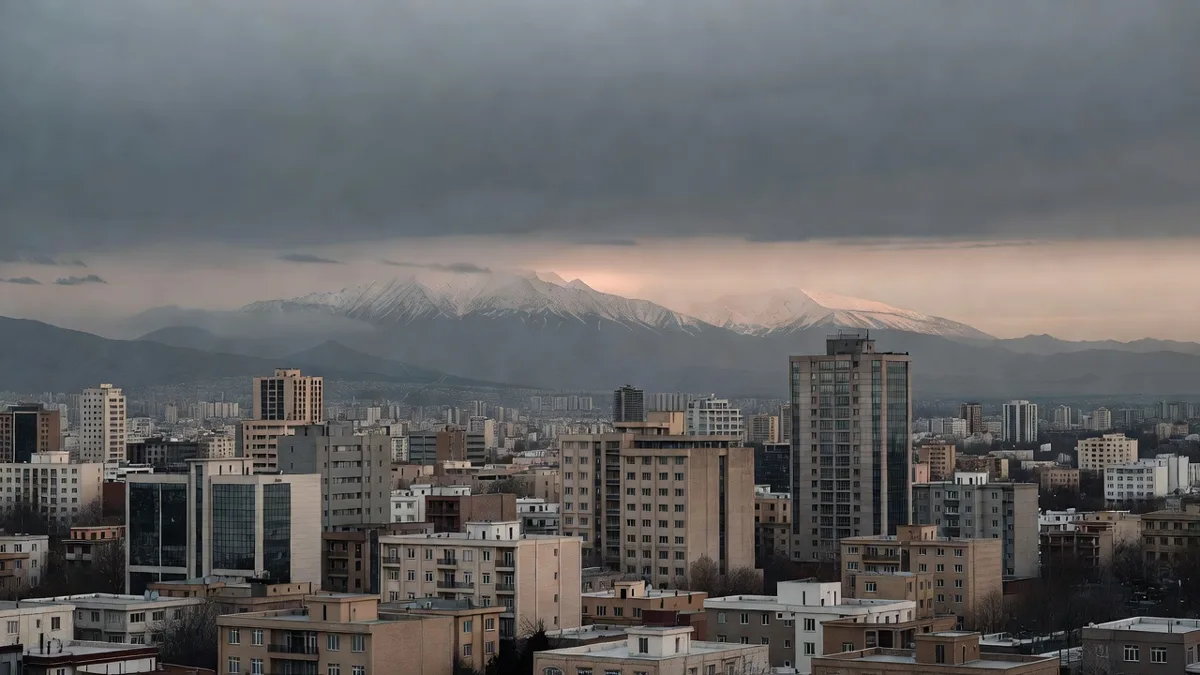
But to be precise, I have to add one more layer. It’s true this war “won’t end,” but that doesn’t mean it’s racing toward a total war in which one side collapses entirely. Look closely and both sides pull back deftly at the brink. Even as Iran flies drones at the US, it has not resumed uranium enrichment. Holding roughly 440 kg of 60% HEU and about 184 kg of 20% acquired before the war, it merely waves the card that “we can go weapons-grade whenever we like” — a calculated threat that neither crosses the line nor draws the pistol. The US, too, keeps saying “technical talks continue” even while hitting 85 targets.
So the real name of this phase is neither “the end of the war” nor “peace.” It is a managed forever-war — no war, no peace. A low simmer that occasionally boils over and then subsides. Paradoxically, this lasts longer and corrodes more slowly than a hot war that flares and burns out. Markets, the media, and eventually we ourselves grow used to it. And that getting used to it — risk becoming a constant, ceasing to be news — is the most frightening part of this war.
The thesis I’ve rewritten is this. This war “won’t end.” But the reason is not that the leader stayed the same; it’s that the regime stays the same even when you change the leader. And that endlessness comes not in the form of total war but as a “managed forever-war” in which risk becomes ordinary.
Hearing the Other Side — ‘This Is Just Negotiating Brinkmanship’
Of course, some read it differently from me. This view says the current restrike is not a resumption of war but “brinkmanship” to get back to the negotiating table. Indeed, the US didn’t drop its willingness to talk even during the strikes, and Pakistan and Qatar are again working to bring both sides to the table. The 60-day window wasn’t shattered, only shaken, and since neither side can afford total war, they’ll converge on some managed agreement. It’s a fair point. That Iran didn’t resume enrichment, and that the US didn’t escalate to a ground war, can both be read as evidence that both sides want to avoid catastrophe.
I take this counterargument seriously. But here’s my answer. “Negotiating brinkmanship” and “a war that won’t end” are really two sides of the same coin. Repeating brinkmanship is itself evidence that this relationship cannot settle into a stable peace. Each time they return to the table, each time the core is deferred, and in the meantime tankers burn and premiums rise. A state that repeats for years — that is exactly what I mean by a “managed forever-war.” The counterargument and my claim don’t diverge in their conclusion; they’re closer to calling the same picture by different names — optimism versus cold realism.
Where the Balance Breaks — Hormuz, Enrichment, Miscalculation
What makes this “managed forever-war” bearable, frightening as it is, is that the balance still holds. The problem is that at least three triggers are cocked to break it. First, a full closure of Hormuz. Right now it’s at the level of “harassing” tankers, but if Iran actually seals the strait, this stops being a local conflict and becomes a global energy crisis. A large share of the world’s seaborne crude passes through this narrow neck. Second, a nuclear breakout. The moment Iran pushes the 60% uranium it has merely been holding toward weapons-grade, the calculus of the US and Israel shifts from “manage” to “eliminate.” Third, miscalculation.
The third one weighs on me most. The new supreme leader, Mojtaba Khamenei, has barely appeared in public since his succession. An unproven new leader — one who inherited the seat after his father was killed by an enemy’s bombs — is easily under pressure to prove his toughness to those inside. When a weak leader has to act strong, the odds of miscalculation rise. Pull just one of these three, and “boiling water” becomes “overflowing water” in an instant.
The Bill That Comes to Korea — Oil, Insurance, Prices
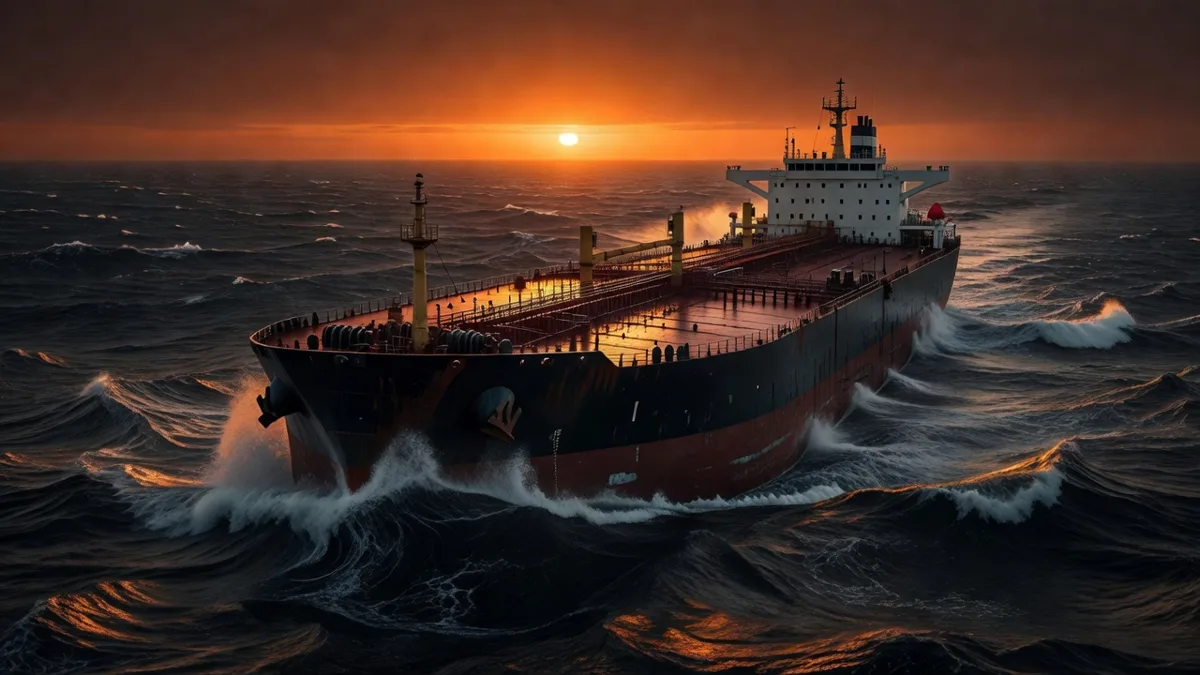
So is this someone else’s fire across the Pacific? Not at all. Korea brings in most of its crude from the Middle East — and through Hormuz. This war hardening into a “managed forever-war” means a permanent risk premium, not a one-off shock, gets attached to Korea’s economy. If the roller coaster of oil sliding to $70 and spiking to $87 repeats, cost calculations for refiners, airlines, and shippers wobble, and the 150% jump in war-risk insurance ultimately rides freight rates back into import prices. If the exchange rate shakes, the burden grows.
What I want to stress is that the “frame” of the response has to change. The strategy of treating it as a one-off event and “waiting for it to pass” no longer works. If it’s a risk that will sit as a constant for years, it’s a cost you have to price in ahead of time, like a tax. Energy inventories and diversified supply sources, freight and currency hedging, and the financial stamina to withstand the volatility — companies and individuals alike must build their plans on the premise of a “standing burden,” not a “spike.” This is why I keep watching this war. Because a single boom of gunfire at the front eventually comes back as a bill in our daily lives.

My Conclusion — It Won’t End, and the Reason Runs Deeper
To sum up. I’ve said the war between the US and Iran won’t end, and this past month confirmed it again. June’s memorandum was a management phase, not peace, and it collapsed as scheduled. But I correct my logic in one place — I said it was “because the leadership doesn’t change,” yet in reality they changed the leader by bombing and the war still didn’t end. So the truth is colder than what I said. The engine of this war is not a person but a regime, and cut off the head, the same body raises a new one.
And this endlessness comes not as a blazing total war but with the face of a “managed forever-war” in which risk becomes ordinary. What’s truly frightening is not catastrophe but that, with catastrophe held off, risk becomes a constant and we grow numb to the bill. Hormuz, enrichment, miscalculation — until one of these three is pulled, the world will go on accepting this uneasy tension as the “new normal.” I refuse to call that normal, normal. Not mistaking a war that won’t end for one that has ended — that is the first principle of reading this board.
Frequently Asked Questions (FAQ)
The Islamabad Memorandum signed on June 17 pushed the core disputes — enrichment, control of Hormuz, sanctions — to a 60-day window. An agreement that defers the hardest issues is a countdown, not a resolution. After tankers were attacked in Hormuz in early July, the US struck 85 targets inside Iran, and Iran hit tankers and what it called a US base in Kuwait, collapsing the ceasefire.
In the opening strike of February 2026, Supreme Leader Ali Khamenei was killed, and in March his son Mojtaba Khamenei succeeded him as the third supreme leader. Yet the line of hostility held. That’s because the engine of this war is not a specific person but the structure of a regime that makes hostility toward the US and Israel its reason for being. Change the leader, and if the system is the same, the war doesn’t end.
A state that is neither total war nor peace. Iran flies drones yet doesn’t resume enrichment, holding its 60% HEU as leverage; the US strikes yet keeps talking. Both avoid catastrophe while neither stops the hostility — a low simmer that continues for years.
Korea imports most of its crude through Hormuz. If the war becomes permanent, it adds a standing risk premium rather than a one-off shock. Oil swinging between $70 and $87 and a 150% jump in war-risk insurance pass through freight into import prices, and a shaky exchange rate deepens the burden. Instead of “waiting for it to pass,” treat it as a standing cost and prepare with inventories, diversified supply, and financial resilience.
References
- CNN — US resumes strikes; Iran says it struck two tankers in Strait of Hormuz (7/13)
- Fox News — US launches fresh Iran strikes as CENTCOM resumes naval blockade (7/14)
- TIME — Full text of the 14-point US–Iran agreement (Islamabad Memorandum)
- Al Jazeera — Iran names Mojtaba Khamenei as new supreme leader
- CNBC — Oil prices rise as US launches new Iran airstrikes (7/14)