The US-Iran clash has once again entered a phase of direct engagement. The fragile April ceasefire did not last two months. On June 9, 2026, a US Army Apache helicopter crashed over the Strait of Hormuz, and the United States responded with multi-stage airstrikes against Iran starting at 5 p.m. ET the same day. Iran declared a counterstrike. Yet amid the exchanges, both sides are simultaneously signaling openness to negotiations. The current US-Iran clash resembles a dangerous cycle of strikes and warnings aimed at calibrating intensity rather than all-out war. The problem is that this cycle unfolds at a chokepoint through which roughly one-fifth of the world’s crude oil passes.
- On June 9, a US Apache helicopter crashed over the Strait of Hormuz. The United States claims a collision with an Iranian drone; Iran claims a shoot-down.
- CENTCOM initiated “self-defense strikes” at 17:00 ET on June 9, targeting air-defense systems and radar sites near the Strait in two to three successive waves.
- The IRGC claimed strikes on US bases in Jordan and Bahrain as well as the downing of an MQ-9 drone, though independent verification remains unavailable.
- US officials described the strikes as “warning shots” calibrated to avoid derailing negotiations.
- The White House stated that “an agreement with Iran is very close,” while Iran’s foreign minister expressed a preference for diplomacy alongside a deterrent message.
- The volatility directly affects South Korea: fluctuations in the Strait transmit to export competitiveness and Bank of Korea policy via oil prices, freight rates, and inflation.
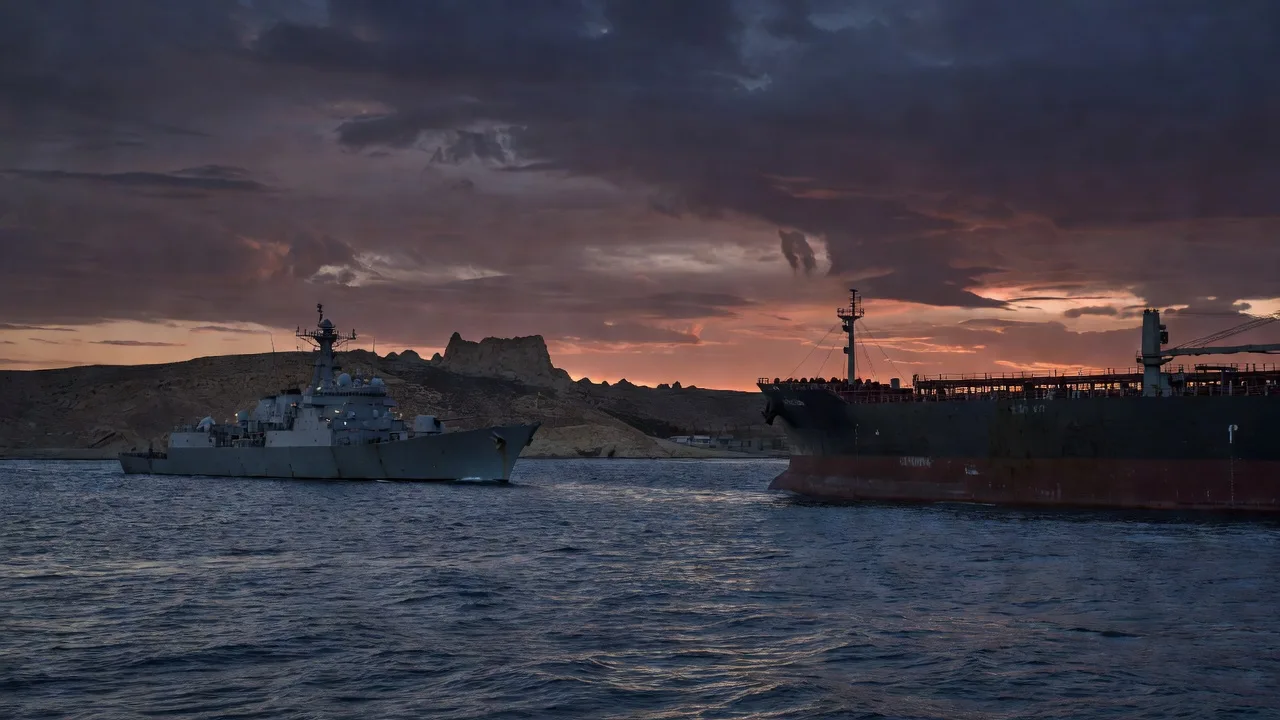
The US-Iran clash reignites — what happened on June 9
The trigger was a single helicopter. On June 9, a US Army Apache crashed over the Strait of Hormuz off Oman. US officials attributed the loss to a collision with an Iranian drone; Iran asserted it had shot the aircraft down inside its claimed airspace and waters. President Trump initially downplayed the incident, saying “it’s not a big deal, the pilots are safe.” Hours later, however, his tone hardened: “They shot down our helicopter, so we are responding right now.”
CENTCOM’s multi-stage strikes
US Central Command announced that it began “self-defense strikes” against Iran at 5 p.m. ET on June 9. The operation did not end with a single wave; multiple OSINT channels reported follow-on strikes. Targets were concentrated on Iranian air-defense and radar installations near the Strait, with explosions reported around Bandar Abbas, Qeshm, Jask, Minab, and Sirik. US officials framed the action as a “warning strike” designed not to derail negotiations. Reports nevertheless indicated that a water pipeline near Sirik was damaged, cutting off drinking water and underscoring the risk of collateral effects on civilian infrastructure.
Iran’s counterstrike claims — unverified
The IRGC immediately declared retaliation, claiming strikes on Al-Azraq air base in Jordan, the US Fifth Fleet headquarters in Bahrain, and F-35 hangars, as well as the downing of a US MQ-9 drone over Jam in Bushehr province. Most of these claims remain one-sided Iranian statements; no independent third-party verification has emerged. Pro-resistance outlets emphasize “direct hits,” yet video or satellite evidence confirming damage is limited. The gap between claimed and confirmed results is especially wide in the current phase.
Claims made in the opening hours of any clash can be exaggerated by both sides. The facts currently corroborated at “high confidence” are ① the Apache crash, ② the US multi-stage strikes and their targets (air-defense and radar), ③ Iran’s threat of counterstrikes, and ④ the simultaneous opening of diplomatic channels. Specific base damage and drone shoot-downs should be treated as unilateral assertions until verified.
Why this is a “strike-warning cycle” rather than all-out war
The key to interpreting the current US-Iran clash lies in the separation between words and deeds. Both sides exchange strikes while simultaneously pointing toward an exit. The White House said on June 9 that “an agreement with Iran is very close.” Vice President JD Vance placed the possible timing anywhere from “next week to several months.” Iranian Foreign Minister Araghchi stated that “Iran prefers the language of diplomacy” yet added that “we are also fluent in other languages,” pairing diplomacy with deterrence. Parliament Speaker Ghalibaf struck a similar note.
Simultaneous signaling of restraint and resolve
The pattern differs from a headlong rush toward escalation. It more closely resembles a signaling contest in which each side tests the other’s resolve while seeking negotiating leverage. The United States limited its strikes to military targets (air-defense systems), avoiding civilian or regime-core sites. Iran fired missiles and drones but amplified their effect through assertive statements. Both sides have so far avoided crossing an irreversible threshold. The present phase of the US-Iran clash is therefore best read as a limited strike-warning cycle rather than all-out war—though the balance remains inherently fragile and could unravel with a single miscalculation.
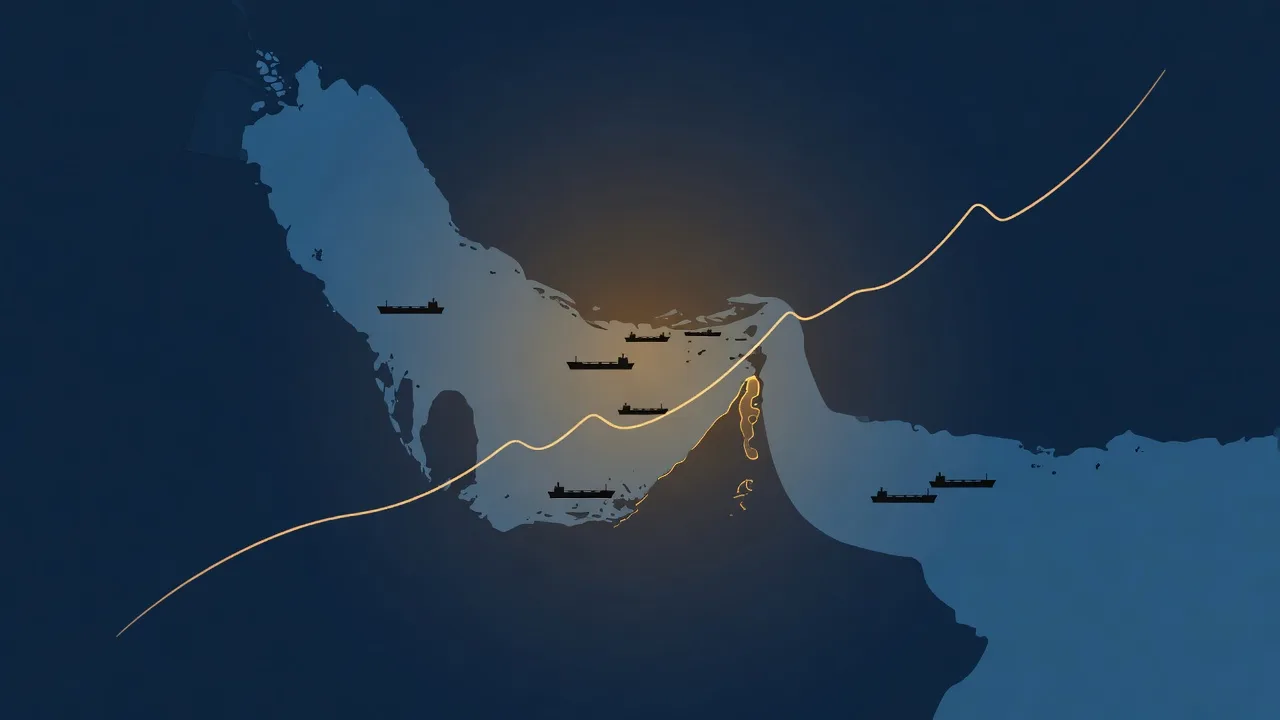
The Strait of Hormuz stage — how the clash spills into the economy
The danger stems from the location itself: roughly 20 percent of global crude oil transits the Strait. That US strikes were confined to air-defense targets provided markets with some relief, signaling that energy-export infrastructure was not the intended aim. Yet variables remain. Iran’s foreign minister reasserted that “the Strait is not international waters but a shared maritime area between Iran and Oman,” reopening the legal status of passage. Any renewed sovereignty dispute would quickly lift insurance premiums and freight rates for tankers and cargo vessels. For deeper insight into oil-price direction, readers may consult Brent crude market updates.
Hormuz volatility reaches South Korea through three channels. First, higher oil prices lift import costs and reduce the Bank of Korea’s room for rate cuts. Second, elevated freight rates on Middle East routes squeeze exporter margins. Third, risk-off sentiment supports the dollar and pressures the won. The front line is in the Middle East, but the bill also lands in Seoul.
The weight of “half their oil”
President Trump’s remark revealed another layer. Asked about postwar reconstruction, he suggested the United States could help “in the manner of the Marshall Plan” but added that “we would take half their oil in return.” The comment hints at resource-control objectives embedded in the diplomatic language. Whether it becomes policy is unclear, yet it signals that Washington views the clash not merely as punishment but as a potential framework for a postwar order. Any negotiation could therefore extend beyond a ceasefire to encompass a protracted redistribution of energy influence.
Neighboring fronts — Gaza, Lebanon, and the West Bank also simmering
While the US-Iran clash dominates headlines, adjacent fronts remain active. In Gaza, Israeli shelling and airstrikes continue despite a ceasefire agreement, and aid inflows remain far below assessed needs. In southern Lebanon, Hezbollah rocket fire and Israeli wide-area strikes have crossed repeatedly. In the West Bank, raids on Jenin and settler violence persist; the UK, Canada, France, and Norway have signaled new sanctions targeting settler violence. Though these fronts appear distinct, they are linked through Iran. Escalation in one theater can undermine restraint in another.
Three possible paths ahead — scenarios and watchpoints
The trajectory of the current US-Iran clash can be gauged by three indicators: the “line” of targets struck, the viability of diplomatic channels, and actual tanker traffic through the Strait. Using these variables, three scenarios can be outlined.
Scenario A — Cycle management, negotiations resume (probability: medium-high)
US strikes remain limited to air-defense assets and both sides sustain their “agreement is close” and “diplomacy preferred” signals. Partial tanker traffic continues; oil prices fluctuate within a contained range. The most benign path, yet the underlying instability of a “managed crisis” persists.
Scenario B — Target expansion, slide toward wider war (probability: medium-low)
US strikes broaden to refineries, power infrastructure, or regime targets, or Iranian retaliation produces US casualties. The cycle breaks, the Strait is effectively closed, oil prices spike, and global inflation and growth forecasts deteriorate simultaneously.
Scenario C — Conditional détente (probability: low)
Negotiations produce a phased de-escalation. Core disputes over enrichment rights, US troop presence, and Hormuz control remain wide, however, making a rapid, comprehensive settlement unlikely in the near term.
In sum, the June 2026 US-Iran clash appears less a resumption of finished war than another phase of a managed crisis. Both sides have drawn weapons yet kept the sheaths within reach. A managed crisis, however, becomes most dangerous precisely when management fails. In the narrow chokepoint of the Strait, a single miscalculation can rewrite the bill for the entire global economy. The true temperature of the clash will be read not in rhetoric but in tanker insurance premiums and daily transits.
Related analysis
How the clash shapes US economic and Federal Reserve calculations is examined in US economic outlook: the Fed fights inflation—or Hormuz. Why the April ceasefire proved so fragile is discussed in US-Iran ceasefire: three agreements. Korean individual-investor perspectives on oil-shock and stagflation responses appear on sister site Atomic 경제 블로그.
📚 Sources
- CNN — Iran-Trump war live updates
- Al Jazeera — Iran war live blog
- Britannica — 2026 Iran war (background)
자주 묻는 질문 (FAQ)
The trigger was the crash of a US Army Apache helicopter over the Strait of Hormuz. The United States attributes the loss to a collision with an Iranian drone; Iran claims a shoot-down. CENTCOM began multi-stage “self-defense strikes” targeting Iranian air-defense and radar sites at 5 p.m. ET the same day.
At present the situation is closer to a limited strike-warning cycle than all-out war. The United States has confined strikes to military targets (air-defense systems), and both sides have kept diplomatic channels open. The risk of wider war remains if strikes expand to energy or regime targets or if US casualties occur.
The IRGC has claimed strikes on US bases in Jordan and Bahrain plus the downing of an MQ-9 drone, but independent verification is still absent. Early claims in any clash can be inflated by both sides; distinguishing verified facts from unilateral assertions is advisable.
Hormuz volatility reaches South Korea through three channels: higher oil prices raise import costs and limit the Bank of Korea’s rate-cut space; elevated freight rates squeeze exporter margins; and risk-off sentiment supports the dollar and pressures the won.
Full normalization remains distant. While US strikes have been limited to air-defense assets and direct closure has not occurred, Iran’s renewed questioning of the Strait’s legal status (international waters versus shared maritime zone) keeps insurance and freight-rate volatility elevated. Daily tanker counts and premiums remain the most reliable indicators.