To read the US economic outlook in 2026, you now have to look at the Strait of Hormuz before Washington — and that no longer sounds like an exaggeration. The war that began on 28 February 2026 with the US-Israeli first strike on Iran has, halfway through the year, come to bind American wallets and the hands of the Federal Reserve more through the oil-price chart than through the noise of the front line. On the surface the US economy looks fine: equities sit near record highs and unemployment is close to full employment. Yet beneath that calm a single uncomfortable structure has settled in — the Fed is no longer data-dependent so much as Hormuz-dependent, hostage to the passage of tankers through a strait 11,000 km away.
- US real GDP slowed to a +1.6% annualized rate in Q1 2026, while April CPI re-accelerated to +3.8% year over year, pulled up by energy.
- The Fed has held its policy rate at 3.50–3.75% for three straight meetings; markets price roughly a 97% chance of another hold on 16–17 June.
- Chair Powell said the oil-driven inflation shock “has not yet peaked,” drawing a line against cutting before the energy shock fades — a hawkish anchor.
- Prediction markets (Polymarket) put the odds of zero cuts in all of 2026 near 57%, while the Fed dot plot still signals one — a clear gap between markets and officials.
- Oil has fallen about 20% from its 2026 peak on ceasefire and Hormuz-reopening hopes, but continued US blockade and Iranian restrictions leave normalization unfinished.
- It matters directly for Korea — a prolonged Fed hold pressures the won, exports, and the Bank of Korea’s room to maneuver all at once.
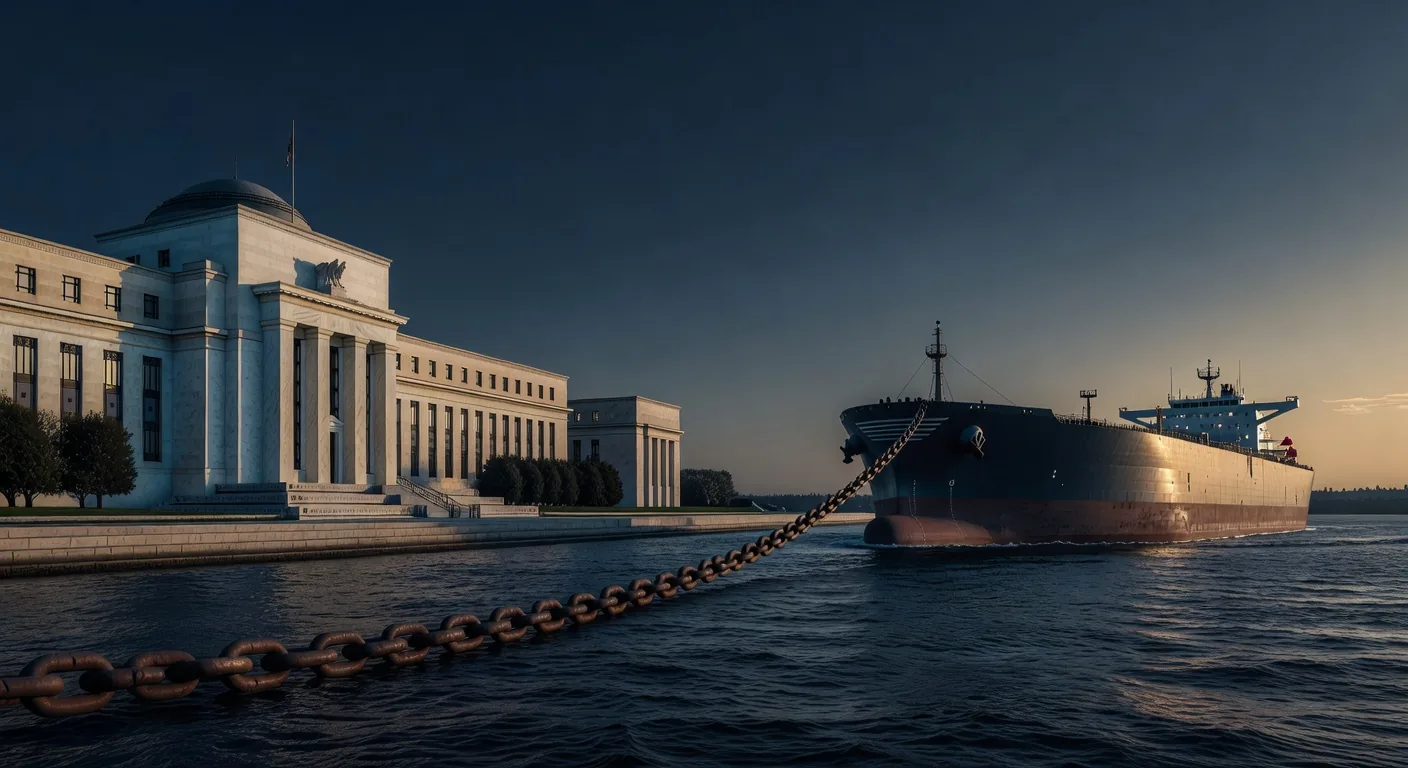
The Front Is in the Middle East, the Bill Is Global — Where the Region Stands Now
It helps to set the facts first. With the war’s opening on 28 February, Iran’s supreme leader Ali Khamenei was killed, and Iran sealed the Strait of Hormuz with mines, coastal missiles, and drones. With a chokepoint carrying roughly 20% of the world’s oil blocked, markets treated it as the largest energy-supply shock since the oil crises of the 1970s.
From Blockade to a Fragile Truce
The picture began to shift in April. A fragile ceasefire took hold on 8 April, and on 17 April — in the wake of an Israel–Lebanon truce — Iran announced it would “open Hormuz to commercial shipping for the duration of the ceasefire,” sending oil down about 11% immediately. Through late May, optimism about a US–Iran deal pushed oil roughly 20% below its 2026 peak. As of 3 June, West Texas Intermediate (WTI) trades in the mid-$90s per barrel and Brent in the high $90s.
The Gray Zone Between “Open” and “Closed”
Yet the headline “Hormuz is open” should not be taken at face value. Despite the reopening declaration, the US continued its blockade of Iran, and Iran tightened controls in response. Commercial traffic is far from back to pre-war levels, and even in early June negotiations swung between suspension and resumption. In other words, today’s lower oil price reflects “expectations of normalization” more than normalization itself — and that subtle gap is, as we will see, the single biggest variable in the US economic outlook.
📊 The Scale of the Energy Shock — The Hormuz blockade threatened roughly 20% of global crude and a meaningful share of LNG flows. The International Monetary Fund (IMF) cut its 2026 global growth forecast to 3.1% and raised headline inflation to 4.4%, a sign the shock is acting on the prices and growth of the whole world at once, not one country.
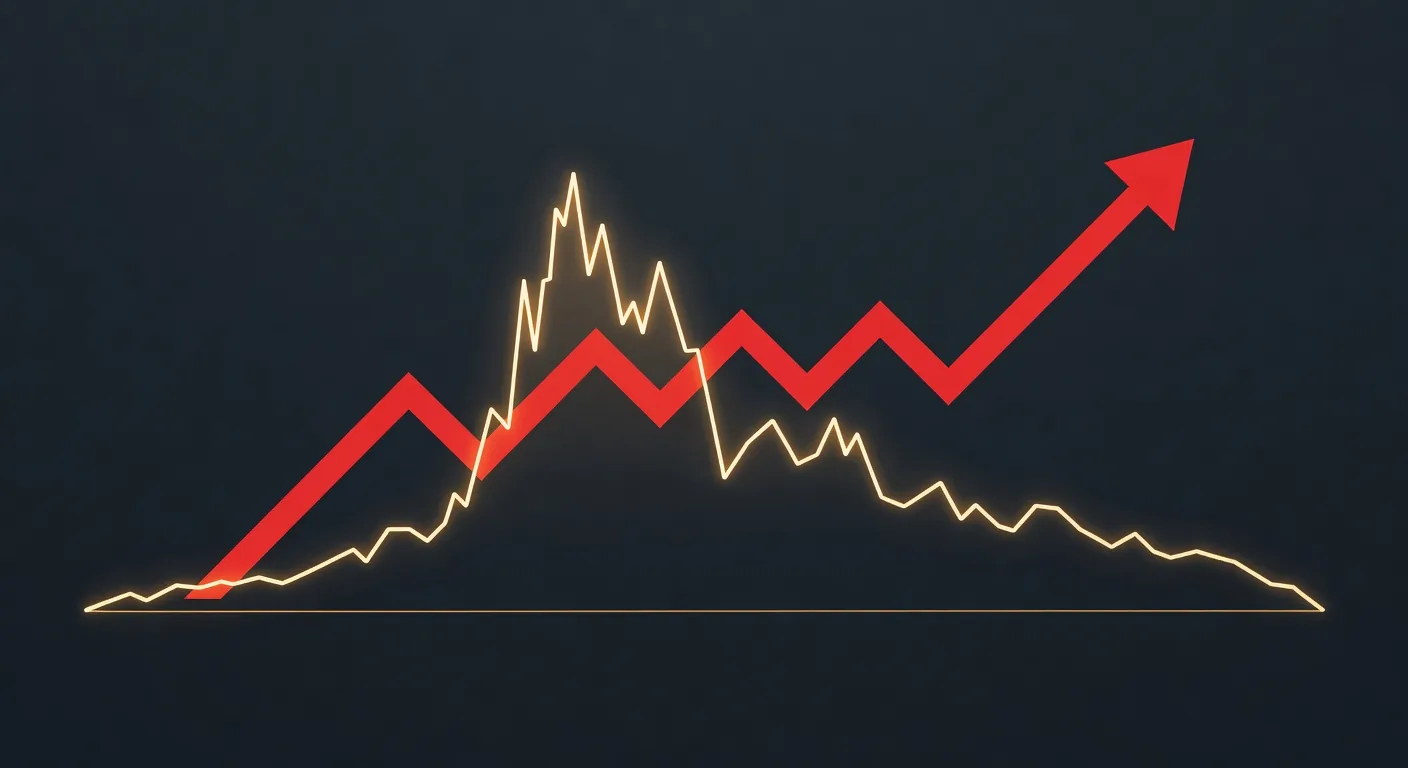
The US Economy Now — Cooling Growth, Reheating Prices
Growth Cools While Prices Warm Up
Turn now to the US itself. Q1 real GDP rose at a +1.6% annualized rate (Bureau of Economic Analysis (BEA) second estimate), a notable slowdown from the prior trend. Exports, investment, consumption, and government spending all contributed positively, yet the underlying momentum has clearly weakened. The problem is that as growth cooled, prices warmed the other way.
The inflation table makes the structure clear. March headline CPI was 3.3% year over year, and core CPI — stripping out volatile food and energy — was 2.6%. But April headline CPI re-accelerated to +0.6% month over month and +3.8% year over year. With core relatively stable while the headline jumped, the source of this price pressure looks like “energy costs,” not “overheating demand.” Put differently, US inflation is now more sensitive to tankers in Hormuz than to policy in Washington.
Calm on the Surface, Stagflation Pressure Underneath
The labor market is still holding. Unemployment sits near 4.6%, close to estimates of full employment, and the Congressional Budget Office (CBO) sees it holding steady around 4.6% this year. But the combination of slowing growth (+1.6%) and re-accelerating prices (+3.8%) resembles the early pattern textbooks warn about as stagflation. It is too early to call it full-blown stagflation, but it is hard to deny that pressure is building in that direction.
Market gauges put this tension into numbers. As of 3 June, the dollar index (DXY) is around 99, in 2026-strong territory, and the US 10-year Treasury yield holds near 4.46%. The United States’ status as a net energy exporter and risk-off sentiment support the dollar, while bond yields reflect a market that expects “high inflation could last.”

The Fed’s Dilemma — From “Data-Dependent” to “Hormuz-Dependent”
A Monetary Policy Tied to an Input It Cannot Control
Here we reach the core frame of this piece. The Fed has long described itself as data-dependent — it sets rates by watching employment and prices. But the 2026 Fed finds itself unable to control the most volatile input in that data. If the main driver lifting prices is oil, and what moves oil is whether the Hormuz ceasefire holds, then the Fed’s next move is effectively decided at the negotiating tables of Tehran and Washington.
Powell’s remarks capture the setup. He made clear that the oil-driven inflation shock “has not yet peaked,” and that he will not cut rates before confirming the energy shock is easing — a plainly hawkish stance. The Fed held its rate at 3.50–3.75% for three consecutive meetings through 29 April, and markets price roughly a 97% chance of another hold at the 16–17 June meeting. On the surface this is “patient watching,” but with the real trigger lodged in a Middle Eastern strait, it looks less like voluntary patience than structural hostage-taking.
⚠️ A Gap That Reveals Uncertainty — Prediction market Polymarket puts the odds of no rate cut at all in 2026 near 57%, while the Fed dot plot still points to one cut this year. Some investment banks go further, suggesting the Fed holds all year and that its next move could be a 2027 hike rather than a cut. That markets, officials, and banks read the same data so differently is itself a measure of how uncertain the current US economic outlook is.
Market Euphoria vs. a Structural Trap — The Gap Between Them
Asset Markets Are Betting on “the End of the War”
There is an intriguing paradox. As oil fell 20% from its peak and ceasefire hopes spread, the S&P 500 has posted a double-digit year-to-date gain and trades near record highs around 7,600. Markets are clearly betting on “the end of the war.” Yet as laid out above, the truce is fragile, Hormuz is not fully open, and the Fed is drawing a line against cuts. Between an exuberant asset market and a structure of bound policy and an unfinished truce, a clear gap exists.
How to read that gap is the thing to watch. Optimists say “the war ends eventually, oil falls, and the Fed cuts, if late.” The cautious say “the market is underpricing the truce’s fragility and the unfinished normalization of energy supply.” Neither can be stated as certain. But one thing is clear — current US asset prices embed, to a large degree, the premise that “the ceasefire will not break,” and that premise rests on a variable the United States cannot control.

The US Economic Outlook Ahead — Three Scenarios
Every Fork in the Road Leads Through Hormuz
Pulling it together, the second-half US economic outlook splits into three paths depending on Hormuz. None can be stated with certainty, and the probability assigned to each rests on a judgment about how durable the ceasefire is.
🟢 Scenario A — Truce Holds (Soft Landing) · A US–Iran deal is reached and Hormuz traffic effectively normalizes. If oil falls further, energy-driven price pressure eases and the Fed can recover room to cut into Q4. Growth rebounds gently and current asset prices are “justified.” This is the scenario markets are betting on now.
🟡 Scenario B — Stalemate (Higher for Longer) · The truce holds but traffic drags on in a half-open state. If oil churns in the $90s, prices stay stickily high, and the Fed prolongs its hold, unable to cut or hike. Growth keeps to a mid-1% crawl. This is the “inertia” path that current data weighs most heavily.
🔴 Scenario C — Truce Collapses (Re-Blockade) · Talks break down and Hormuz closes again. If oil spikes anew, headline inflation tops 4% and the Fed may reach for a “hike” to tame prices. This is a genuine stagflation phase of slowing growth and surging prices, exposing record-high asset markets to a sharp repricing. The probability looks low, but it is the tail risk with the largest impact.
Implications for Korean Readers — Someone Else’s War, Our Bill
A Triple Squeeze: Rate Gap, the Won, and Oil
None of this is a distant fire for Korea. The longer the Fed holds, the more the Korea–US rate gap stays wide and entrenched, which feeds won-weakness pressure and narrows the Bank of Korea’s room to maneuver. For a country that routes most of its crude imports through Hormuz, the very oil price that stokes US inflation simultaneously squeezes Korea’s trade balance and manufacturing costs. That is why reading the US economic outlook is, for Korean investors and firms, not a distant overseas topic but a direct variable for the exchange rate, rates, and exports.
In short, the lens on Korea’s second-half markets shares the same coordinates. As long as the Fed is tied to Hormuz, the direction of the won-dollar rate and domestic rates may largely follow the wake of the same tankers. That is the reason to watch the path of international oil prices (WTI).
Limits of This Analysis — Sources and Verification
The figures here are as of the writing date (3 June 2026) and may be revised by their sources. GDP, CPI, and unemployment draw on official releases from the BEA, BLS, and CBO; the rate and policy stance on Fed FOMC materials and Powell’s remarks; market gauges (oil, dollar, yields, equities) on exchange and market data, all cross-checked. Note that May CPI is scheduled for 10 June and is not reflected here, and that the Middle East situation and Hormuz traffic can change quickly — so the scenario probabilities are not fixed values but contingent on judgments about the ceasefire’s durability.
Frequently Asked Questions (FAQ)
Whether the Hormuz ceasefire holds. Because oil lifts prices and those prices bind the Fed’s rate decision, the normalization of traffic drives the inflation, rate, and growth paths all at once.
Hard to say. The Fed dot plot points to one cut this year, but prediction markets lean toward none, and some banks think the next move could even be a hike. The key is whether the energy-driven price shock fades.
Energy costs, more than overheating demand, look like the main driver. Core CPI was relatively stable while headline CPI jumped to +3.8% in April, suggesting oil is pushing prices up.
Markets are pricing in a lasting truce. But if that premise wobbles (Scenario C), they could face a sharp repricing. In other words, the current strength leans on an uncontrollable variable: the war’s end.
A prolonged Fed hold can entrench the Korea–US rate gap and pressure the won. And with high dependence on Hormuz-routed crude, Korea bears a double burden as higher oil weighs on both the trade balance and manufacturing costs.
- US Bureau of Economic Analysis (BEA) — Q1 2026 GDP
- US Bureau of Labor Statistics (BLS) — CPI
- Congressional Budget Office (CBO) — 2026 Economic Outlook
- Federal Reserve — FOMC calendar & statements
- IMF — World Economic Outlook 2026
- US Energy Information Administration (EIA) — crude & energy data
- CNBC — Oil falls on US–Iran ceasefire optimism (2026-05-29)