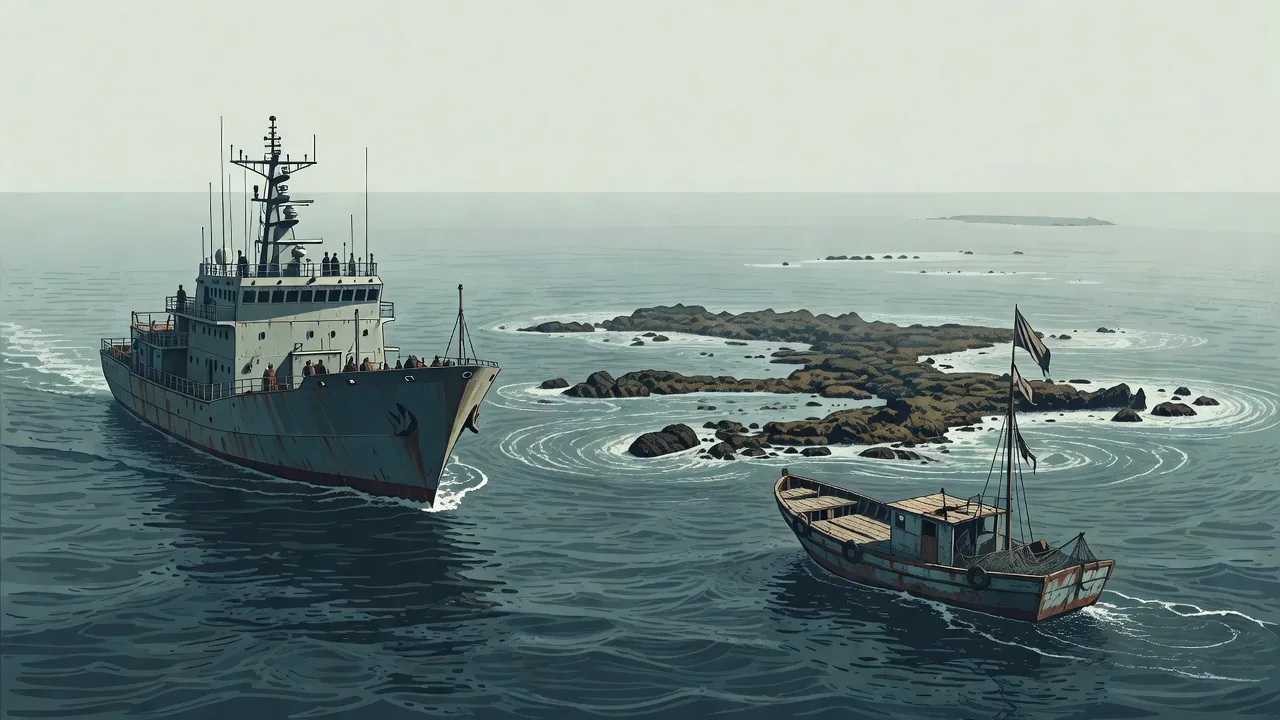
The South China Sea remains one of the world’s busiest trade routes and one of its most dangerous maritime flashpoints. Even in 2026, Chinese coast guard and maritime militia vessels continue to shadow and block Philippine ships around Scarborough Shoal and Second Thomas Shoal, while the Philippines counters by expanding joint exercises with the United States, Japan, Australia, and other partners.
Recent Developments (April–May 2026)
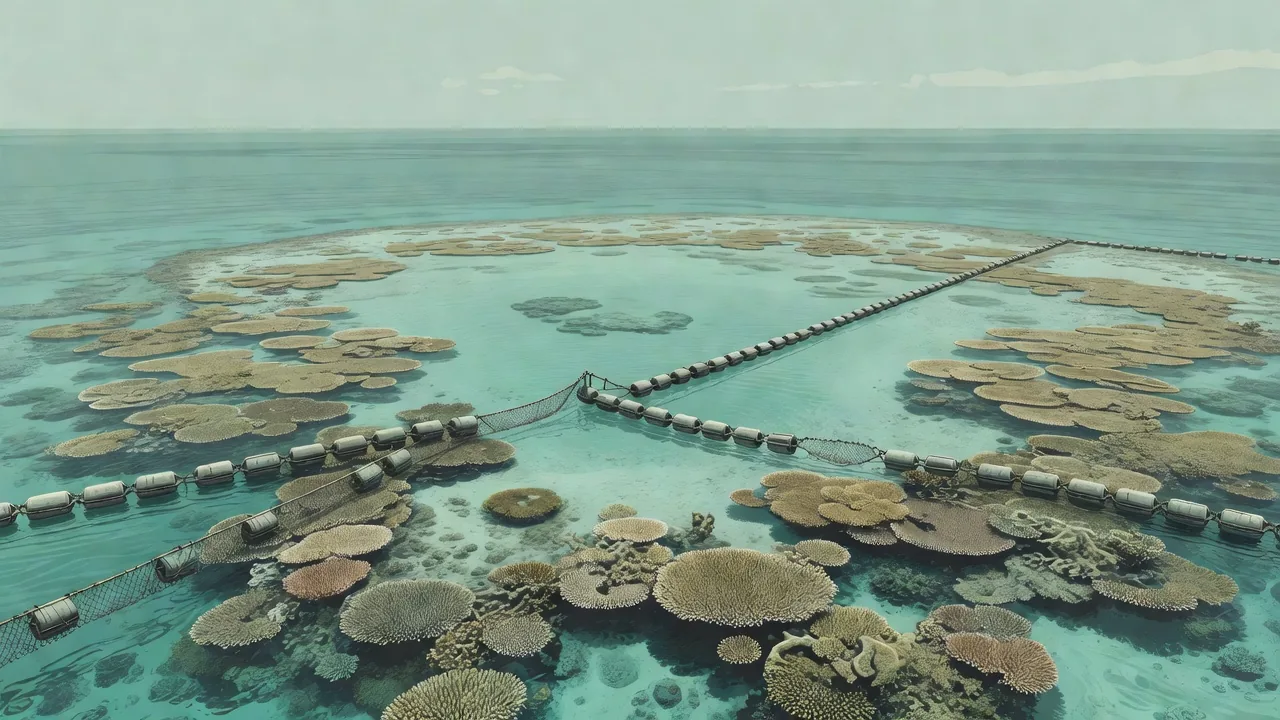
In April and May, China installed floating barriers at the entrance to Scarborough Shoal and engaged in flag-planting and research-vessel standoffs at Sandy Cay. During the same period, the United States and the Philippines conducted the largest-ever iteration of their “Balikatan” joint exercises. While no direct physical clashes occurred, routine “pushing and posturing” at sea became a daily occurrence.
The Structure of the Dispute — Law Versus Power
China claims nearly the entire South China Sea on the basis of its so-called “nine-dash line,” yet the 2016 Permanent Court of Arbitration ruling found that claim to have no legal basis. The Philippines relies on that ruling and its alliance with the United States, while China seeks to consolidate de facto control through gray-zone tactics employing coast guard and maritime militia forces. It is a classic collision between international law and on-the-water power.
Why South Korea Must Pay Attention
The South China Sea is the maritime artery through which South Korea receives its crude oil and LNG and ships its exports. Tankers from the Middle East and container vessels bound for Southeast Asia and Europe all pass through these waters. Any instability here drives up freight rates and insurance premiums and disrupts supply-chain lead times. Although the disputes may seem distant, they directly threaten South Korea’s trade lifeline.
Outlook and Implications
In the short term, repeated cycles of standoff and negotiation are more likely than outright clashes. Nevertheless, the normalization of close-quarters encounters at sea always carries the risk of accidental collision. A single ramming incident or water-cannon blast could escalate into a diplomatic crisis, so the contest over the “rules” of these waters is expected to continue for the foreseeable future.
Key Points of Contention
Conflict in the South China Sea tends to flare at a handful of specific locations. The most prominent are Scarborough Shoal and Second Thomas Shoal near the Philippines, along with the Spratly Islands where artificial islands have been built. China maintains a permanent coast guard and militia presence at these sites to solidify effective control, while neighboring states respond with resupply and patrol missions. In this way, a single small reef can become a test case for the broader regional maritime order.
Frequently Asked Questions
Q. What did the 2016 international ruling mean?
The Permanent Court of Arbitration ruled that China’s nine-dash line claim lacked legal foundation. Because there is no enforcement mechanism, however, China has ignored the decision and continues to consolidate its physical presence.
Q. Why hasn’t the situation escalated into open war?
Both sides recognize that the costs of full-scale conflict would be enormous. Consequently, they have chosen to apply pressure through coast guard and maritime militia forces operating below the threshold of war.
Ultimately, the heart of the South China Sea issue is not the islands themselves but the sea lanes. Whoever sets the rules for these waters will hold significant influence over the trade order of the entire Indo-Pacific.