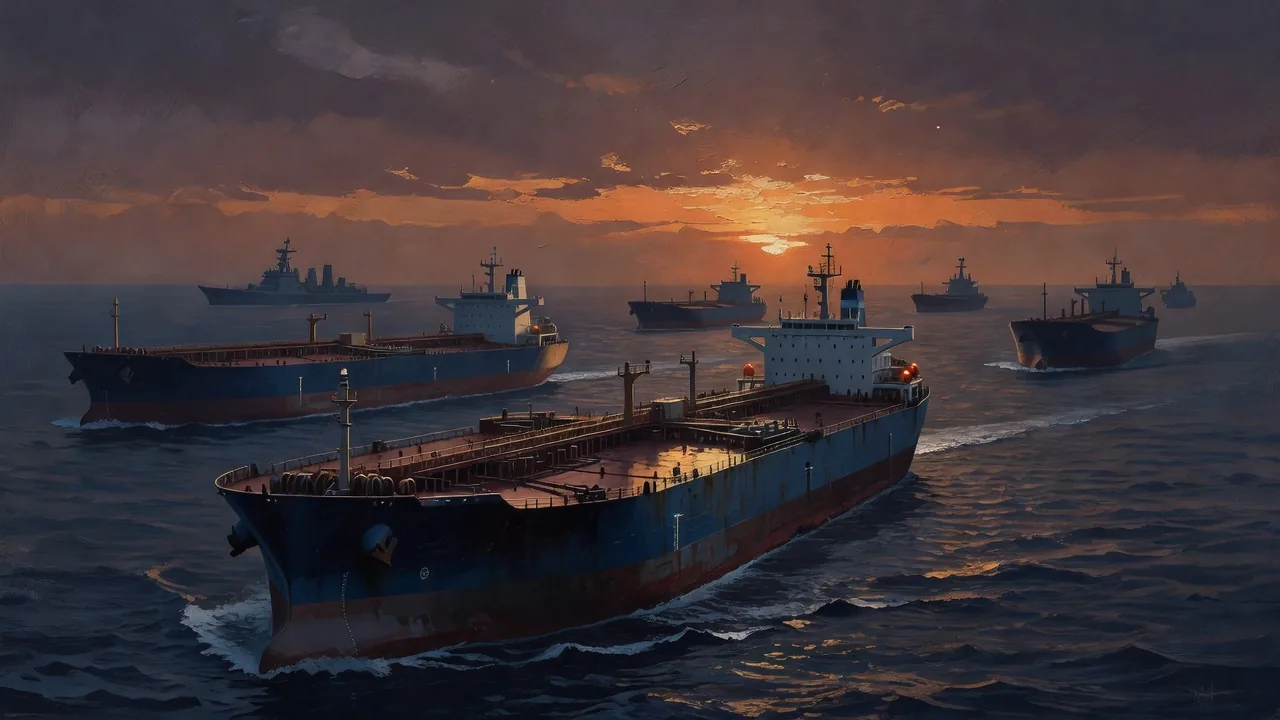
The 2026 US-Iran war has escalated in June into its most dangerous phase—direct military engagement between the United States and Iran. The center of the front lines is not inland Iran but the Strait of Hormuz and the Persian Gulf. With about 20% of the world’s crude oil passing through this chokepoint, the risk of direct confrontation has become real as the US Navy and Iran clash head-on, moving beyond proxy wars or ceasefire scenarios.
Current Situation — US-Iran Direct Clash (June 8–10)
The situation deteriorated sharply during the second week of June. On the night of June 8, Iran fired 24 ballistic missiles toward Israel and then declared a “halt to military operations,” but attached a conditional threat: “If Lebanon comes under further attack, operations will resume.” The following day, June 9, after a US Apache helicopter was shot down, US Central Command (CENTCOM) launched a multi-phase air campaign targeting Iranian air-defense networks and radar facilities around the Strait of Hormuz.
Iran immediately claimed retaliatory strikes. The Islamic Revolutionary Guard Corps (IRGC) announced attacks on the US Fifth Fleet base in Bahrain, the Al-Azraq base in Jordan, and F-35 hangars, and also claimed to have shot down a US MQ-9 drone in the Jam region. Actual damage assessments remain disputed between the two sides and unverified by third parties. Analysts describe the current phase not as all-out war but as a “limited strike–warning cycle.”
The Geography of the Front — All Roads Lead to Hormuz
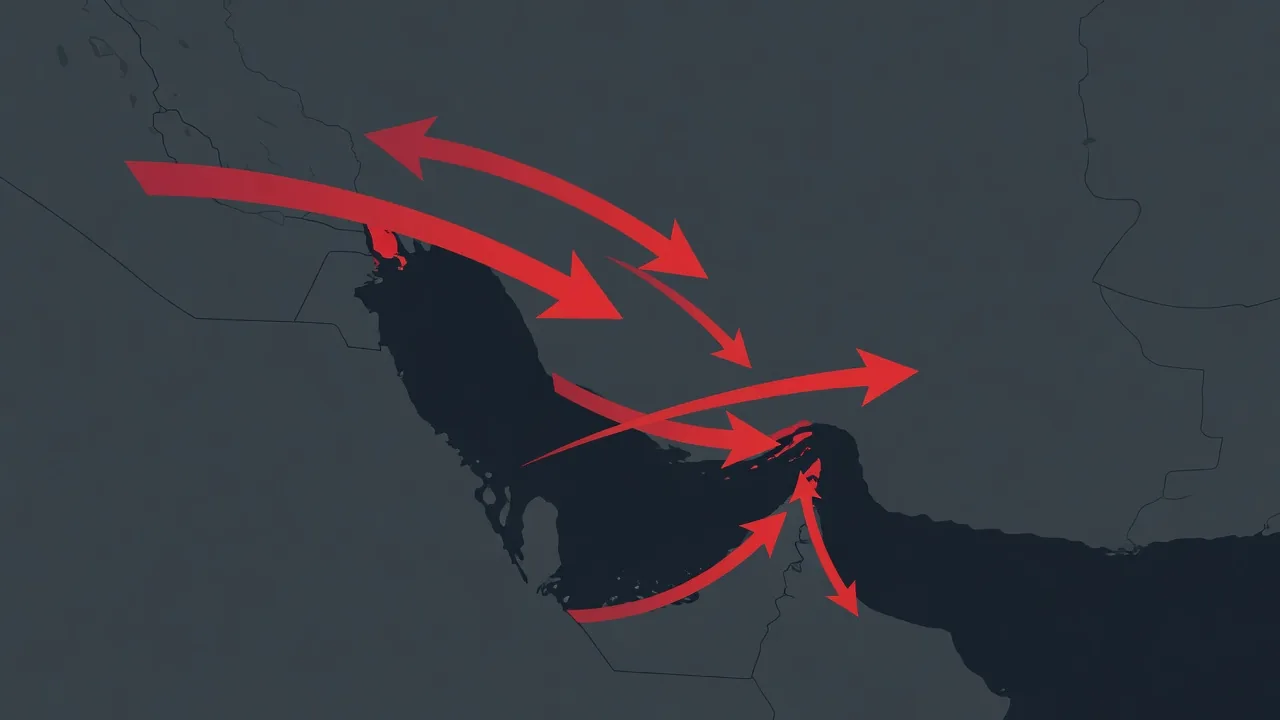
The geographic center of this clash is clear. US airstrikes have focused on Iranian air-defense systems around the Strait of Hormuz, while Iranian counterstrike claims extend toward Bahrain (US Fifth Fleet), Jordan, and Kuwait. Earlier, the US Navy imposed a blockade on Iranian oil terminals and deployed carrier strike groups offshore; Kuwait International Airport was also partially closed after missile and drone strikes. Effectively, the entire Persian Gulf has become a single battlefield.
Escalation or Exit?
Paradoxically, both sides are also sending diplomatic signals alongside the fighting. On June 9 the White House stated that “a deal with Iran is very close,” while Trump downplayed the helicopter shoot-down as “not a big deal.” Iranian Foreign Minister Araghchi said he “prefers diplomacy but is fluent in other languages” in a measured deterrent remark. Markets priced the probability of a ceasefire as low as around 20 percent at one point. Strikes and negotiations are unfolding simultaneously in an extremely unstable equilibrium.
Key Issues
The first is control of the Strait of Hormuz. The United States insists on freedom of navigation; Iran holds the blockade card. The second is the nuclear issue: Washington demands an end to enrichment and nuclear weapons, while Tehran refuses to relinquish enrichment rights. The third is the risk of wider escalation. The Lebanon–Hezbollah–Israel front remains a live spark; a single miscalculation could turn the “limited cycle” into full-scale war.
Implications for Korea
Korea depends on the Strait of Hormuz for most of its imported crude oil. As direct clashes raise transit risks, oil prices, freight rates, and insurance premiums rise in tandem, squeezing the trade balance, manufacturing costs, and consumer prices. Adding to the pressure, the United States has diverted some THAAD interceptors from South Korea to the Middle East, sparking debate over a potential defense gap on the Korean Peninsula. Though it may look like someone else’s war, the bill is arriving in Korea through exchange rates, inflation, and security.
Frequently Asked Questions
Q. Are the US and Iran in all-out war right now?
Still too early to call it all-out war. Direct clashes are occurring, but most analysts see the situation as a “limited strike–warning cycle” in which both sides keep diplomatic channels open.
Q. Where is the center of the battlefield?
The Strait of Hormuz and the Persian Gulf. US strikes have targeted Iranian air defenses around Hormuz, while Iranian counterstrikes have been directed toward Bahrain, Jordan, and Kuwait.
Personally, I believe the real variable in this phase is not the “front lines” but the “exit signals” both sides are simultaneously holding. As long as strikes and negotiations overlap, neither markets nor Korea can afford to look away from oil prices.
※ The situation updates in this post are compiled from cross-referenced OSINT channels (pro-Palestinian, pro-resistance, Israeli, and neutral monitors). Because of strong factional bias, some “claims” are difficult for third parties to verify. Primary sources should be consulted for factual confirmation.