Last week I wrote on this blog that Iran had switched from blockading the Strait of Hormuz to administering passage through it. While writing that piece I missed one thing. At the end of the route Saudi Arabia had taken to avoid Hormuz, another chokepoint was waiting.
At dawn on 10 September the Houthis took Mocha, a port town on Yemen’s Red Sea coast. Two days later they had Perim Island, sitting in the middle of the Bab el-Mandeb strait. Saudi Arabia’s detour has become a waterway administered by the other side.
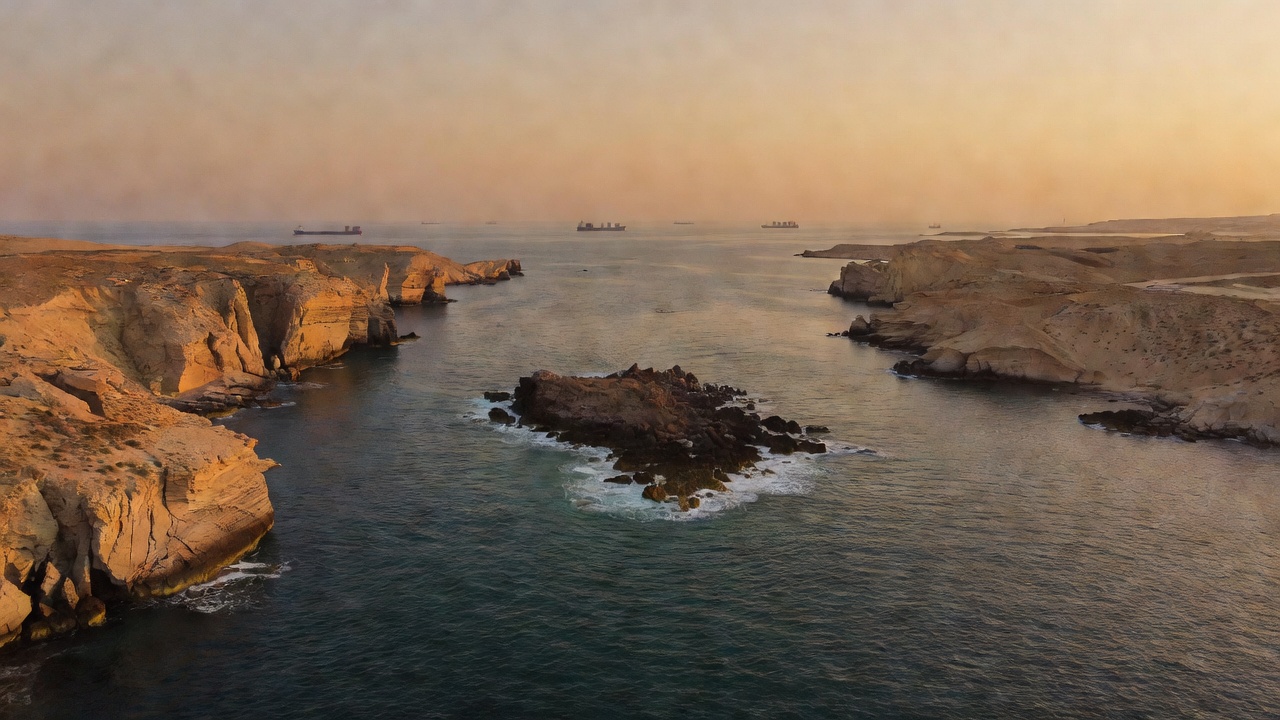
- When Hormuz closed, Saudi Arabia shifted more than 70% of its crude exports to Yanbu on the Red Sea. Yanbu’s throughput jumped from 750,000 barrels a day before the war to the four-million range.
- The Houthis physically seized Bab el-Mandeb, the exit of that Red Sea route, between 10 and 12 September. Saudi Arabia’s detour and the Houthis’ new front met in the same place.
- A Houthi official said navigation is “safe and orderly.” I read that sentence as the same grammar Iran used at Hormuz: not the language of closing, but the language of administering.
- The alternative, Egypt’s SUMED pipeline, is capped at 2.5 million barrels a day. It cannot absorb the 3.39 million barrels a day Saudi Arabia rerouted to the Red Sea.
- On 17 September it was reported that China, at Saudi Arabia’s request, had pressed Iran to rein in the Houthis. I consider this the most significant development of the current phase.
A four-year truce that collapsed in two months
The truce the UN brokered in April 2022 formally expired that October but held in a low-intensity form for years afterwards. That condition broke in July 2026. The immediate trigger was a Saudi-led coalition strike on the runway at Sanaa airport, which blocked an Iranian aircraft from landing.
On 20 July the Houthis announced an operation they called “a siege for a siege,” declaring a blockade of shipping and ports connected to Saudi Arabia. I do not think the timing was accidental. It came immediately after Saudi Arabia shifted its export route away from Hormuz to the Red Sea.
| Date | Event |
|---|---|
| July 2026 | The Saudi-led coalition struck Sanaa airport. The Houthis declared a “siege for a siege.” |
| 8–20 August | The Houthis repeatedly struck the Jazan refinery and Najran airport. Saudi Arabia announced the fires were extinguished. |
| 8 September | The Houthis mounted a large attack on four southern Saudi cities. Seventy-three civilians were wounded. |
| 10–12 September | The Houthis took Mocha, Perim Island and six nearby districts, covering 5,400 square kilometres. |
| 17 September | It was reported that China, at Saudi Arabia’s request, pressed Iran to rein in the Houthis. |
| 19 September | The Houthis struck Riyadh directly for the first time. Saudi Arabia said it intercepted the missile. |
What changed between 8 and 19 September
The 8 September attack was aimed at the border region. Houthi spokesman Yahya Saree said dozens of ballistic missiles and drones were used. The targets were four cities: Abha, Jazan, Najran and Khamis Mushait. They included a 400,000-barrel-a-day refinery at Jazan, Aramco facilities, and King Khalid Air Base at Khamis Mushait. Saudi Arabia said 73 civilians were wounded, among them women and children.
The 19 September attack was different in character. The Houthis claimed they had targeted “sensitive facilities” in the capital, Riyadh, and Aramco installations at Yanbu on the Red Sea. The Saudi-led coalition said it intercepted the ballistic missile fired toward Riyadh and reported no casualties or material damage. Residents, however, described black smoke rising from Aramco fuel tanks near Riyadh airport.
Separating the confirmed from the asserted: confirmed — the capture of Mocha and Perim (reported independently by multiple outlets), 73 wounded on 8 September (Saudi official), the Jazan refinery fire (Saudi energy ministry), and the air-raid warning and interception claim for Riyadh (Saudi-led coalition). Asserted — the Houthis’ tally of successful strikes and Saudi Arabia’s assessment of “minimal damage.” Both sides have clear incentives to adjust the numbers to fit their narrative.
Moving the target from the border to the capital demonstrates reach. I read it as an attack meant to manufacture leverage rather than to inflict damage.
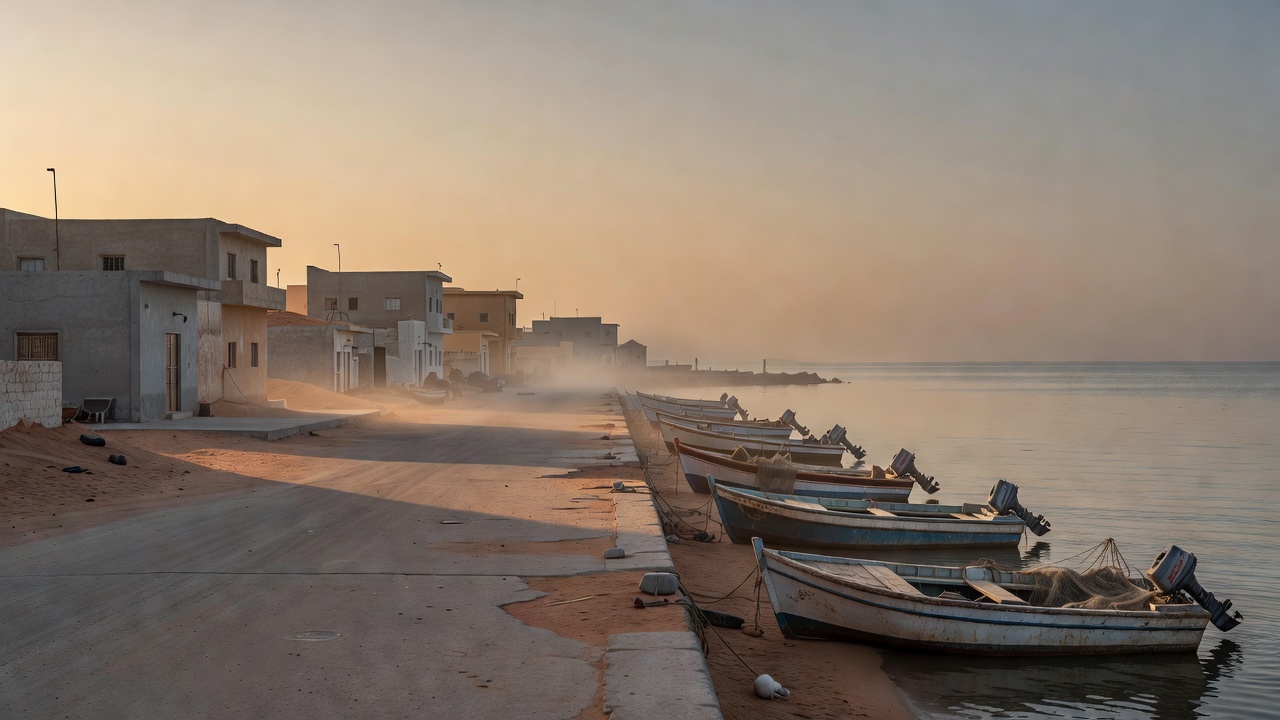
Bab el-Mandeb — the trap at the end of the detour
To understand why the Houthis pushed down to the Red Sea coast now, you have to look at Saudi Arabia’s export map first.
| Item | Before the war (2025) | Now (2026) |
|---|---|---|
| Yanbu (Red Sea) exports | 750,000 b/d | 3.77–4.18 million b/d |
| Ras Tanura (Gulf) exports | 5.4 million b/d | reduced by Hormuz constraints |
| Volume rerouted to the Red Sea | — | 3.39 million b/d |
| Saudi crude loadings | 9.5 million b/d (29 June) | 6.1 million b/d (week of 13 July, -36%) |
That table explains the structure of this crisis. When Hormuz closed, Saudi Arabia moved more than 70% of its crude exports to Yanbu on the west coast, and Yanbu’s throughput rose more than fivefold from its pre-war level. But crude loaded at Yanbu and bound for Asia must pass through Bab el-Mandeb.
That is exactly the point the Houthis took. With Mocha, Perim and the coast around Dhubab in hand, the entire Yemeni shore of the strait is now theirs. Al Jazeera reported that Yemeni government forces simply withdrew from the islands, with few signs of organised resistance or preparation for a counteroffensive.
A detour inside the enemy’s reach is not a detour
When we planned operations, we designated an alternate route in case the main supply route was cut. There was one condition we always checked: whether the alternate route lay outside the adversary’s weapons reach. An alternate route inside that reach, doctrine held, is not a route at all — it is an illusion that buys time.
What Saudi Arabia has done over the past few months fits that description. When the main route through Hormuz closed, it moved volumes to the alternate route through the Red Sea — but the exit of that alternate route sat within ground-force reach of a movement aligned with Iran. Defending a strait and defending the shore of that strait turned out to be different problems.
The third route available to Saudi Arabia is also short on capacity. Egypt’s SUMED pipeline has an operable capacity of 2.5 million barrels a day, and its historical peak throughput was 1.77 million in 2016. It cannot absorb the 3.39 million barrels a day Saudi Arabia shifted to the Red Sea. Routing around the Cape of Good Hope extends the voyage to Asia from about three weeks to six or seven.
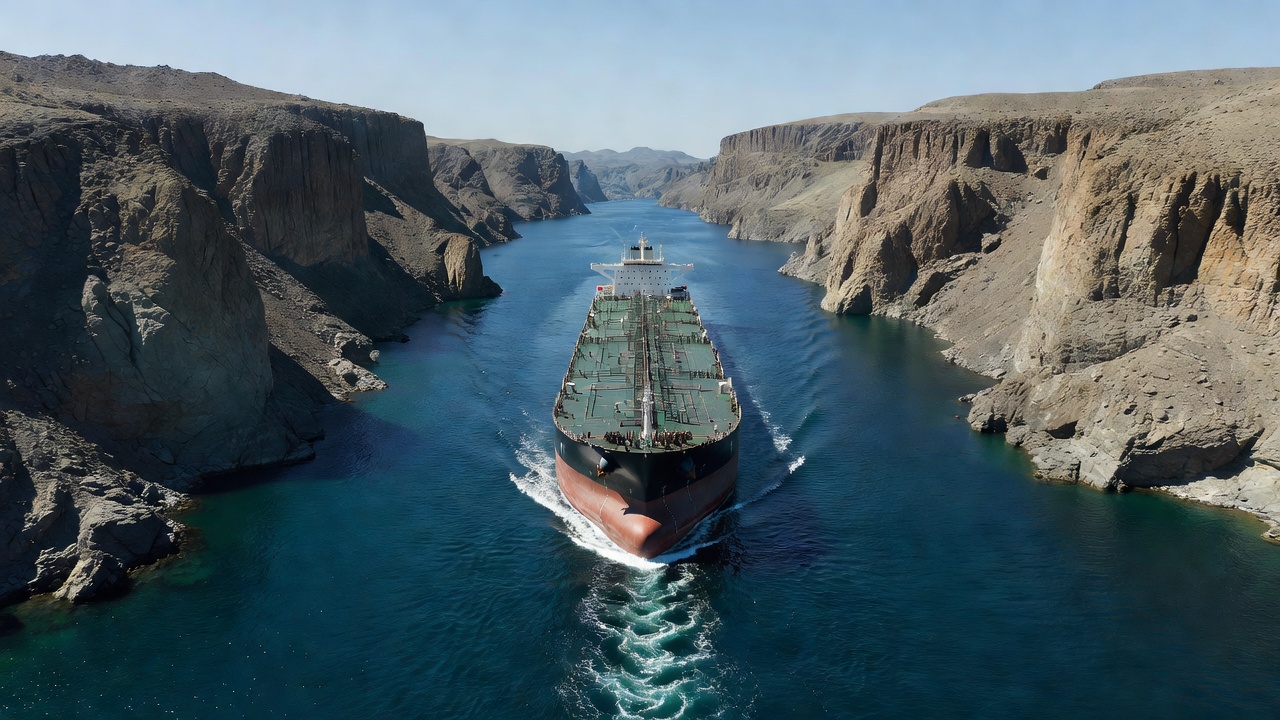
After taking Bab el-Mandeb, the Houthis started speaking like Iran
I have reread the statement a Houthi official made after the seizure several times. He said that “freedom of navigation and international trade in the Red Sea and Bab al-Mandab are safe and orderly,” and that there was “no cause for international concern.”
That is not a declaration of blockade. It is closer to a declaration that order will be supplied. I see the same structure here as in Iran’s phrasing at Hormuz last week. Iran never said it would close the strait either. It said it would designate zones, compile lists and deny services. Both position themselves as the party that administers rather than the party that blocks.
Why does the same grammar appear in two places at once? I see two reasons. First, declaring a blockade makes an enemy of the whole world, whereas declaring administration creates room to discriminate between individual ships — to stop Saudi-linked vessels and let the rest through. Second, claiming the role of administrator converts that authority into equity at a negotiating table. A blockade ends when it is lifted; an administrative claim outlives the lifting.
The scale of that authority shows in the strait’s traffic. Roughly 12% of world trade and about 25% of global container traffic pass through Bab el-Mandeb. By US Energy Information Administration figures, daily crude transits fell from 9.3 million barrels in 2023 to about 4.1 million in 2024, before recovering to roughly 7.4 million by June 2026.
China’s move matters most
One report from 17 September strikes me as the most important signal of this phase: Saudi Arabia asked China for help, and China pressed Iran to rein in the Houthis.
The move matters because of where China’s interest sits. Most crude leaving Yanbu and passing Bab el-Mandeb is bound for Asia, and its largest buyer is China. The tighter the Houthis squeeze the strait, the more China pays for its crude. The country that sponsors Iran and the country that buys Saudi oil are the same country.
I think that is where the brake on this crisis may sit. No actor appears capable of stopping the Houthis militarily; Saudi airstrikes have continued since 2015 without removing them. The state that can apply real pressure to Iran is China, and China has a motive to do it.

Bab el-Mandeb — three paths for the next three months
I have set out three ways this could resolve.
Path A — Chinese mediation works. Pressure from Beijing tells, the Houthis allow selective transit, and Saudi Arabia lowers the intensity of its airstrikes. Exports from Yanbu recover and oil has room to fall back into the $90s. Even on this path, though, the Houthi hold on the coast is not reversed. Saudi Arabia would have to accept, as a standing condition, that a hostile movement controls the gateway of its own export route.
Path B — selective control becomes entrenched. The Houthis keep stopping Saudi-linked vessels while letting others through. Saudi exports stay down and world oil stays in a high range. A state that is neither war nor peace runs on for months. I rate this the most likely path.
Path C — escalation to ground operations. If strikes on Riyadh repeat and real damage results, Saudi Arabia may consider moving beyond airstrikes to ground operations or a coastal landing. Riyadh is reported to have recently signed defence agreements with Turkey and Pakistan. On this path the US-Iran front and the Yemen front become one. I rate the probability low, but it is hard to reverse once opened.
The limits of this analysis
What I treated as fact and what I left as judgment
Treated as fact: the capture of Mocha and Perim, reported independently by multiple outlets; the 73 wounded on 8 September and the Jazan refinery fire, both announced by Saudi authorities; the Riyadh interception claim from the Saudi-led coalition; export volumes at Yanbu and Ras Tanura, the 36% fall in loadings and SUMED’s capacity, all from shipping and energy data providers; and the Bab el-Mandeb crude transit figures from the US Energy Information Administration.
Left as judgment, and I want that stated plainly: the reading that Houthi phrasing mirrors Iran’s, the inference that the timing of the Houthi advance answered Saudi Arabia’s change of export route, the view that China may act as a brake, and the assessment that Path B is most likely. None of these is a fact. Which ships the Houthis actually let through and which they stop will become visible over the next few weeks, and that record will confirm or refute this reading.
One more note. AI tools were used alongside the research and organisation of this piece, to speed up cross-checking reporting and institutional statistics from several countries against one common reference date. Every figure was re-verified against the original report or the issuing body, and the interpretation and judgment are my own.

Frequently Asked Questions (FAQ)
It is a narrow channel about 30km wide linking the Red Sea and the Gulf of Aden. Roughly 12% of world trade and about 25% of global container traffic pass through it, and it is the southern gateway of the Suez route between Europe and Asia. If it closes, ships must round the Cape of Good Hope, extending the voyage to Asia from about three weeks to six or seven.
In the current phase I rate it low. Immediately after taking the coast, the Houthis said freedom of navigation would be maintained. A full closure would make an enemy of the entire international community and would hurt China, the largest customer of their sponsor, Iran. Selective interdiction of Saudi-linked vessels, however, already appears to be under way.
Three exist, and all are constrained. The first is Hormuz, limited by the US-Iran conflict. The second is Egypt’s SUMED pipeline, whose 2.5 million barrels a day cannot take the 3.39 million rerouted to the Red Sea. The third is the Cape of Good Hope, which roughly doubles voyage time and badly damages economics.
There has been no formal declaration that it is dead. But the UN special envoy for Yemen has warned this is the highest risk of major conflict since the 2022 truce, and the scale of fighting has returned to something close to pre-truce levels. It is closer to reality to describe the truce as formally intact and practically over.
📚 References
- Al Jazeera — Houthis take control of Yemen’s Red Sea coast, key shipping route, 11 Sep 2026
- NPR — Houthi attacks on Saudi Arabia ignite fires at oil facilities and wound 73 people, 8 Sep 2026
- The National — Saudi oil loadings drop by 36% as Houthi threats disrupt Bab Al Mandeb passage, 20 Jul 2026
- Kpler — Factbox: Red Sea crude flows, Bab el-Mandeb, and alternative routes
- OilPrice — The Red Sea Is Becoming Saudi Arabia’s Biggest Oil Bottleneck
- Reuters (via US News) — China presses Iran to help rein in Houthis after Saudi appeal, 17 Sep 2026
- International Crisis Group — Yemen’s War Is Returning
- US Energy Information Administration — Bab el-Mandeb crude transit estimates