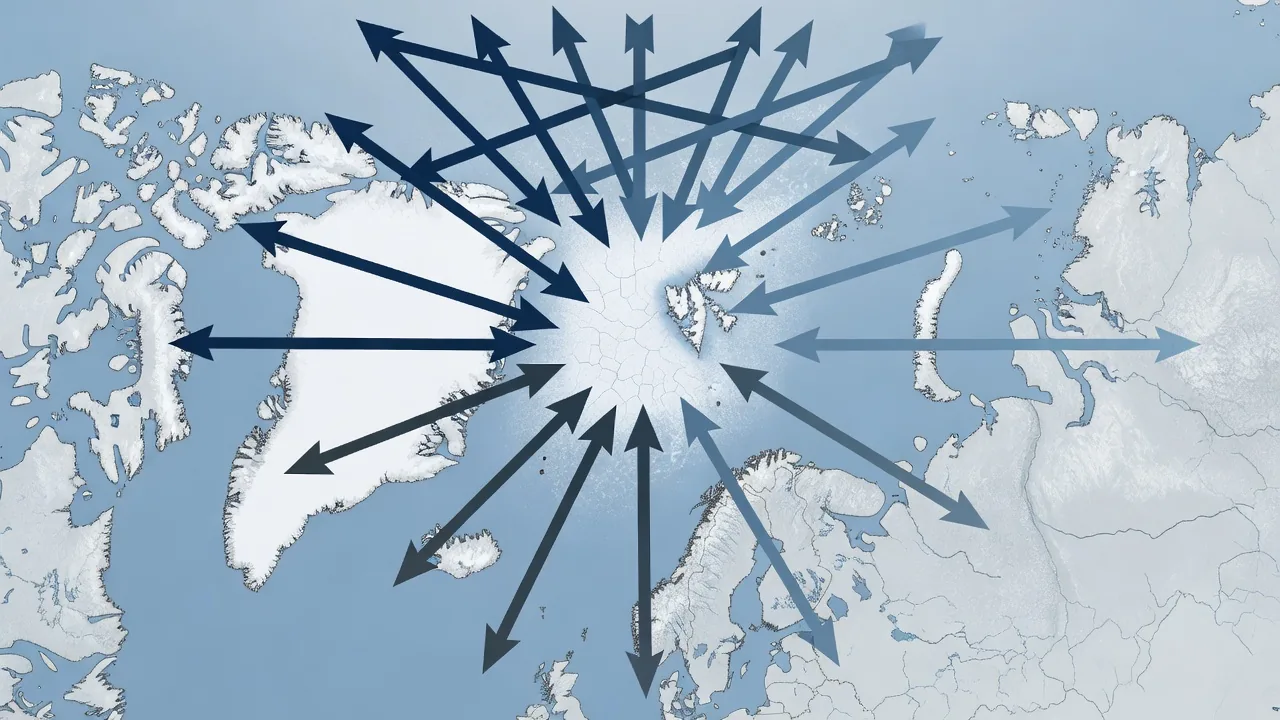
Global warming is paradoxically opening a new geopolitical stage. As Arctic ice melts, previously inaccessible energy and mineral resources and new maritime routes are becoming available, fueling heated competition among the United States, Russia, and China to secure them first. NATO has responded by intensifying military exercises such as “Arctic Sentry” and treating the Arctic as a new frontline of defense.

Recent Trends (2026)
In March 2026, the United States held its largest-ever oil field development bidding round in Alaska’s National Petroleum Reserve-Alaska (NPR-A), while Russia-China Arctic cooperation was also observed. Russia aims to turn the Northern Sea Route (NSR) into a vital artery for its economy, and China is positioning itself as a “near-Arctic state” by investing in the “Polar Silk Road.” This is a complex contest involving resources, shipping routes, and military power simultaneously.
Why the Arctic Matters
The Arctic is estimated to hold a significant share of the world’s undiscovered oil and natural gas, as well as strategic minerals such as rare earth elements. At the same time, the Northern Sea Route has the potential to shorten Asia-Europe voyages far more than the traditional Suez route. With these two pillars—resources and logistics—overlapping, the Arctic is shifting from a “distant frontier” to a “future strategic hub.”
Outlook and Implications for Korea
While the risk of military conflict remains low in the short term, diplomatic and economic competition over resources and routes will intensify. For Korea, this presents both opportunities and challenges. Once the Northern Sea Route becomes operational, new demand will emerge in shipbuilding, shipping, and logistics, potentially highlighting Korea’s strengths in icebreaker and LNG carrier construction. At the same time, the country must address the task of balancing resource development with environmental protection and international norms.
Calculations of Key Players
Russia seeks to leverage the Northern Sea Route (NSR) and Arctic resources as a new economic lifeline to offset sanctions, while China positions itself as a “near-Arctic state” and invests in the Polar Silk Road and related infrastructure. In contrast, the United States and NATO are countering these moves through defensive exercises and by expanding their icebreaker fleets. On the same stage, differing objectives—resources, routes, and security—are colliding, turning the Arctic into a complex space where cooperation and competition operate simultaneously.
Frequently Asked Questions
Q. Can the Northern Sea Route replace the Suez route?
It is more likely to develop as a seasonal and complementary route rather than a full replacement. While ice coverage periods and infrastructure limitations remain, the distance-saving effect is clear.
Q. What can Korea do in the Arctic?
Korea can leverage its icebreaker and LNG carrier construction capabilities, along with its shipping and logistics competitiveness, to participate as a partner in route development and resource projects.
Personally, I believe the real contest in Arctic competition is not about “who plants the flag first,” but about “who can actually turn routes and resources into economic value.” The speed at which rules are established may prove more important than the speed at which the ice melts.