Trump tariff policy roadmap entered an entirely new phase in 2026. On February 20, 2026, the Supreme Court struck down IEEPA tariffs in a 6-3 ruling, and within hours, the Trump administration invoked Section 122 to reimpose a 10% global tariff. In March, Section 301 investigations expanded to cover 16 countries plus 60 additional economies, and on April 2, a 100% Section 232 tariff was declared on patented pharmaceuticals. The legal basis shifted, but the direction toward building tariff walls has only become more systematic. This article provides a comprehensive breakdown of the legal structure, timeline, and real-world impact of the post-ruling Trump tariff policy roadmap.
- February 20, 2026: Supreme Court ruled IEEPA tariffs unconstitutional — approximately $166 billion collected under IEEPA now subject to refund
- Section 122 global 10% tariff (Feb 24 – Jul 24) — 150-day statutory limit, expires automatically without Congressional extension
- Section 301 investigations: 16 countries (excess capacity) + 60 countries (forced labor) — targeting July 24 completion to replace IEEPA tariffs
- Section 232 pharmaceutical tariff of 100% (effective July 31) — reduced to 20% with onshoring plans, 0% with MFN pricing agreements
- Existing Section 232 tariffs (steel/aluminum/copper 50%, autos 25%, semiconductors 25%) remain unaffected by the Supreme Court ruling
Trump Tariff Policy Roadmap: The Legal Turning Point — IEEPA Struck Down
Learning Resources v. Trump — The Core Logic of the 6-3 Ruling
On February 20, 2026, the Supreme Court ruled in Learning Resources, Inc. v. Trump that IEEPA (International Emergency Economic Powers Act) does not authorize the president to impose tariffs. Chief Justice Roberts authored the majority opinion, joined by Justices Barrett, Gorsuch, Jackson, Kagan, and Sotomayor. Justice Kavanaugh wrote the dissent, joined by Justices Thomas and Alito.
The majority held that imposing tariffs is a form of taxation, and taxing power belongs exclusively to Congress under the Constitution. The authority to regulate importation under IEEPA is distinct from the power to tax.
Total IEEPA tariffs collected from April 2025 through February 2026 are estimated at approximately $166 billion (Penn Wharton Budget Model), affecting over 330,000 businesses eligible for refunds. US Customs and Border Protection (CBP) is developing an automated system called CAPE to process refund requests.
What the Ruling Did Not Touch — Section 232 Tariffs Stand
The IEEPA ruling did not invalidate all tariffs. Section 232 tariffs under the Trade Expansion Act rest on separate legal authority unaffected by the Supreme Court decision. Currently active Section 232 tariffs include 50% on steel, aluminum, and copper; 25% on automobiles and auto parts; tariffs on lumber; and 25% tariffs on semiconductors imposed in January 2026.
Trump Tariff Policy Roadmap Phase 1 — Section 122 Global 10% Tariff
What Is Section 122 — A Law Never Used in 72 Years
Immediately after the Supreme Court ruling, President Trump became the first president to invoke Section 122 of the Trade Act of 1974. This provision allows the president to impose temporary import surcharges of up to 15% for a maximum of 150 days to address fundamental international payments problems. It had never been used since its enactment in 1974.
The Section 122 tariff, effective February 24, applies a uniform 10% surcharge — unlike the IEEPA regime, which imposed differentiated rates by country. It automatically expires on July 24, 2026, and cannot be extended without an act of Congress.
Two lawsuits have already been filed against the Section 122 tariffs. A 24-state coalition (State of Oregon v. Trump) and a business suit (Burlap and Barrel v. Trump) were both filed with the Court of International Trade (CIT), with oral arguments held on April 10, 2026.
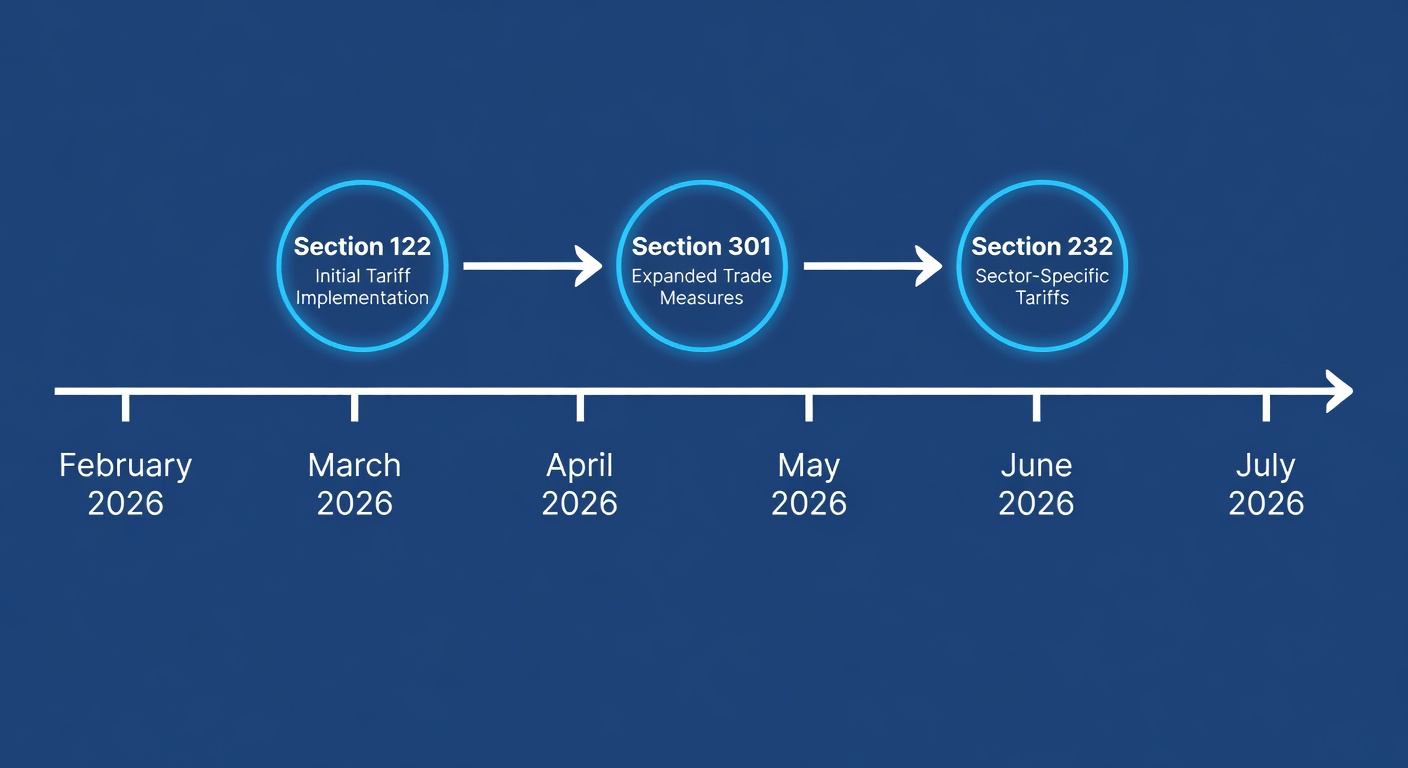
Section 122 Structural Limits and Stacking Rules
Section 122 tariffs do not stack on top of existing Section 232 tariffs. Exempted products include USMCA-qualifying goods, CAFTA-DR textiles and apparel, critical minerals, energy products, agricultural products, pharmaceuticals, and electronics.
This structure closely mirrors the exemption list (Annex II) of the now-invalidated IEEPA tariffs. The administration has described this as policy continuity — changing the legal basis while preserving the tariff architecture.
Trump Tariff Policy Roadmap Phase 2 — Massive Section 301 Investigations
16-Country Excess Capacity Investigation (March 11)
On March 11, USTR initiated Section 301 investigations into structural excess capacity across 16 economies: China, the EU, Singapore, Switzerland, Norway, Indonesia, Malaysia, Cambodia, Thailand, South Korea, Vietnam, Taiwan, Bangladesh, Mexico, Japan, and India — covering 60-70% of US imports.
The administration has stated that Section 301 investigations are designed to build country-specific tariffs that will effectively replace the struck-down IEEPA tariffs before Section 122 expires on July 24. USTR Ambassador Greer pledged an accelerated timeframe, but experts at PIIE have called this schedule unrealistically short.
60-Country Forced Labor Investigation (March 12)
USTR launched a separate Section 301 investigation into 60 economies to determine whether they have failed to prohibit imports of goods produced with forced labor. This investigation covers 80-90% of US imports. Written comments were due by April 15, with public hearings beginning April 28.
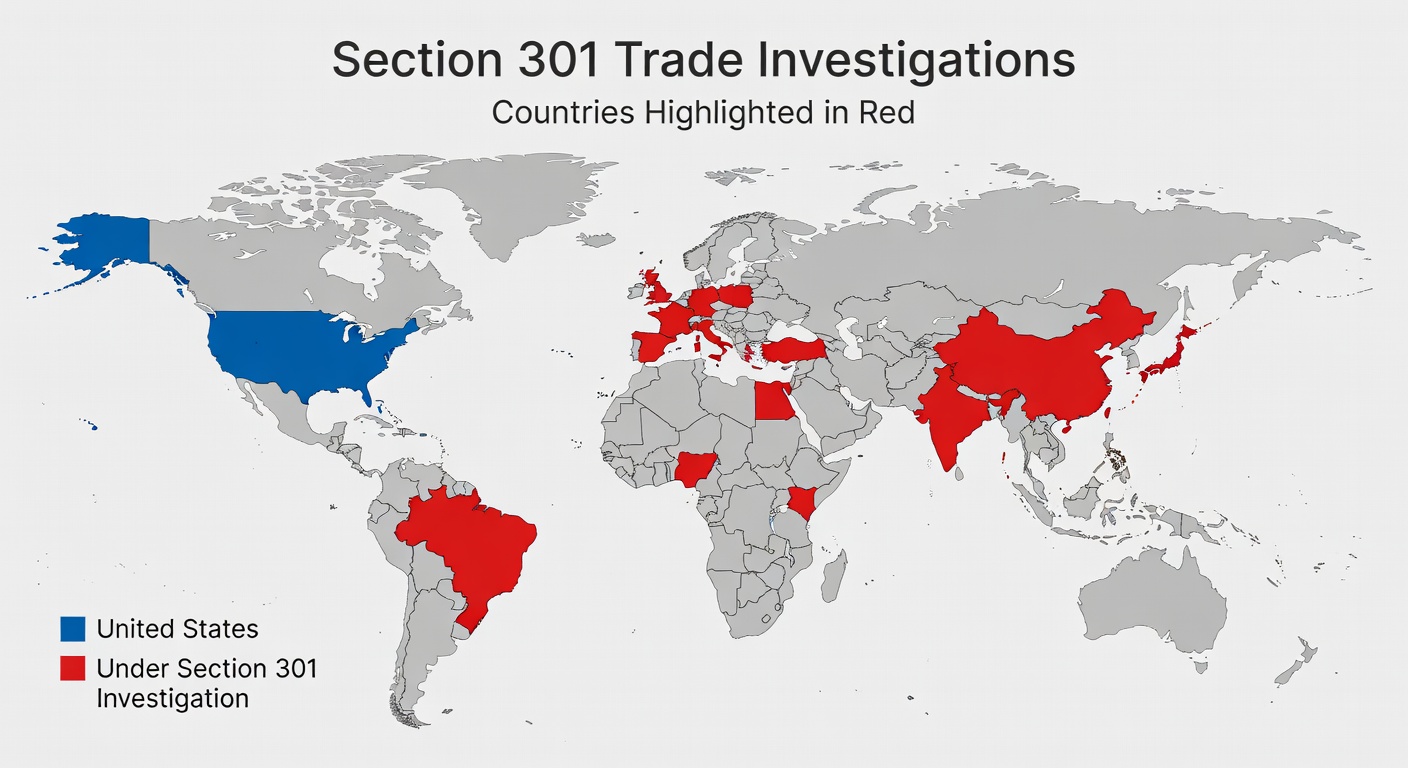
Trump Tariff Policy Roadmap Phase 3 — Section 232 Pharmaceutical Tariffs
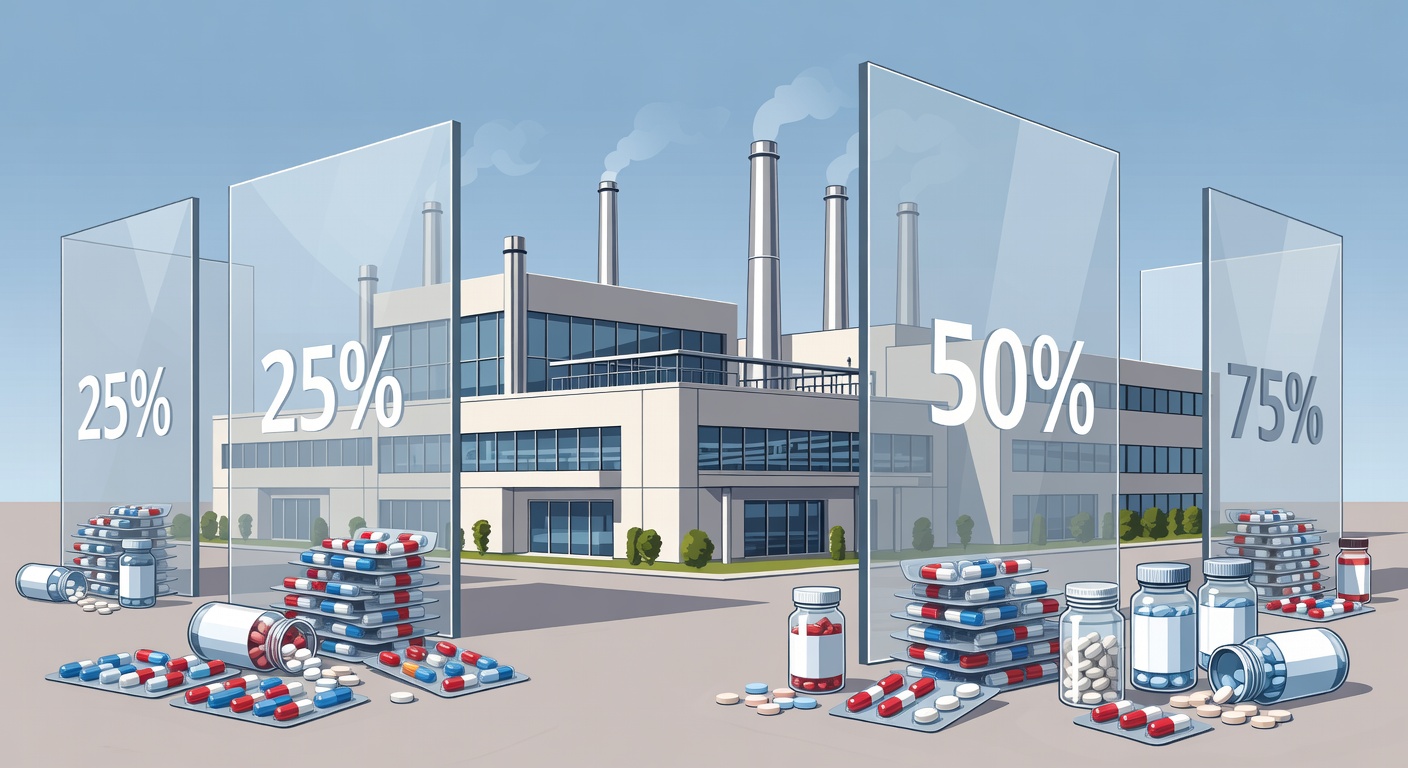
The 100% Tariff Structure — Onshoring Incentives and MFN Pricing
On April 2, 2026, President Trump declared a 100% Section 232 tariff on patented pharmaceuticals and active pharmaceutical ingredients (APIs). Companies with Commerce-approved onshoring plans receive a 20% rate. Companies with both onshoring and MFN pricing agreements qualify for 0% through January 20, 2029. EU, Japan, South Korea, and Switzerland receive 15%; UK receives 10%.
The White House claims approximately $400 billion in US investment commitments have been announced by pharmaceutical companies since the tariff declaration.
Pharmaceutical Tariff Effective Dates and Scope
Pharmaceutical tariffs take effect July 31 for large companies and September 29 for all others. Coverage is limited to patented pharmaceuticals listed in the FDA Orange Book or Purple Book. Generic pharmaceuticals and biosimilars are currently excluded.
Trump Tariff Policy Roadmap: Economic Impact
Household Burden and Trade Balance
According to the Tax Foundation, the average tax burden increase per US household from Trump tariffs in 2026 is estimated at approximately $1,050. Research from the New York Federal Reserve found that over 90% of tariff costs during most of 2025 were borne by US businesses and consumers.
A one-year tariff reduction agreement extended in November 2025 remains in effect through November 10, 2026. US tariffs on Chinese goods were reduced from 125% to 10%, and fentanyl-related surcharges from 20% to 10%. First-term Section 301 tariffs on China (7.5-25%) remain in place.
Employment Market and Stagflation Concerns
According to the San Francisco Federal Reserve, dramatic tariff escalations have historically been accompanied by rising unemployment. The current US labor market faces tariff uncertainty, AI-driven workforce displacement, and rising energy costs from the Iran conflict.
Trump Tariff Policy Roadmap — Three Scenarios After July 24
The Section 122 Expiration as the Critical Inflection Point
July 24 is the most important inflection point in the Trump tariff policy roadmap.
Section 301 investigations conclude on schedule, and country-specific tariffs take effect simultaneously with the Section 122 expiration. Market uncertainty temporarily decreases.
Section 301 investigations fail to conclude within five months, creating a temporary tariff gap. Section 232 items remain, but effective rates on other products could fall significantly.
CIT rules against Section 122 tariffs, or legal challenges are filed against Section 301 investigations as circumvention of the IEEPA ruling. The administration might consider Section 338 of the Tariff Act of 1930.
Trump Tariff Policy Roadmap — Current Tariff Summary (April 2026)
Active Tariff Framework Table
| Legal Authority | Target | Rate | Status |
|---|---|---|---|
| Section 232 | Steel / Aluminum / Copper | 50% (finished), 25% (derivatives) | ✅ Active |
| Section 232 | Automobiles / Auto Parts | 25% | ✅ Active |
| Section 232 | Semiconductors | 25% | ✅ Active (Jan 2026~) |
| Section 232 | Patented Pharmaceuticals | 100% (default), 15-20% (negotiated) | ⏳ Jul 31 |
| Section 122 | Global (with exemptions) | 10% | ⏳ Expires Jul 24 |
| Section 301 | China (first-term) | 7.5-25% | ✅ Active |
| Section 301 | 76 countries (investigation) | TBD | 🔍 Ongoing |
| IEEPA | Global (former) | 10-50% | ❌ Struck down |
Trump Tariff Policy Roadmap — Impact on South Korea
The US-Korea Trade Agreement and the 15% Tariff Reality
South Korea reached a tariff agreement at the October 2025 APEC summit, reducing its reciprocal tariff rate from 25% to 15%, in exchange for $350 billion in US investment commitments and $100 billion in US LNG and energy purchases. South Korea is included in both the 16-country excess capacity investigation and the 60-country forced labor investigation under Section 301. Semiconductors, automobiles, and pharmaceuticals — South Korea’s three major export industries — all fall within the scope of the Trump tariff policy roadmap.
Outlook — The Real Game Behind the Tariff Roadmap
Three Functions of Tariffs — Negotiation, Punishment, Revenue
According to the Atlantic Council, the Trump administration uses tariffs in three ways: as a negotiation tool, a punitive tool replacing financial sanctions, and a revenue source. The shift to Section 232 and Section 301 signals an effort to make tariff barriers more permanent. For related analysis, see IEEPA Ruling Analysis and US-China Manufacturing War.
Analytical Limitations
Sources and Verification Standards
This analysis synthesizes official White House fact sheets, USTR announcements, nonpartisan analyses from Tax Foundation, Tax Policy Center, and PIIE, and legal analyses from White and Case and Covington. US tariff policy is evolving rapidly. Readers should verify with official CBP announcements and Federal Register publications.
Frequently Asked Questions (FAQ)
No. The Supreme Court ruling invalidated only tariffs imposed under IEEPA authority. Section 232 tariffs (on steel, aluminum, automobiles, semiconductors) and Section 301 tariffs (on Chinese goods) remain unaffected. The current average effective US tariff rate is approximately 13.7%.
Refunds are likely but the timing and process remain undetermined. The CIT has ordered CBP to begin refund proceedings, and CBP is developing an automated system called CAPE. Approximately 330,000 businesses may be eligible, with total refund estimates of $166-175 billion.
Not without Congressional action. The administration describes Section 122 as a bridge to other tariff authorities. However, the president could theoretically invoke Section 122 again after expiration with a new emergency declaration.
South Korea is included in the 16-country Section 301 excess capacity investigation. Patented pharmaceuticals face a 15% Section 232 tariff, automobiles face 25%, and semiconductors face 25%. The bilateral 15% tariff agreement remains in effect but has uncertain legal foundations.
Tariffs represent a direct supply-side shock that raises import prices. Combined with energy price increases from the Iran conflict, stagflation pressure intensifies. New York Fed research shows over 90% of tariff costs are borne domestically.